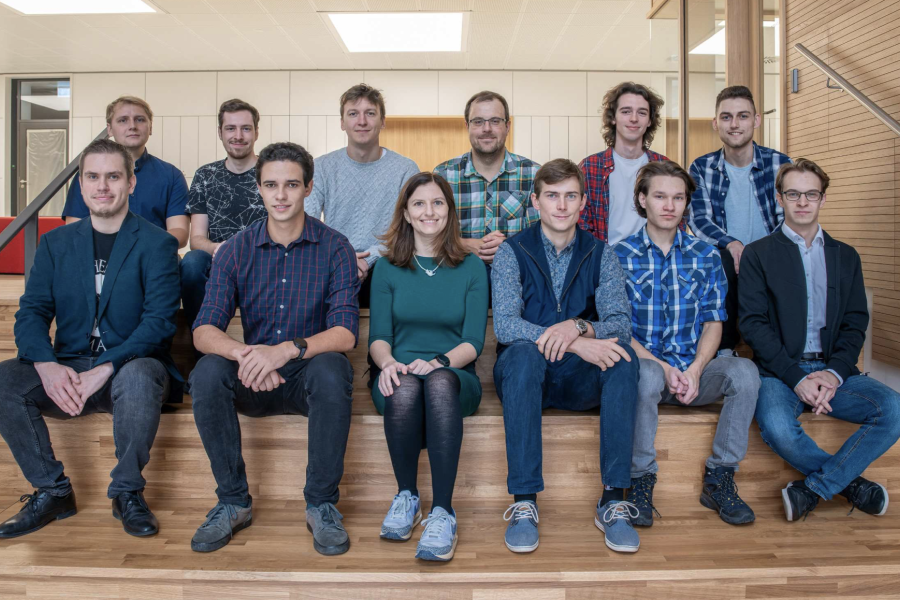
We develop theoretical models describing the interactions between electrons and light at the nanoscale, design new concepts in electron optics, and subsequently verify them in the laboratory. Our research takes place both on our own experimental setups and in the Core Facilities of CEITEC BUT, where we have access to world-class, state-of-the-art electron microscopes. By combining theory and experiment, we are able to turn new ideas into practice. Our main research directions include light-controlled electron optics, electron beam shaping, electron spectroscopy of low-energy excitations, and time-resolved electron microscopy. We investigate how light can be used to create new types of electron beams, obtain more detailed information about materials, and track processes that take place on extremely short timescales. By combining electron microscopy with nanophotonics, we are able to open up new research directions and push the boundaries of current imaging and spectroscopic methods.
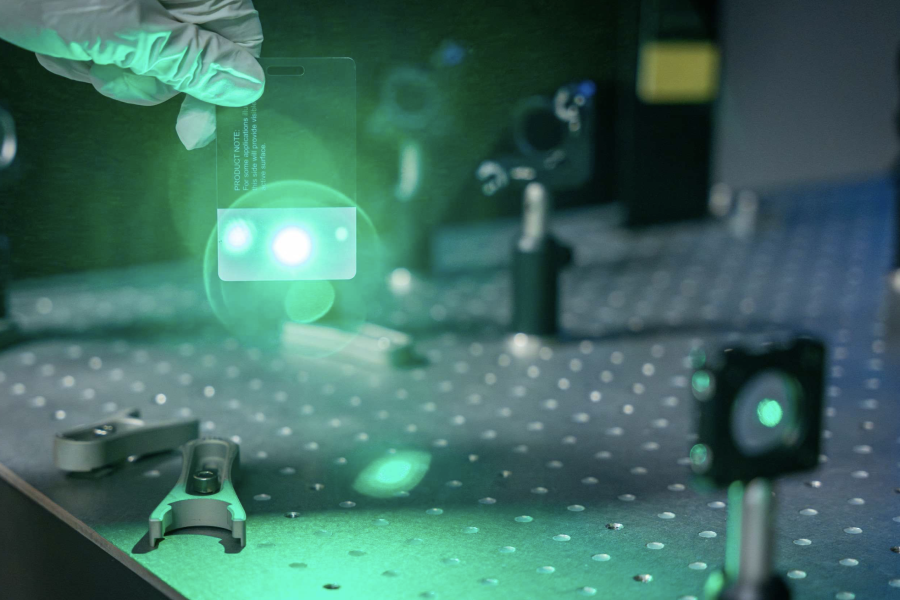
Electron microscopes play a key role in the development of semiconductor components, new materials, batteries, and nanostructure-based optical elements, as well as in the study of biological systems and chemical reactions. They make it possible to image structures at the level of individual atoms, obtain information about their properties, and reveal defects that could not be detected by other methods. However, current electron microscopes have their limitations – setting up experiments is often time-consuming, some information can only be obtained through complex procedures, and sensitive samples can be damaged during measurement. Our goal is to use light to control electron beams more precisely and flexibly, and to develop instrumentation and procedures that allow more information to be obtained faster and more efficiently. In the future, microscopes could automatically optimize part of their settings, offering users higher-quality results with less operational effort. Our research holds significant potential for the development of chips and new functional materials, as advanced spectroscopy allows us to examine not only the appearance and structure of samples, but also their electrical, optical, or thermal properties. At the same time, the new imaging methods we are developing could facilitate work with sealing sensitive biological samples, bringing benefits to the fields of biology and medicine as well.
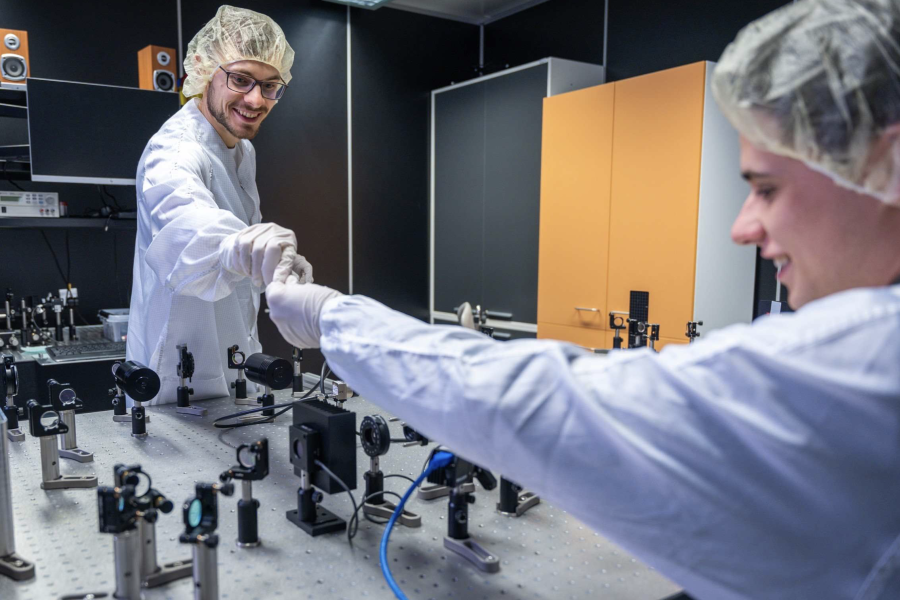
Although the group was officially established only in 2025, it builds on approximately ten years of research in electron microscopy, spectroscopy, and nanophotonics. Among its significant achievements is research on infrared electron energy loss spectroscopy (EELS), which makes it possible to study excitations in materials such as phonons, vibrational modes, and low-energy plasmons. This information helps us better understand the optical, thermal, and electronic properties of materials at the nanoscale. Another major milestone was securing the prestigious GAČR Junior Star and ERC CZ LightEM grants. The LightEM project originated from a proposal that received the highest possible rating twice in the European ERC competition. Thanks to support from the Ministry of Education, Youth and Sports of the Czech Republic, it can now be carried out in full. The project provides our team with stable five-year support and allows us to pursue demanding basic research with the potential to significantly influence the future of electron microscopy.

