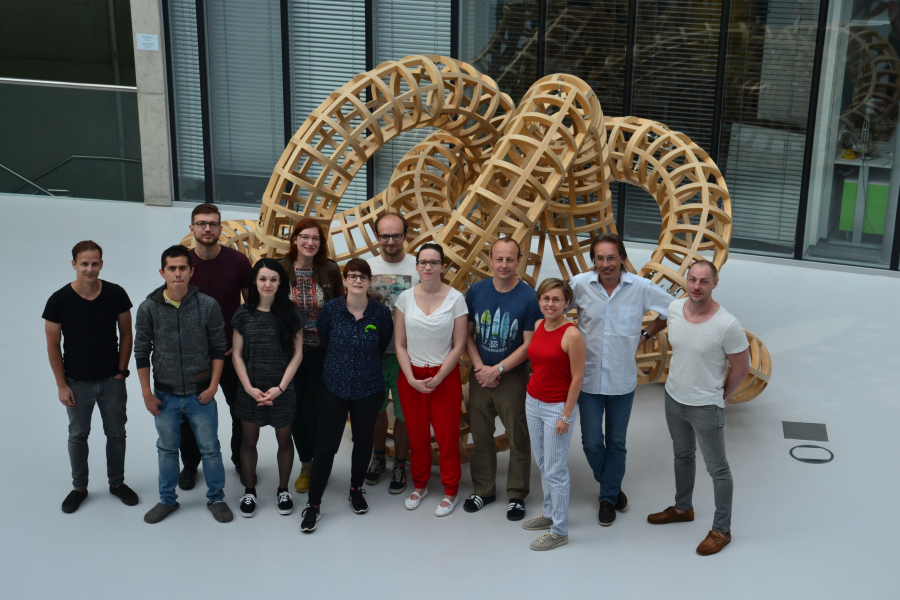
We are a team of neuroscientists and data analysts studying how the human brain works. Our research focuses primarily on epilepsy, disorders of memory and consciousness, and other neurological conditions associated with changes in brain networks.
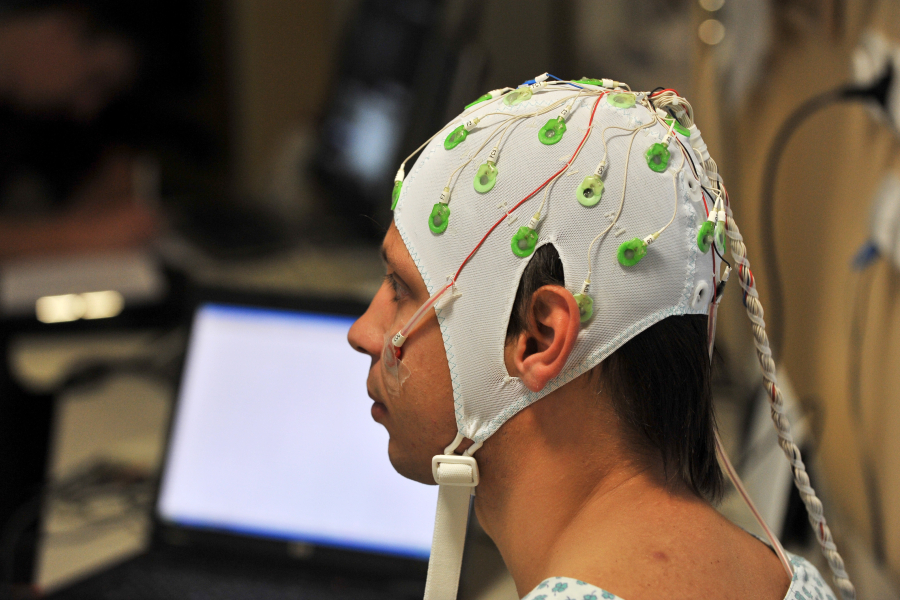
Using electroencephalography (EEG), magnetic resonance imaging (MRI), and other advanced methods, we monitor brain activity and investigate the mechanisms underlying epileptic seizures, cognitive impairment, and altered states of consciousness. At the same time, we study how brain networks support learning, memory, perception, and social behaviour.
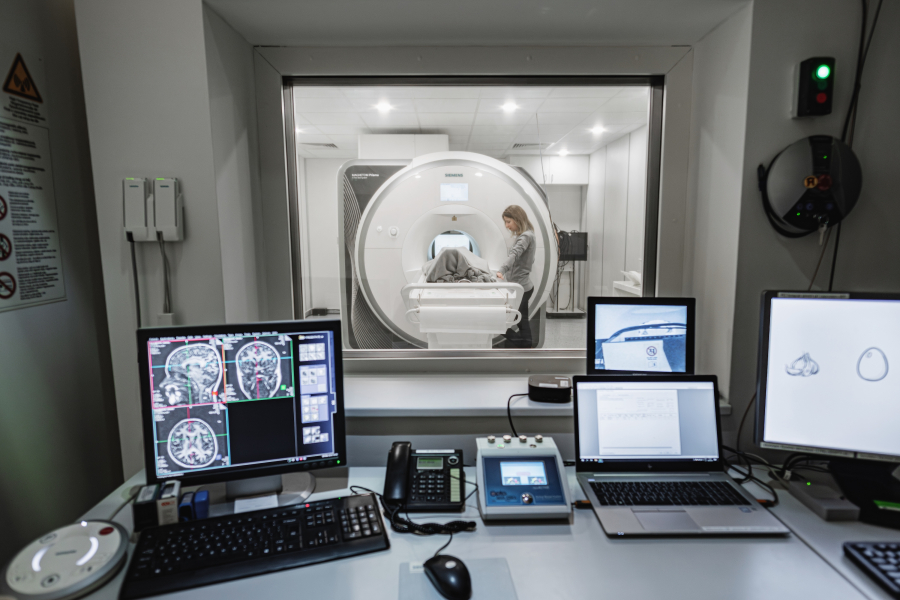
Our findings help identify brain regions responsible for generating epileptic seizures and improve the chances of successful surgical treatment in patients whose seizures cannot be controlled by medication. We also search for new biomarkers of brain activity that may help predict disease progression and treatment response.
A better understanding of how brain networks function also allows us to uncover the mechanisms underlying memory, consciousness, and human behaviour.
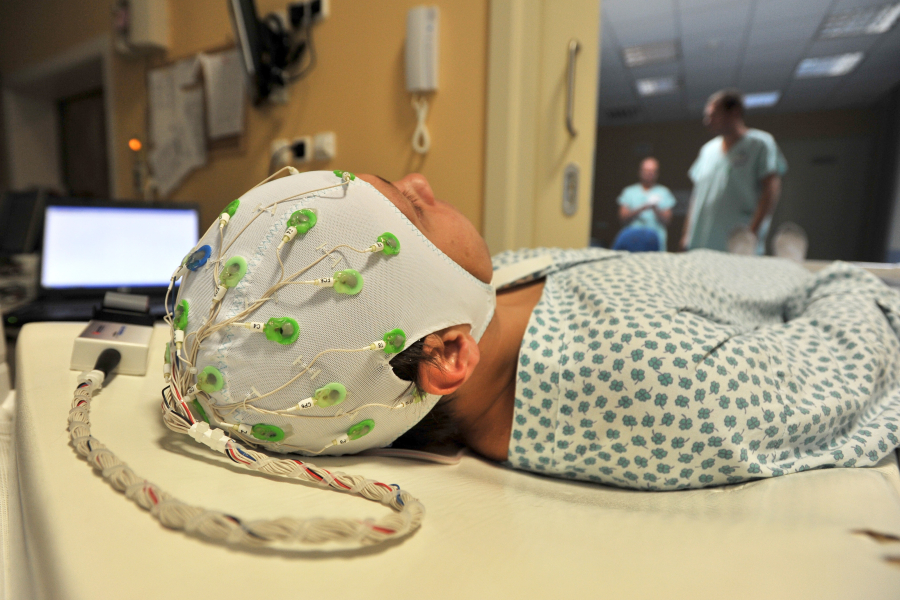
We are among the leading European centres investigating epilepsy and the functional organisation of the human brain. We have contributed to the development of methods that improve the localisation of brain regions responsible for epileptic seizures and support the planning of epilepsy surgery.
We have also contributed to research on high-frequency brain oscillations associated with memory and cognitive functions, as well as studies exploring brain networks in epilepsy, autism, and disorders of consciousness. Our findings, published in leading international journals, contribute to a deeper understanding of how the human brain works.
We are currently focusing on extremely fast oscillations in the human brain and investigating their relationship with memory and epileptic activity. We are also further developing Pre-X-stim, a tool developed and patented by our team that helps predict the effectiveness of therapeutic vagus nerve stimulation in patients with epilepsy.
We also investigate social cognitive functions – the processes that enable us to perceive and understand other people – and the potential use of virtual reality in psychiatric disorders. Another area of our research examines how events before and shortly after birth influence brain development and its cognitive and emotional functions. We also study pathological hyperexcitability and neurodegeneration – processes associated with excessive activity of nerve cells and their progressive damage.
Viktor Jirsa – Institute de Neurosciences des Systemes, INSERM, Marseille, France
Greg Worrell – Department of Neurology, Mayo Clinic, Rochester, USA
Adam Zeman – Peninsula College of Medicine, University of Exeter, UK
Nathan Faivre – Laboratoire de Psychologie et Neurocognition, Grenoble, France
Michael Pitts – Department of Psychology, Reed College, Portland, USA
Michał Wierzchoń – Institute of Psychology, Jagiellonian University in Krakow, Poland
Kristian Sanberg – Aarhus University, Center of Functionally Integrative Neuroscience, Denmark
Andrea Vranić – University of Zagreb, Department of Psychology, Croatia
Jovana Bjekić – University of Belgrade, Institute for Medical Research, Serbia
Cristina Reschke – School of Pharmacy & Biomolecular Sciences, RCSI, Dublin, Ireland
Tomas Paus – Rotman Research Institute, University of Toronto, Canada
Jill Goldstein – Brigham and Women’s Hospital, Harvard Medical School, USA
Nikolova Yuliya – Centre for Addiction & Mental Health, Toronto, Canada
Fabrizio Vecchio – Brain Connectivity Laboratory, IRCCS San Raffaele Pisana, Rome, Italy
Gavin Woodhall – Aston University, College of Health & Life Sciences, Birmingham, UK
Giorgia Silani – SCAN Unit, University of Vienna, Austria
Bertil Tungodden – The Choice Lab, Norwegian School of Economics, Bergen, Norway

