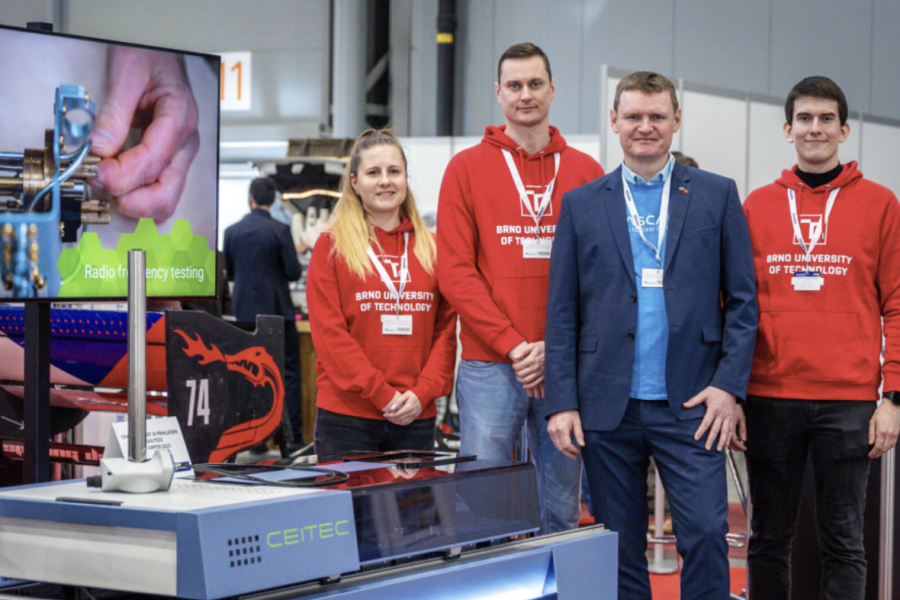
The significance of our research lies in the study of the physical properties of materials and spin systems. We focus primarily on two-dimensional (2D) materials such as graphene, graphite, porphine, as well as molecular layers, where the experimental approaches we develop enable detailed investigation of interactions and dynamic processes that are crucial for quantum technologies, electronics, and energy applications. Another key area is spin systems and single-molecule magnets, which have potential applications as molecular switches, memory storage media, or even as the building blocks of future quantum computers. Magnetic resonance plays a fundamental role in our efforts to understand the underlying physical mechanisms and allows us to manipulate their quantum states. This effectively enables, for example, the writing of information or switching directly within the molecular structure
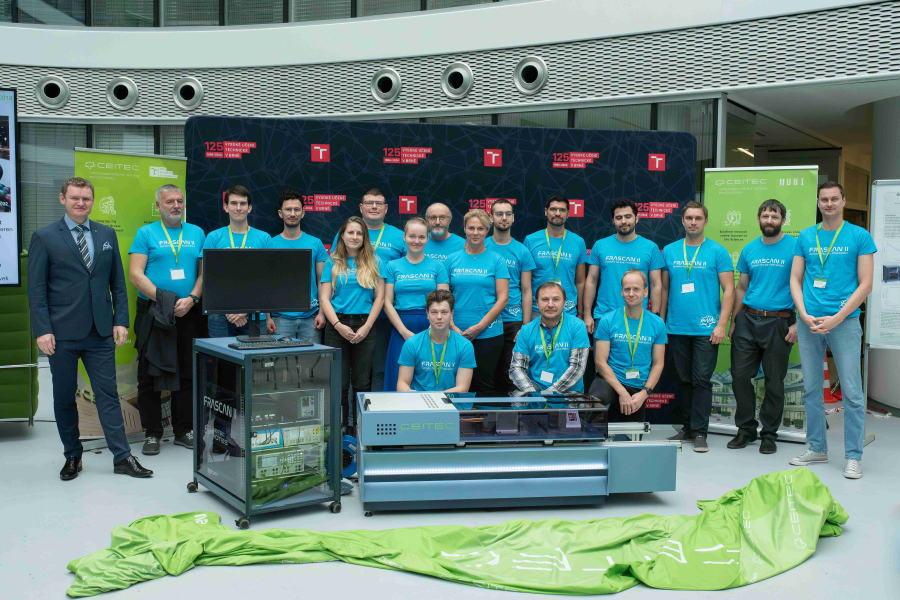
The FRASCAN I spectrometer has been used long-term in everyday research and, as the only device of its kind, makes it possible to study the same sample at different frequencies without the need to transfer it between individual instruments. This unique feature significantly simplifies experimental procedures and enables more efficient data collection in complex measurements. Building on this approach, our latest development, the FRASCAN II spectrometer, aims to significantly enhance signal strength and reduce measurement time through the use of dynamic nuclear polarization (DNP). The device is still under development; however, it has already enabled a substantial increase in measurement sensitivity for selected samples. As a result, experiments that would normally take hours or even days can now be performed in just a few seconds—a fraction of the original time. This represents a major step toward faster and more efficient analysis. We plan to gradually apply these approaches to the study of chemical reactions and other time-dependent processes. Their implementation requires further technical and methodological development, which we are currently pursuing within international projects focused, among other areas, on chemical reactions in battery systems. The goal is to monitor and understand short-lived intermediates and dynamic processes
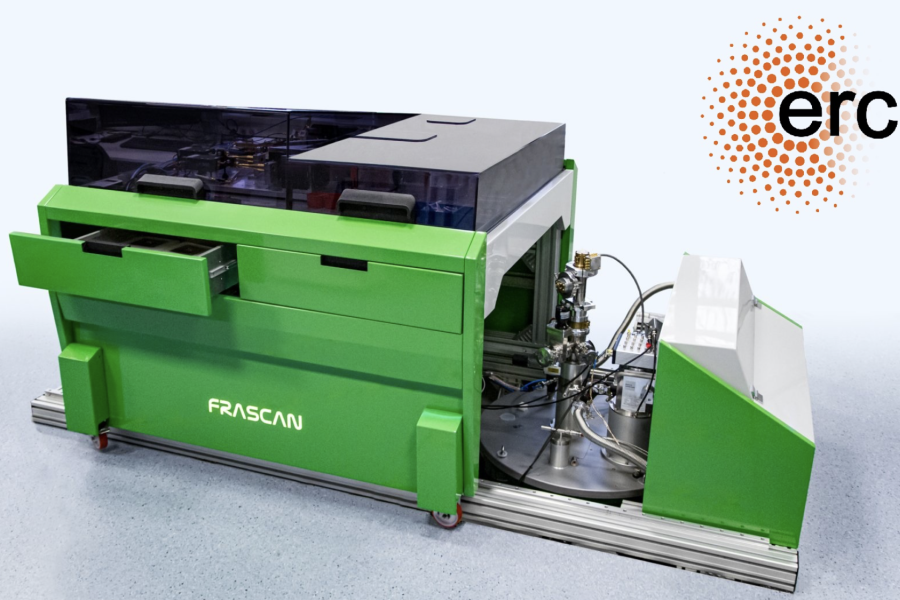
In our experiments, we achieved signal enhancement exceeding a value of 250. In practical tests, within just a few seconds we obtained a signal comparable to a measurement that would take more than 68 hours without this method. This represents a reduction in measurement time by tens of thousands of times. The method provides significant signal enhancement and thus a substantial reduction in measurement time, while the exact time savings depend on the experimental setup, the dynamics of reaching maximum enhancement, and the physical limits of the measurement itself. Nevertheless, this represents a major breakthrough and demonstrates what we can look forward to in the future. This approach leads to lower operating costs, increased safety, and creates potential for further technological development. The results of our work have been published in international scientific journals and have received recognition, including the Golden AMPER Award 2025.