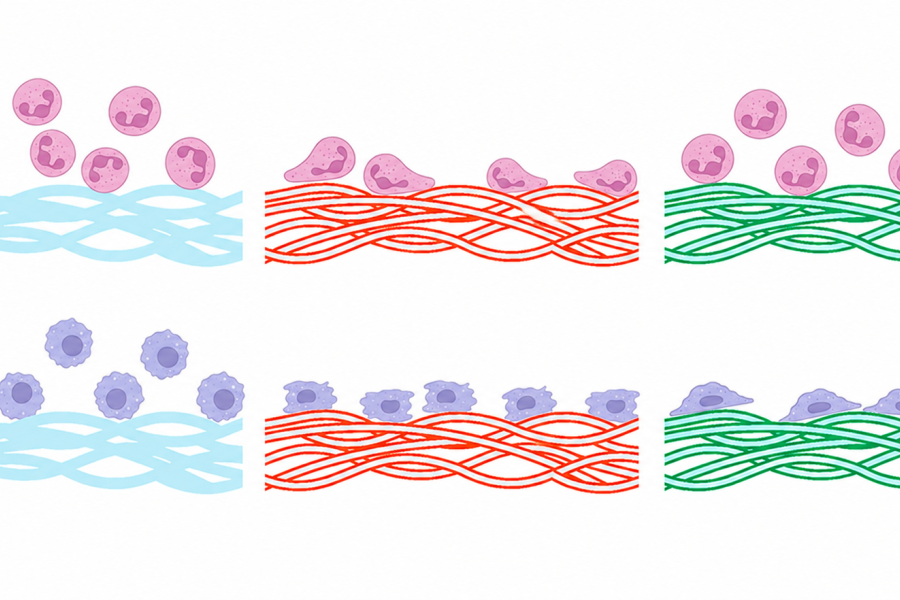
A key area of our work is bioactive surfaces and biointerfaces, that is, the interfaces between technical materials and biological environments. We focus on the creation and modification of surface layers containing nitrogen and oxygen based functional groups, such as amino or carboxyl groups, which enable targeted interactions with biomolecules, proteins, and cells. Our goal is to understand the relationship between plasma process parameters, the structure of the resulting layer, and its functional properties
Plasma technologies enable precise and gentle modification of surface properties without the need for high temperatures or aggressive chemicals. This makes it possible to control wettability, adhesion, biocompatibility, and chemical reactivity without affecting the mechanical properties of the underlying material. This approach is particularly important for sensitive materials such as polymers and nanofibrous structures. The outcomes of our research have potential applications across a wide range of fields, from biomedicine, for example in bioactive surfaces, wound dressing materials, or implantable systems, to industrial applications such as polymer bonding and surface treatment of plastics, as well as environmental technologies, including paper treatment, filtration, and liquid processing. Atmospheric plasma discharges also enable surface modification directly at ambient pressure, which is essential for future industrial implementation. We also devote special attention to the modification of liquids, water, and hydrogels. In these systems, plasma generates reactive oxygen and nitrogen species that may exhibit antibacterial effects and open new possibilities for the use of plasma in materials research at the interface between solid and liquid phases

One of the areas in which we achieve internationally significant results is the plasma chemical modification of polymer nanofibres and nanotextiles. The Czech Republic is among the global leaders in nanofibre production, and our research directly builds on this tradition. We have demonstrated that both plasma treatment and plasma chemical modification can fundamentally alter the functional properties of these materials without disrupting their delicate structure. A specific example is our research on polymer nanofibres containing zinc oxide. The material itself did not exhibit antibacterial effects, but these emerged only after plasma surface modification. This finding confirmed the importance of plasma for surface activation and opened new research questions regarding plasma interactions with nanostructured materials. We have also long been engaged in research on carbon nanomaterials, including carbon nanotubes and carbon nanoparticles with nitrogen functional groups. This work has resulted in numerous publications in leading international journals and has demonstrated the potential of these materials for the binding of drugs and other functional molecules