

 Share
Share
27. Jan. 2026
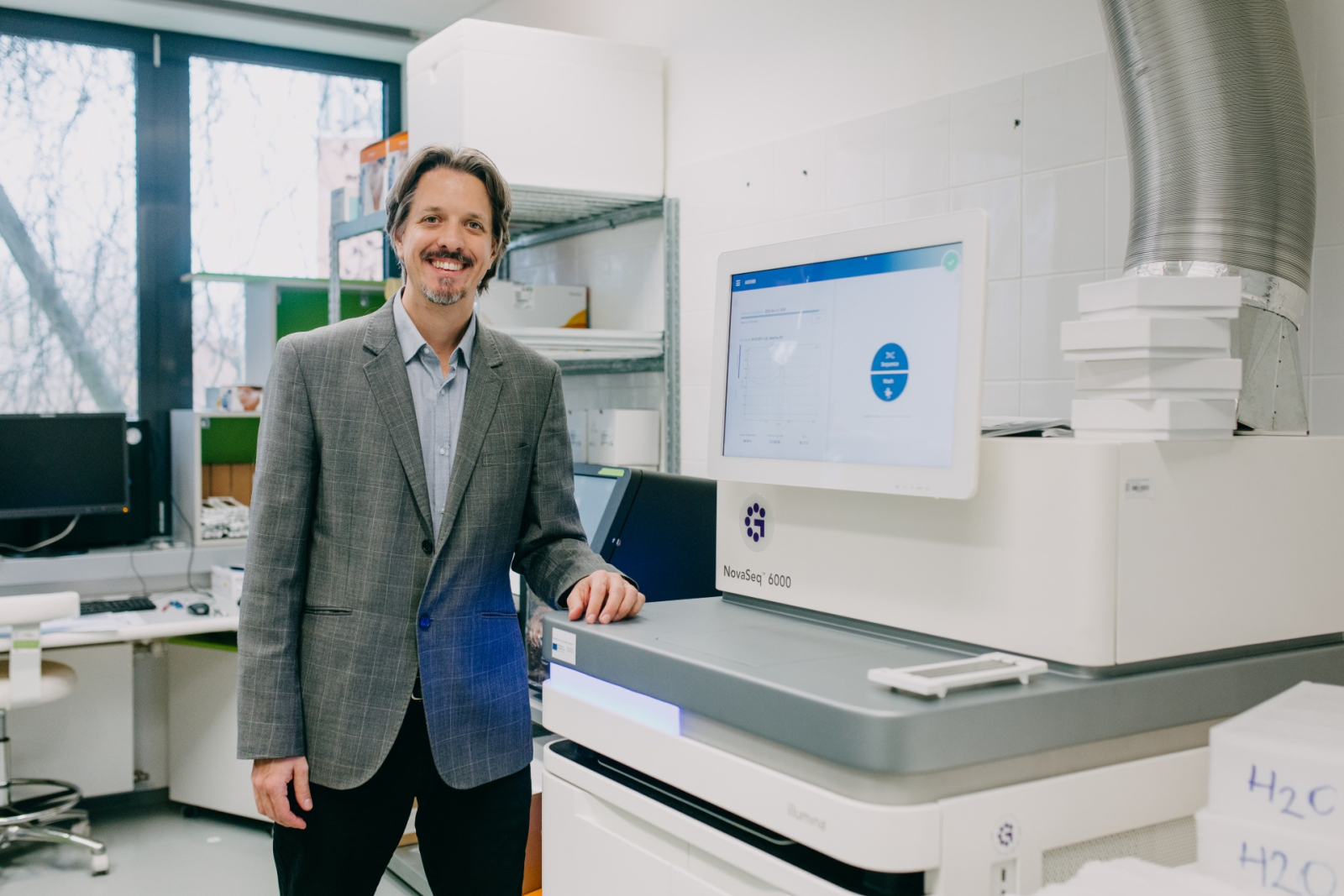
Photo: National Institute for Cancer Research (NICR)
Physician and molecular biologist Marek Mráz from CEITEC Masaryk University (MUNI) and University Hospital Brno (FN Brno) has been awarded a prestigious ERC Proof of Concept (ERC PoC) grant. Support from the European Research Council (ERC) will enable him to advance the development of new inhibitors of the GAB1 protein – compounds that appear to be a promising route towards more effective treatment of acute myeloid leukaemia (AML), one of the most aggressive forms of cancer. The ERC PoC grant helps researchers verify whether results from basic research can be translated into applications with real-world impact.
At CEITEC MU and FN Brno, Marek Mráz’s research team has long been investigating mechanisms that allow cancer cells to evade the effects of therapy. The laboratory originally focused on chronic lymphocytic leukaemia (CLL), whose cells are able to bypass standard treatment by rewiring cellular signalling pathways. However, when studying GAB1 biology during a previous ERC Starting Grant awarded to Marek Mraz, the researchers observed a surprising effect: inhibitors targeting the GAB1 protein, induced strong killing not only of CLL cells, but also of acute myeloid leukaemia (AML) and several other leukaemias and lymphomas.
AML is among the most unfavourable haematological malignancies, often affecting young people, and more than half of patients die within one year from diagnosis despite intensive treatment. The scientists found that the GAB1 protein plays a key role in the survival of leukaemic cells as well as in adaptive processes that enable cancer cells resistance to other therapies, and that targeted inhibition of GAB1 disrupts these processes.
“Targeting GAB1 is technologically challenging because it is not an enzyme – such as a kinase molecule, which are the most common targets of anticancer drugs,” says Marek Mráz. “GAB1 protein functions inside the cell as an ‘aggregation’ hub, helping to connect and amplify signals between different regulatory pathways. Intervening in this type of protein therefore requires a different, technically more demanding approach than drugs in the so-called kinase inhibitor category. When developing GAB1 inhibitors in collaboration with medicinal chemists at the Faculty of Science of Masaryk University, we therefore have to pursue a different strategy in order to disrupt its key role in the cancer cell.”
The newly awarded ERC Proof of Concept grant, which is granted exclusively to researchers who have previously succeeded in one of the main ERC grant schemes, represents a major milestone for the team. It will enable the development and testing of second-generation inhibitors, the expansion of preclinical data, the assessment of the potential for clinical use, and the establishment of collaborations with industrial partners.
The project builds on the team’s earlier success in obtaining a US patent for compounds blocking the function of the GAB1 protein and may represent an important step towards a new type of therapy for patients with AML and other haematological malignancies. The path from a laboratory discovery to a medicinal product, however, is long and demanding, requiring extensive testing, substantial investment, and patience.
Photogallery

Author

Expert
