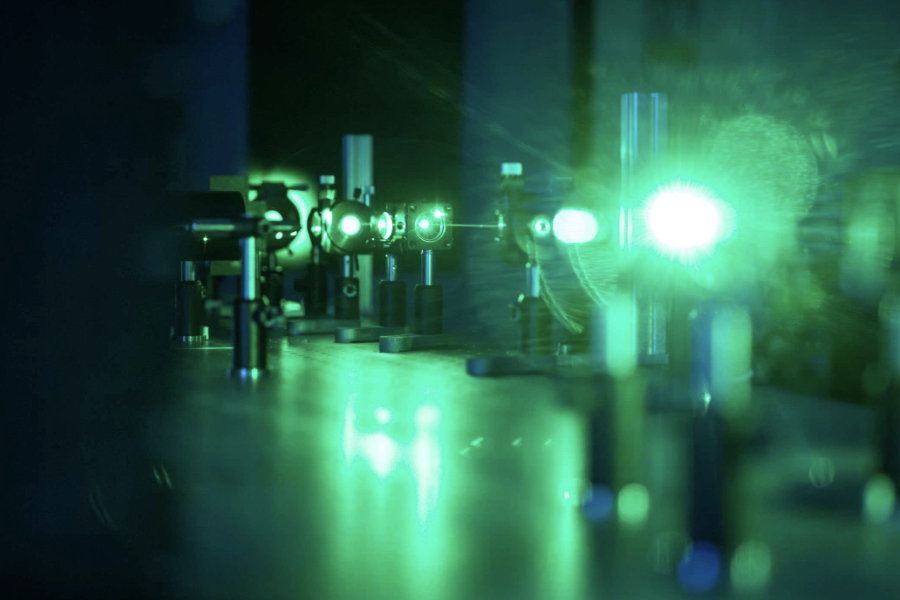
The main focus of our current research is the development of a light-based electron microscope within the LightEM project. Its goal is to replace part of the traditional electron optics with new optical elements that utilize the interaction between electrons and intense laser fields. While today's electron microscopes rely primarily on static electric and magnetic fields, our approach works with dynamic, spatially and temporally "shaped" optical fields, which offer much greater flexibility in controlling electron beams. This could allow us to create new types of electron beams and adaptively change their properties during an experiment. An important part of our research also involves exploring new ways of acquiring data that would enable the use of lower electron doses, allowing for gentler examination of sensitive samples.
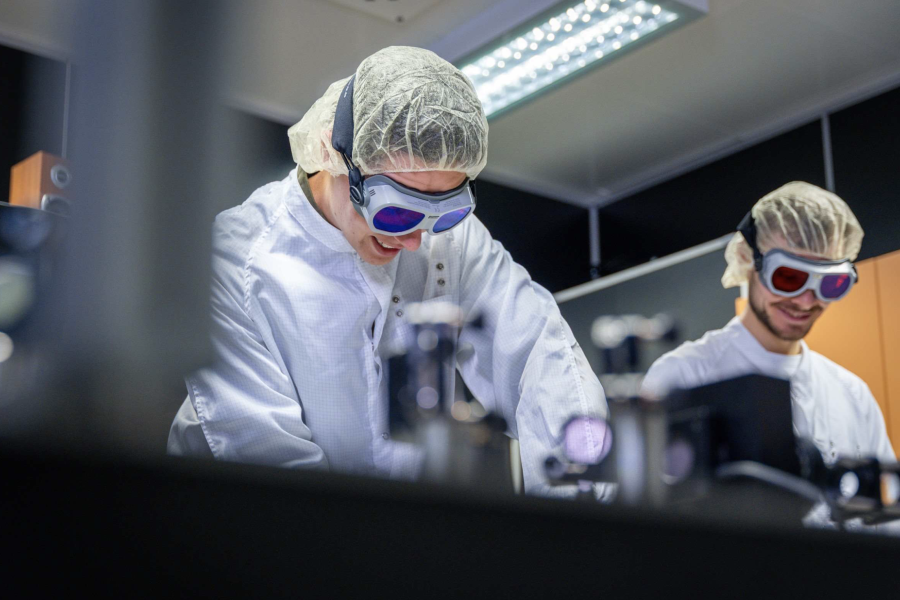
We also place great emphasis on automation and the development of software tools. In addition to physicists, our team includes programming specialists who develop software for controlling experiments and optimizing optical systems. Our long-term vision is to create an integrated ecosystem in which the optical part of the microscope works together with the electron part, with many processes running automatically. We also want to move electron microscopy beyond static imaging toward tracking fast dynamic processes in materials in real time.
Research at the frontiers of current knowledge relies on close collaboration between experts from different disciplines and countries. Our group therefore works intensively with other research teams both at CEITEC BUT and beyond. Joint projects combine cutting-edge experimental equipment, advanced computational modeling, and the development of new electron spectroscopy methods. International collaborations are also essential to our research because they allow us to connect our theoretical modeling with experimental work. While some research questions arise from experimental observations made by our partners, in other cases we propose new theoretical concepts and experiments, which we then verify in collaboration with international teams. This connection enables us to develop new ideas more quickly and translate them into practice. Collaboration with specialists in sample preparation, new materials development, nanophotonics, advanced experimental measurements, theoretical modeling and cutting-edge electron microscopy plays an important role in our research. It is precisely the combination of different expertise that allows us to work on research that would not be possible to carry out in one workplace. Our important partners include, for example, the CIC nanoGUNE research center in San Sebastián, the Institut de Ciències Fotòniques (ICFO) in Barcelona, the Technische Universität Wien or the Ernst Ruska-Centre for Microscopy and Spectroscopy with Electrons (ER-C) in Jülich. Partnerships in the United States of America, in particular with the Oak Ridge National Laboratory and the University of Washington, are also an important part of our activities.

