 Share
About Event
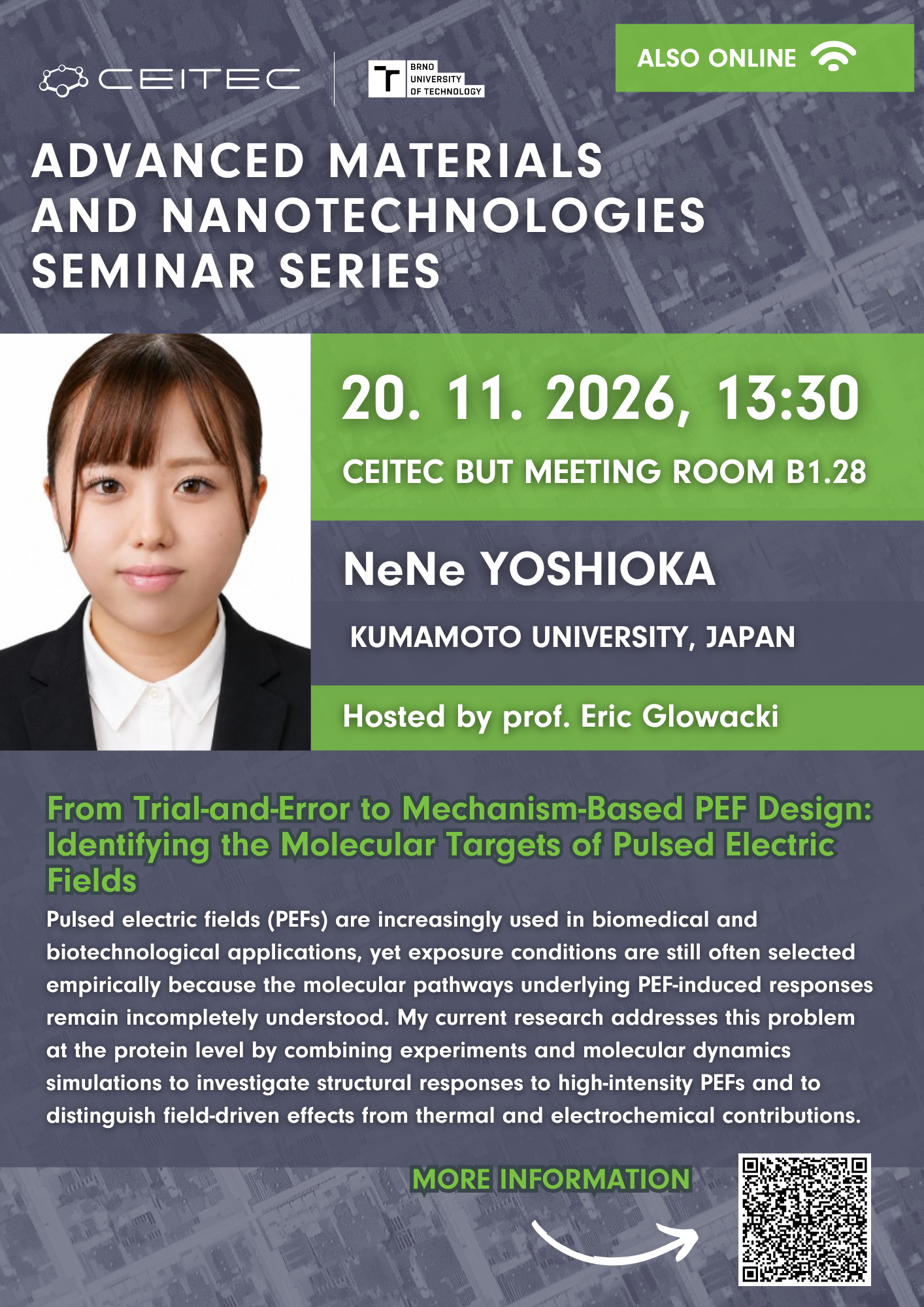
Pulsed electric fields (PEFs) are increasingly used in biomedical and biotechnological applications, yet exposure conditions are still often selected empirically because the molecular pathways underlying PEF-induced responses remain incompletely understood. My current research addresses this problem at the protein level by combining experiments and molecular dynamics simulations to investigate structural responses to high-intensity PEFs and to distinguish field-driven effects from thermal and electrochemical contributions.
Building on this work, I aim to determine how PEFs act at the cell membrane. I propose using minimal artificial membranes containing a single defined type of membrane protein to separate protein-mediated responses from lipid electroporation. By independently monitoring membrane permeability and protein function while controlling pulse characteristics, membrane charging, medium conductivity, and electrode-related effects, I aim to distinguish field-mediated, transmembrane-voltage-mediated, lipid-mediated, and chemical or thermal pathways.
Ultimately, identifying which molecular pathway dominates under a given electrical condition could provide a mechanistic basis for selecting pulse parameters, electrode interfaces, and solution conditions, enabling PEF protocols to be designed according to the desired biological effect rather than optimized by trial and error.