 Share
Share
About Event
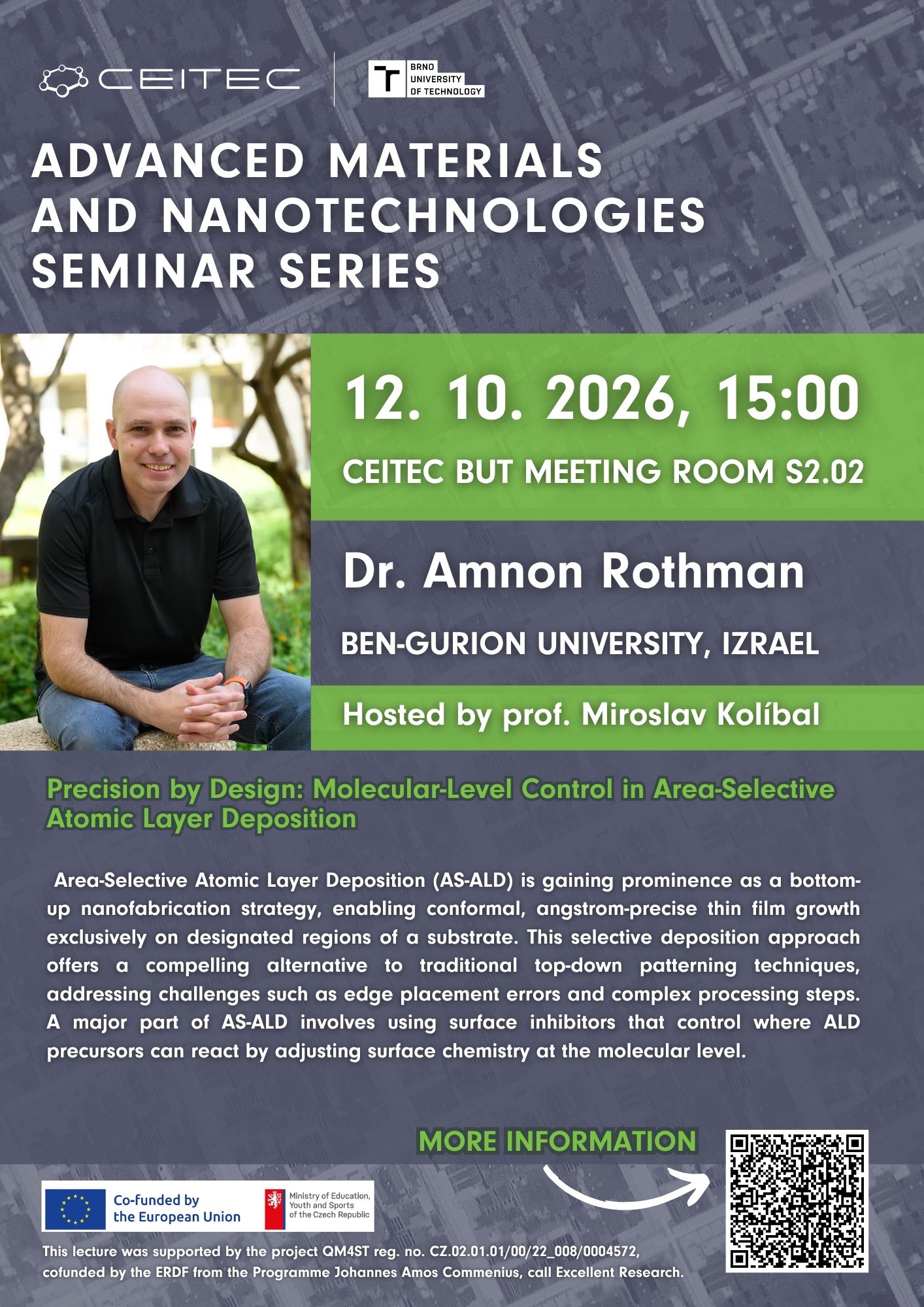
Area-Selective Atomic Layer Deposition (AS-ALD) is gaining prominence as a bottom-up nanofabrication strategy, enabling conformal, angstrom-precise thin film growth exclusively on designated regions of a substrate. This selective deposition approach offers a compelling alternative to traditional top-down patterning techniques, addressing challenges such as edge placement errors and complex processing steps. A major part of AS-ALD involves using surface inhibitors that control where ALD precursors can react by adjusting surface chemistry at the molecular level.
This talk highlights approaches using self-assembled monolayers (SAMs), small-molecule inhibitors (SMIs), and polymers to block or allow film growth in specific areas. One objective is to create a spin-coated polymer that sticks to one surface but not the other. The role of surface functional groups and ALD precursor chemistry will be discussed, focusing on how their interaction affects selectivity. By better understanding these chemical interactions, we aim to support the design of more effective inhibitors and precursors for reliable and scalable AS-ALD processes across a range of applications.
This lecture was supported by the project QM4ST reg. no. CZ.02.01.01/00/22_008/0004572, cofunded by the ERDF from the Programme Johannes Amos Commenius, call Excellent Research.