 Share
About Event
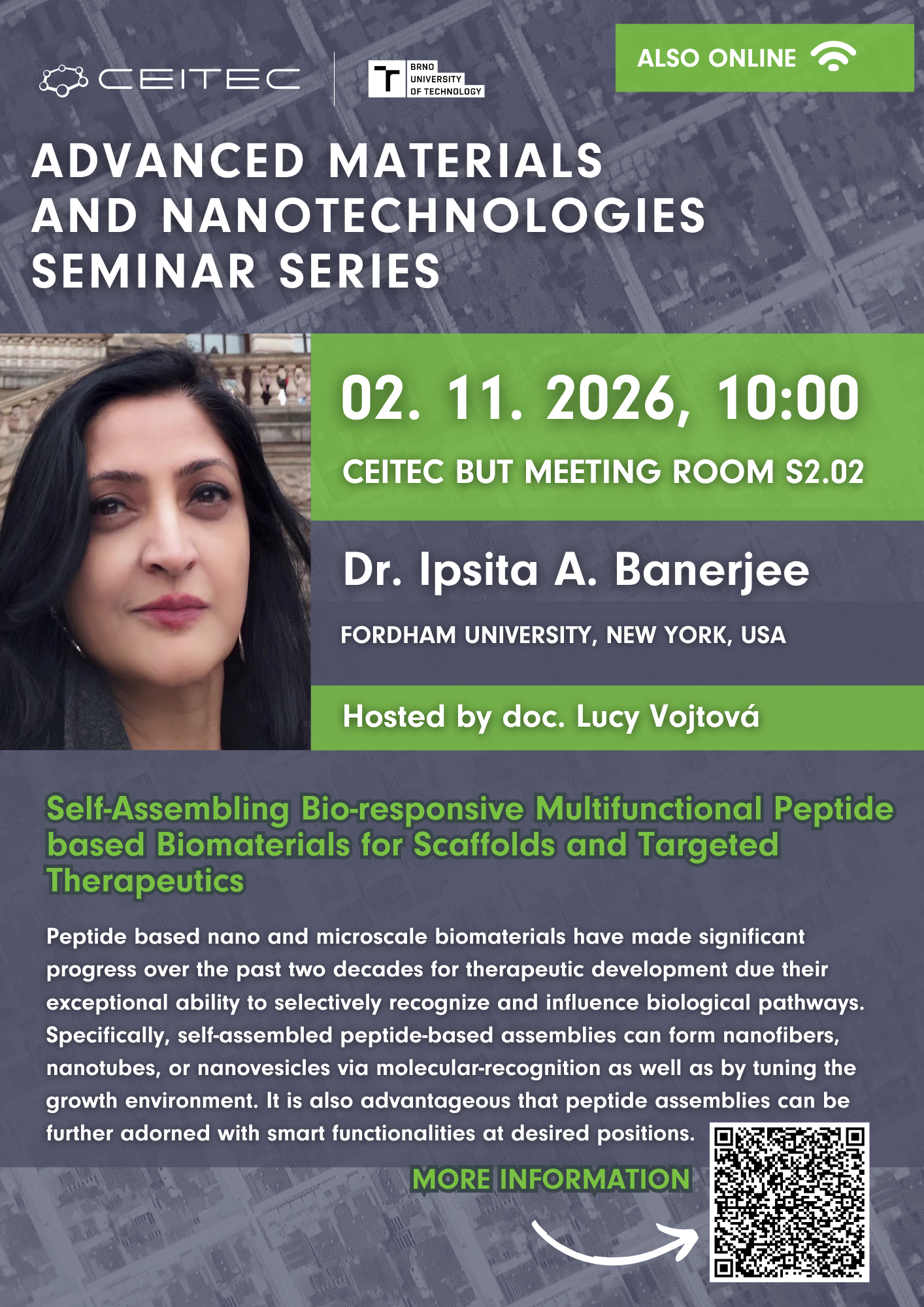
Peptide based nano and microscale biomaterials have made significant progress over the past two decades for therapeutic development due their exceptional ability to selectively recognize and influence biological pathways. Specifically, self-assembled peptide-based assemblies can form nanofibers, nanotubes, or nanovesicles via molecular-recognition as well as by tuning the growth environment. It is also advantageous that peptide assemblies can be further adorned with smart functionalities at desired positions. Furthermore, such materials are highly biocompatible, and can be utilized as building blocks for targeted delivery or for developing engineered scaffolds. These features make peptide assemblies an evolving class of biomaterials with substantial translational potential. Continued augmentation of delivery methods remains crucial to their successful integration into personalized medicine. A wide variety of natural and modified peptides and peptide amphiphiles and conjugates have been designed and studied, covering multiple therapeutic areas including targeting misfolded proteins involved in neurodegenerative diseases as well as for tumor targeting and scaffold development that may lead to new insights into the mechanism of action across multiple disease domains. This talk will highlight a broad range of natural and synthetic peptide scaffolds or composites that have been developed and evaluated across disease-specific potential therapeutic applications including targeting tumor cells and 3D spheroids as well as in neurodegenerative diseases.
Short Bio:
Ipsita A. Banerjee, Ph.D., is a Professor of Biochemistry and Bionanotechnology at Fordham University, NY where she served as department chair from 2018-2024 and is the current program director of Biochemistry. She received her Ph.D. from the University of Connecticut where she studied photopolymerization of biological systems. During her post-doctoral work at the University of Notre Dame and at the City University of New York, Dr. Banerjee worked on developing nanoscale systems for drug delivery, biomineralization and biosensing. At Fordham, Dr. Banerjee and her students are investigating tumor cell targeting and tissue engineering approaches using newly designed hybrid-peptide based supramolecular biomaterials. Her research lab has mainly focused on the development of a range of molecularly designed supramolecular peptide based soft materials. Her research integrates developing scaffolds for tumor targeting, as well as investigating disease mechanisms using iPSC-derived human neurons in Alzheimer’s disease. Dr. Banerjee has published over 120 journal articles and has either co-edited or written five book chapters, and has participated in over 280 conference presentations (National/ Regional/ International). She is a recipient of the US Fulbright Scholar award, Outstanding Research Mentorship award from the National Council of Undergraduate Research, Outstanding Chemistry teaching award from the New York section of the American Chemical Society, Emmet E. Reid Award from the Middle Atlantic Regional American Chemical Society as well as a recipient of the Distinguished Research Award from Fordham University and Distinguished Scientist Award from the Westchester Chemical Society of the New York Section of the American Chemical Society. She is also a recipient of the Faculty Undergraduate Research Mentor award in the Sciences from Fordham University.