 Share
Share
About event
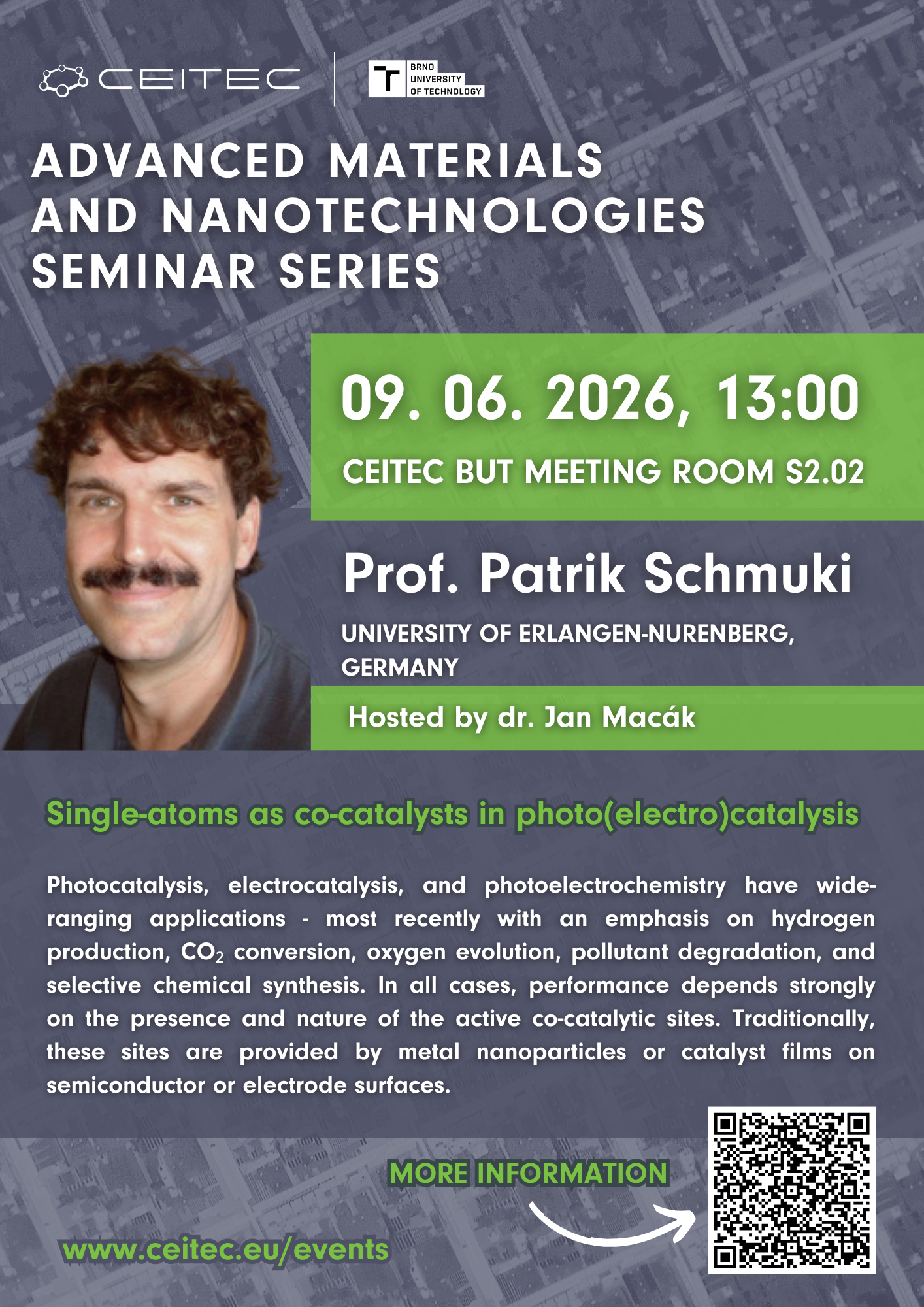
Photocatalysis, electrocatalysis, and photoelectrochemistry have wide-ranging applications - most recently with an emphasis on hydrogen production, CO₂ conversion, oxygen evolution, pollutant degradation, and selective chemical synthesis. In all cases, performance depends strongly on the presence and nature of the active co-catalytic sites. Traditionally, these sites are provided by metal nanoparticles or catalyst films on semiconductor or electrode surfaces.
However, many highly active catalysts rely on scarce or expensive elements, motivating strategies that use catalytic materials more efficiently while maintaining high activity and stability. Single-atom catalysts offer a powerful approach not only in view of an economic use of catalytic material but also as they may open-up unusual reaction-pathways.
Their activity is not determined by the metal alone, but also by the surrounding surface structure, coordination environment, and interaction with light- or electrically generated charges. In this presentation, we discuss how single atoms can be stabilized, activated, and used across photo-, electro-, and photoelectrochemical systems, highlighting their "hot" and "cold" nature as well as stability aspects and optimized use; this with an emphasis on their opportunities and key challenges for sustainable energy and chemistry.