

 Share
Share
How can sound be used to detect that an industrial machine is approaching failure – and predict it before it causes unplanned downtime? As part of the European AI-MATTERS programme, we helped the Czech startup Neuron Soundware validate a new artificial intelligence model for predicting the Remaining Useful Life (RUL) of industrial machinery. The model uses long-term acoustic and operational data to detect changes in machine behaviour that may indicate an emerging fault. By leveraging the computing infrastructure of RICAIP Testbed Brno, the new model was successfully trained and its prediction accuracy significantly improved.
- Client: Neuron Soundware
- Year: 2025
- Computing capacity: 1,000 GPU hours
Solution
From machine sounds to lifetime prediction
The solution is based on a principle similar to that used by modern language models. While a language model predicts the next word based on the preceding text, the Neuron Soundware model learns to predict how a machine's acoustic behaviour will develop based on its operating history. Over several years, the company collected acoustic data from dozens of machine types and hundreds of components – ranging from motors, pumps, and compressors to bearings, shafts, and spindles. For model training, these data were converted into approximately 33.6 billion “sound tokens.” The model learns to recognise normal operating patterns and identify deviations that may indicate a change in the machine's condition or an approaching failure. In addition to acoustic data, the system can also process information from vibration and temperature sensors.
Training AI with high-performance computing
Processing such an extensive dataset and training the new Transformer model required substantial computing power. Through the AI-MATTERS programme, Neuron Soundware gained access to the infrastructure of RICAIP Testbed Brno and the NVIDIA DGX H100 HPC system. Approximately 1,000 GPU hours of computing time were used during the project. The result was a model capable of working not only with the machine's current condition but also with the broader context of its operating history. This capability significantly improved the accuracy of Remaining Useful Life predictions.
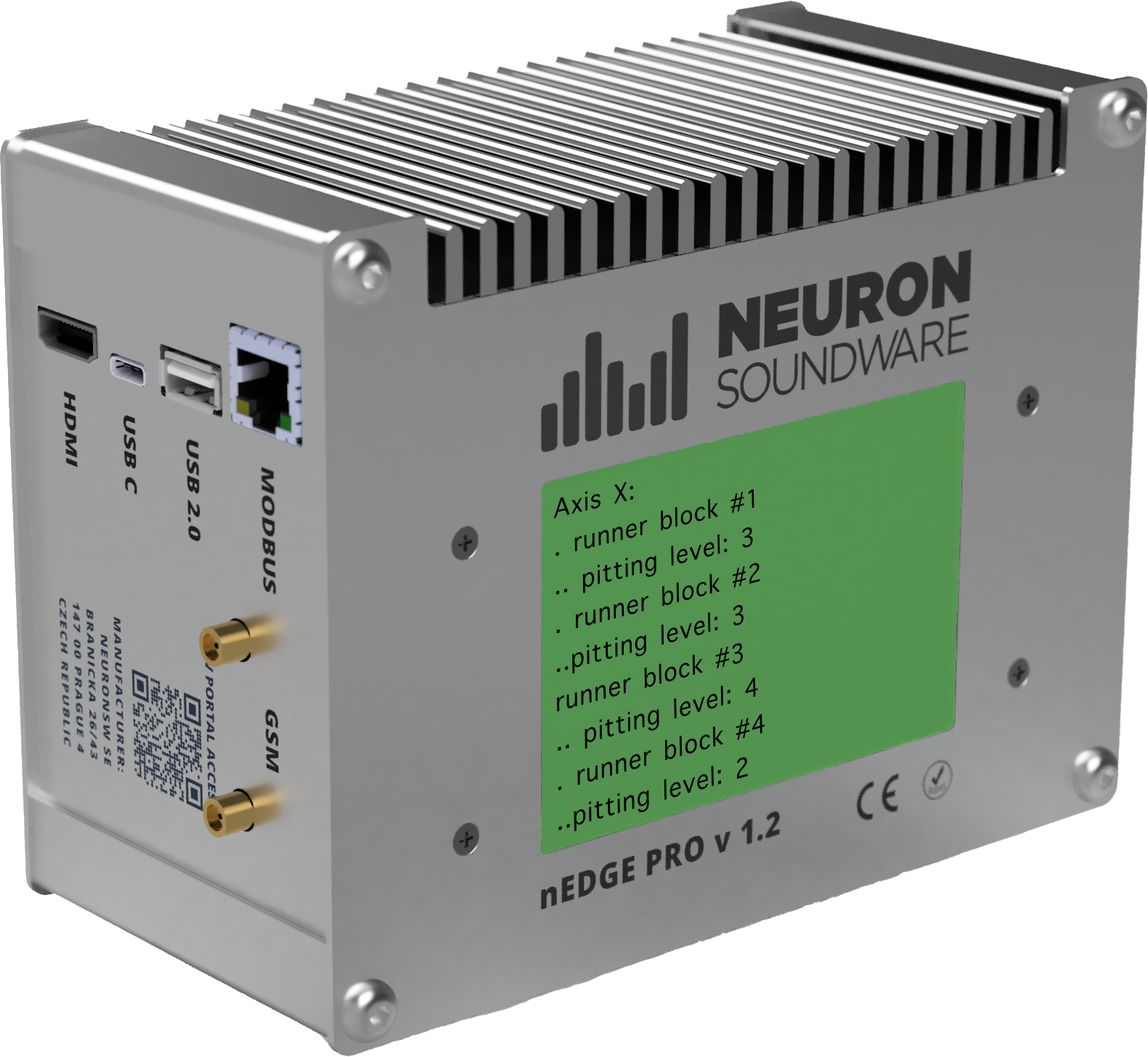
The nEdge PRO device for on-machine analysis (source: Neuron Soundware)
Results
The new model delivered major improvements, particularly in predicting the Remaining Useful Life of machines. Prediction error was reduced to just 5–15% of its previous levels, representing up to a tenfold improvement over earlier methods in some cases. The classification of operating conditions was also significantly simplified. While previous approaches required hours or even tens of hours of labelled data to train the model, the new model can work with just a few minutes of labelled data. As a result, the time and cost associated with data preparation when setting up a new customer project can be reduced by up to 95%. Anomaly detection also improved. The model was able to identify cases that previous models had failed to detect and recognise subtle changes in the operating sounds of machinery.
Benefits of the Solution
More accurate Remaining Useful Life predictions enable companies to move from preventive maintenance based on fixed service schedules towards truly predictive maintenance based on the actual condition of their equipment. Maintenance can therefore be performed when it is genuinely needed, rather than replacing components prematurely or waiting for a failure to occur. This can help reduce unplanned downtime, make more effective use of component lifetimes, and lower costs associated with maintenance and production interruptions. Another major benefit is the significantly smaller amount of labelled data required to deploy the model on a new type of equipment, making the technology faster and easier to implement across additional industrial applications.
Potential Applications
The technology can be applied wherever sound, vibration, or other sensor data reflect the technical condition of equipment. Potential applications include monitoring motors, pumps, compressors, bearings, machine tools, and other rotating equipment. In the energy sector, it can support the detection of undesirable phenomena in transformers, while in manufacturing it can be used for real-time process monitoring and quality control. Thanks to edge computing, part of the analysis can be performed directly at the machine, enabling rapid data processing even in industrial environments with limited internet connectivity.
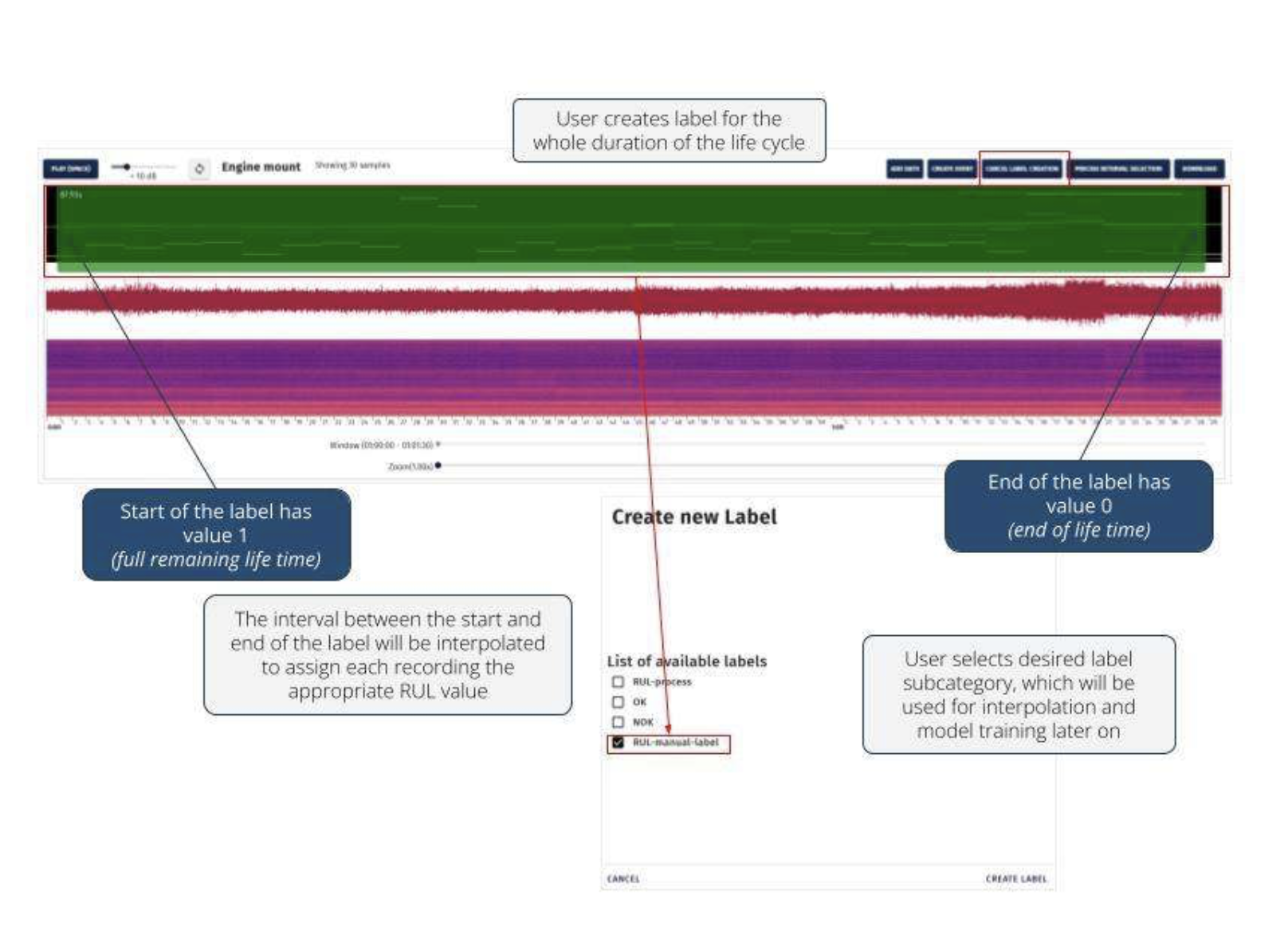
Data labeling for remaining useful life (RUL) prediction in the nGuard system (source: Neuron Soundware)
Technologies Used
- Artificial intelligence: Transformer model, Llama
- Data analysis: acoustic, vibration, and temperature data
- HPC infrastructure: NVIDIA DGX H100
- Edge computing: NVIDIA Jetson Orin Nano
- Platform: Neuron Soundware nGuard
- Edge device: Neuron Soundware nEdge PRO
Implementation
The project was carried out in 2025 as part of the European AI-MATTERS programme in cooperation with RICAIP Testbed Brno and CEITEC BUT. RICAIP Testbed Brno provided Neuron Soundware with access to the HPC infrastructure required for the computationally intensive training and validation of the new artificial intelligence model. Approximately 1,000 GPU hours were used during the project.
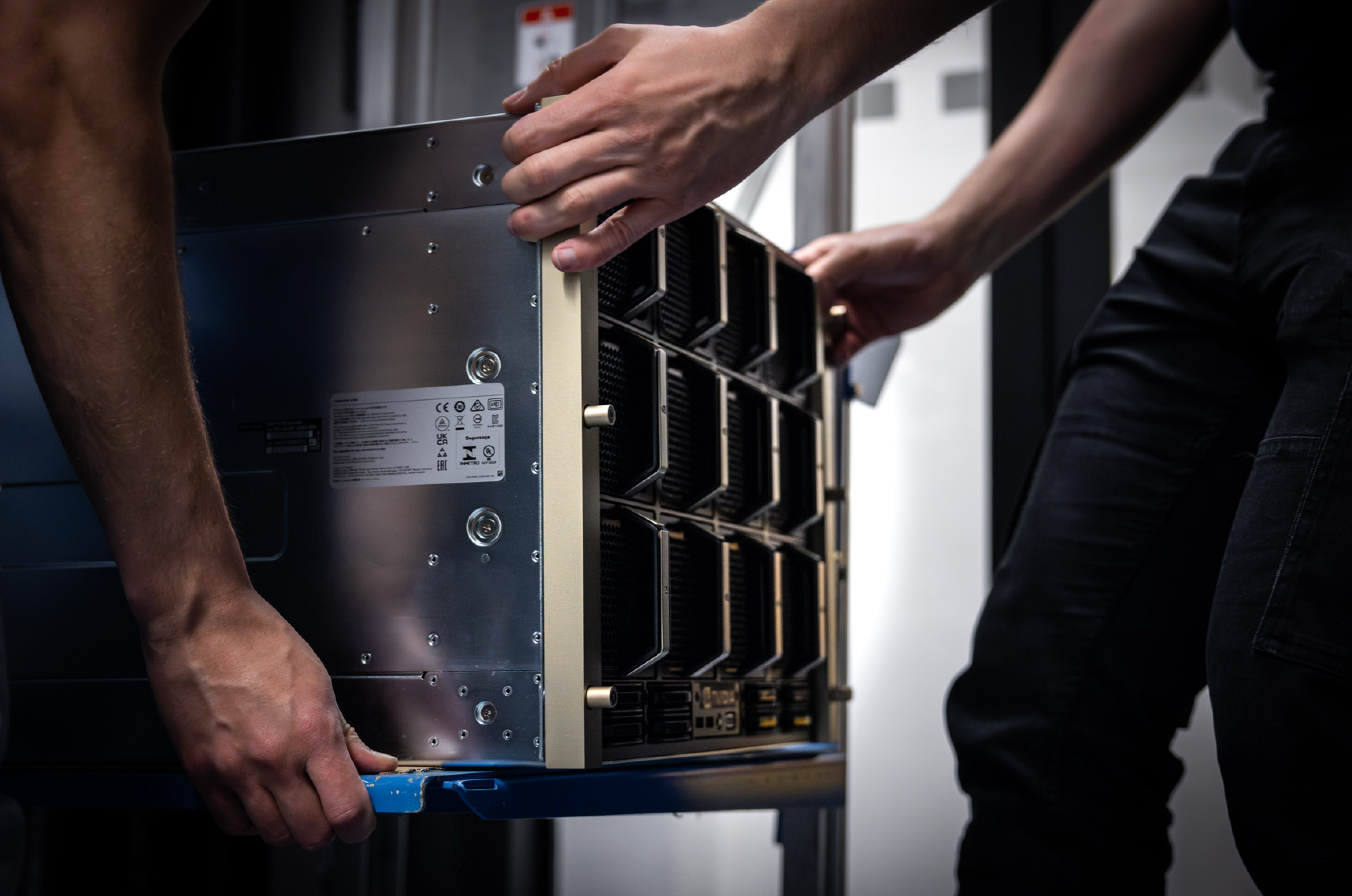
NVIDIA supercomputer at the CEITEC centre (source: CEITEC BUT)
