

 Share
Share
9. Sept. 2026
Acne is one of the most common skin conditions. It affects up to 85% of people during adolescence and, for many, persists into adulthood. Beyond its physical symptoms, it can also significantly affect self-confidence. Treatment often takes time, and some commonly used products can dry out or irritate the skin. Researchers at CEITEC Brno University of Technology (BUT) have developed specially modified cellulose microfibres that effectively inhibited acne-causing bacteria in laboratory tests. The fibres can be used in face masks. These findings could pave the way for new approaches to treating acne-prone skin.
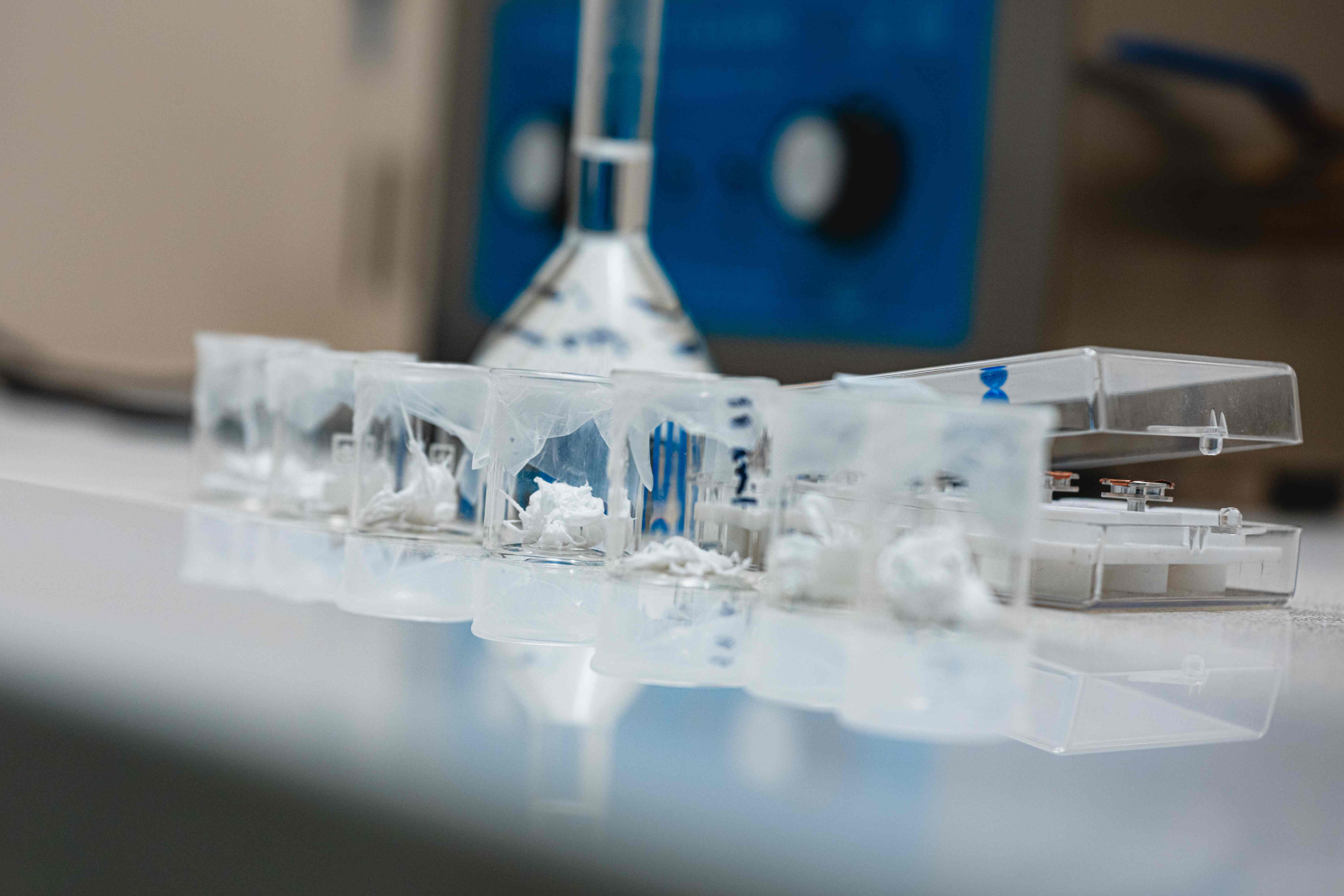
The material consists of cellulose acetate microfibres enriched with zinc oxide and subsequently treated with oxygen plasma. The zinc oxide is then gradually released into the skin, where its antibacterial action limits the growth of bacteria associated with acne. Unlike conventional products, the active ingredient is incorporated directly into the fibres and released gradually, allowing for a longer-lasting effect.
“The fibres retain high efficacy without any of the additives commonly found in commercial products. The material contains exactly what is needed to combat acne effectively, with no unnecessary ingredients. Our research showed that the fibres retain their antibacterial effect for at least a year after treatment,” says Martina Říhová of the Advanced Low-Dimensional Nanomaterials research group at CEITEC BUT, who led the research. This demonstrated long-term effect opens the door to commercial applications.
In the future, the same principle could also be used to treat other skin conditions complicated by bacterial infections, such as atopic dermatitis. The fibres could be incorporated not only into face masks for acne treatment but also into patches for smaller affected areas or dressings suitable for larger areas.
Fibres Made Much Like Cotton Candy
The researchers produced the microscopic fibres using centrifugal spinning. The same physical principle is used to make cotton candy, but in this case, fine polymer fibres are formed instead of sugar strands.
The breakthrough came from combining a method called Vapour Phase Infiltration, which enriched the fibres with zinc oxide, with subsequent oxygen plasma treatment. This treatment slightly disrupts the surface of the fibres, allowing the active substances to be released upon contact with water.
“We were the first in the world to demonstrate this procedure using cellulose acetate fibres,” notes Martina, who has been researching acne and its treatment for seven years. She and her colleagues published their findings in Small, one of the world’s leading scientific journals focusing on nanomaterials and nanotechnology.
Researchers from Brno and Spain Joined Forces
Several research teams from different institutions contributed to the material’s development. “Our team, led by Jan Macák, was responsible for preparing the fibres. We then took them to San Sebastián in Spain, to Mato Knez’s team at nanoGUNE, where they carried out the vapour phase infiltration. Next, Lenka Zajíčková’s team at CEITEC BUT treated the fibres with oxygen plasma. Finally, Zbyněk Heger’s team at the Department of Chemistry and Biochemistry at Mendel University conducted the antibacterial testing,” says Martina Říhová, describing the collaboration.
The research took more than a year. Before the new material can enter routine use, it will need to undergo further biological testing, followed by clinical trials to verify its safety and effectiveness in treating patients.
Author: Jan Němec
Photogallery


Expert
