

 Share
Share
21. July 2026
When a heatwave hits, people look for shade and a glass of water. Plants do not have that option. Yet most of them are able to cope with drought, heat, or salty soils. How? The answer lies underground. For many years, Jan Hejátko from CEITEC Masaryk University and his team have been studying how roots perceive their surroundings, make decisions about their growth, and help plants survive even under challenging conditions.
When we think of plants, most of us imagine leaves or flowers. But you say that the most fascinating part of a plant’s life happens underground. Why?
Because that is often where the decision about whether a plant survives is made. What we see above ground is only one part of the plant, and its final appearance is the result of a whole range of processes that have also taken place in the roots.
Roots are constantly exploring their surroundings. They detect where water is available, where nutrients can be found, or where conditions are becoming less favourable. Based on this information, the plant adjusts its growth and uses hormones to communicate signals to other parts of its body.
At school, we learned that roots anchor plants in the soil and absorb water and nutrients. Are roots simply “straws for water”, or can they do much more?
Roots are far from being a passive supply system. They can respond very sensitively not only to the availability of water and nutrients, but also to mechanical obstacles or increased salt concentrations in the soil.
Based on this information, roots decide, for example, where to form new lateral roots or how quickly the entire root system should grow. A plant cannot move to a different location, but it can significantly change the way it invests energy into its growth.
That is exactly what we are trying to understand – how plants make these decisions at the cellular and molecular level.
We have experienced another wave of heat and drought in recent weeks. What happens inside a plant at such a moment? Which processes are triggered first, and what determines whether the plant can cope with the stress?
Plants constantly monitor their environment. As soon as water or nutrient availability changes, or salt levels in the soil increase, root cells detect these changes very quickly. A complex signalling network is activated – including plant hormones that regulate further processes, such as the production of so-called reactive oxygen species. These molecules help coordinate the plant’s response to stress, including the regulation of root growth.
At the same time, the plant changes its priorities. It slows down processes that can wait and redirects its energy towards defence mechanisms that help it survive unfavourable conditions. It is not a single mechanism, but rather a coordinated effort involving hundreds of genes and other molecules.
Your latest study describes one of the mechanisms that helps plants cope with stress. What did you discover?
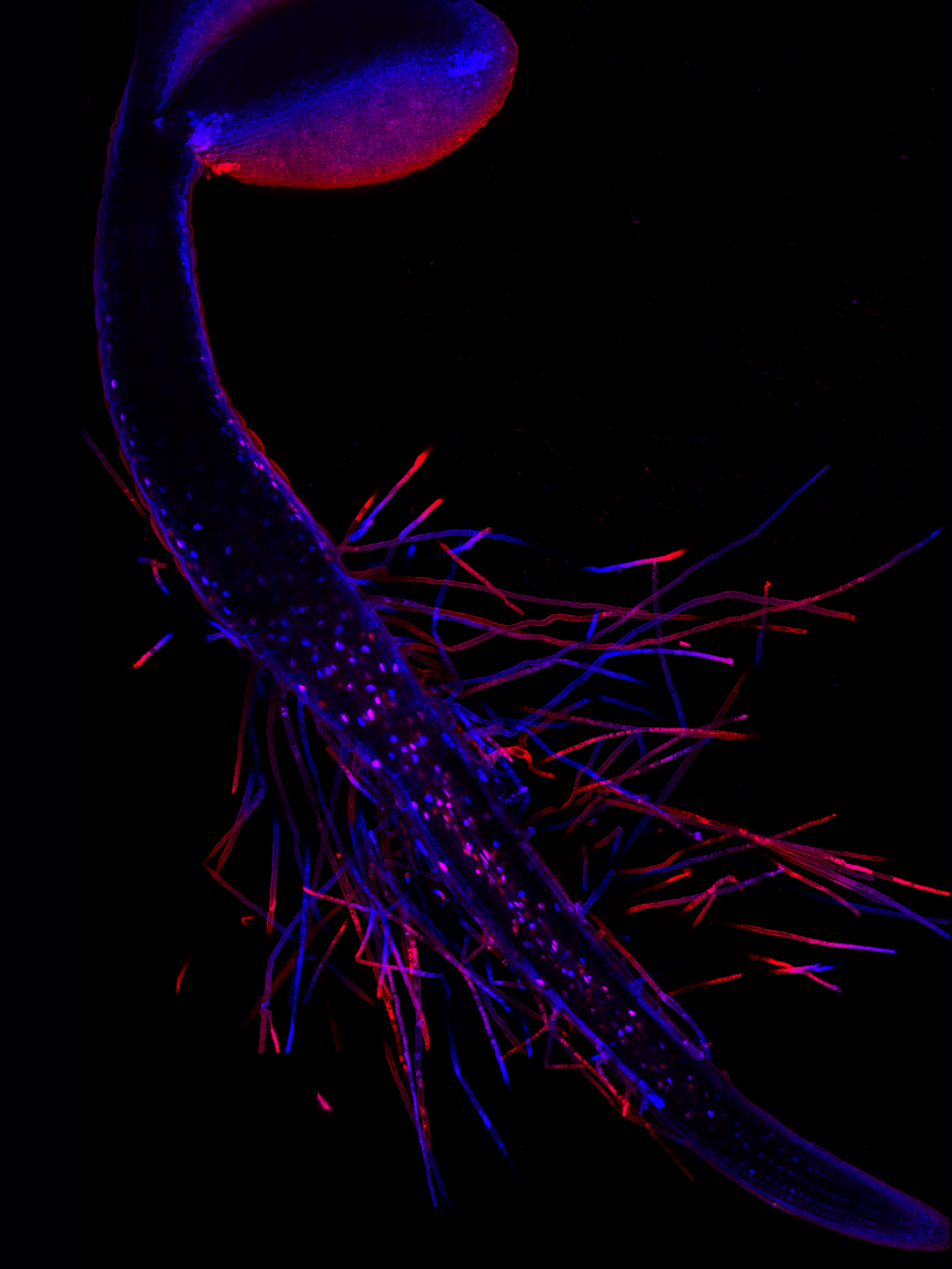
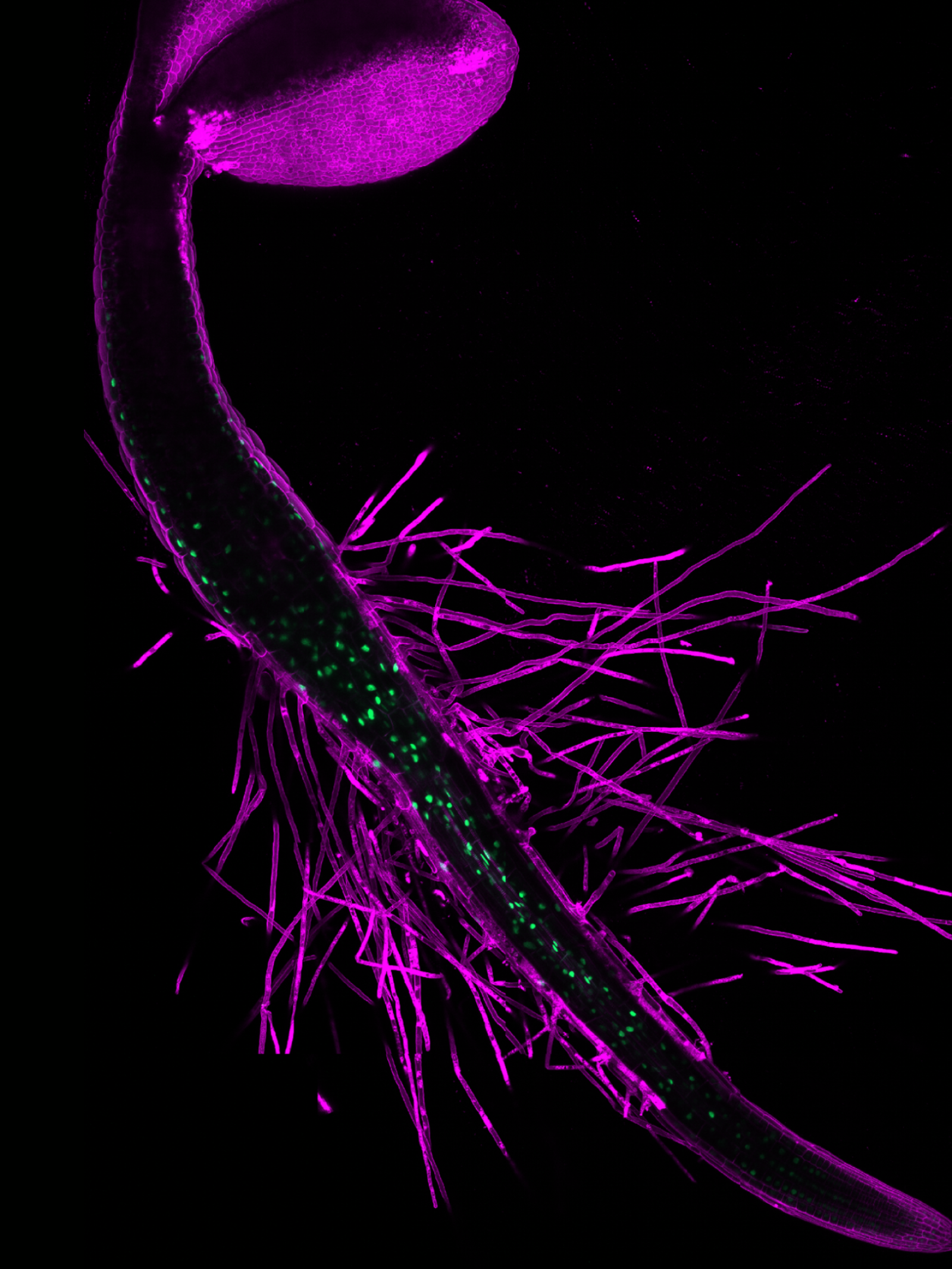
We found that an important role is played by a protein called DIR13, which connects several processes that we previously knew were linked but did not fully understand. DIR13 promotes the production of lignans – natural compounds known, among other sources, from flax seeds and sesame. In plants, however, lignans are not important only as antioxidants that protect cells from damage. Our results show that they also help maintain the balance of reactive oxygen species, thereby contributing to the regulation of root growth and the plant’s response to stress.
As the European Union is now opening the door to new genomic techniques (NGTs), there is often discussion about crops that are more resistant to drought, diseases, or climate change. Does this mean that the solution lies primarily in modifying genes? Or do we first need to understand the mechanisms that nature has already developed?
I believe the second approach is crucial. Nature has had hundreds of millions of years to develop effective solutions. We are only beginning to learn how to read them. Basic research helps us understand how plants regulate their growth and respond to stress. Without this knowledge, it would be very difficult to breed more resilient crops in a targeted way.
The European Parliament recently approved new legislation on the use of new genomic techniques in plant breeding. It is an important step, but technologies alone are not enough. To use them effectively and safely, we first need to understand which genes and regulatory mechanisms are truly important. And this is precisely where fundamental research contributes.
To end on a lighter note: if plants could talk, what do you think they would complain about most today – in a world of increasingly frequent heatwaves and climate change?
I think they might tell us something like this: “After causing climate change and these unbearable heatwaves, please do not expect us to deliver record-breaking yields. You would not be able to run a marathon at 40 °C either – at least not at full speed… if at all.”
Photogallery
Author

Expert
