

 Share
Share
22. June 2026
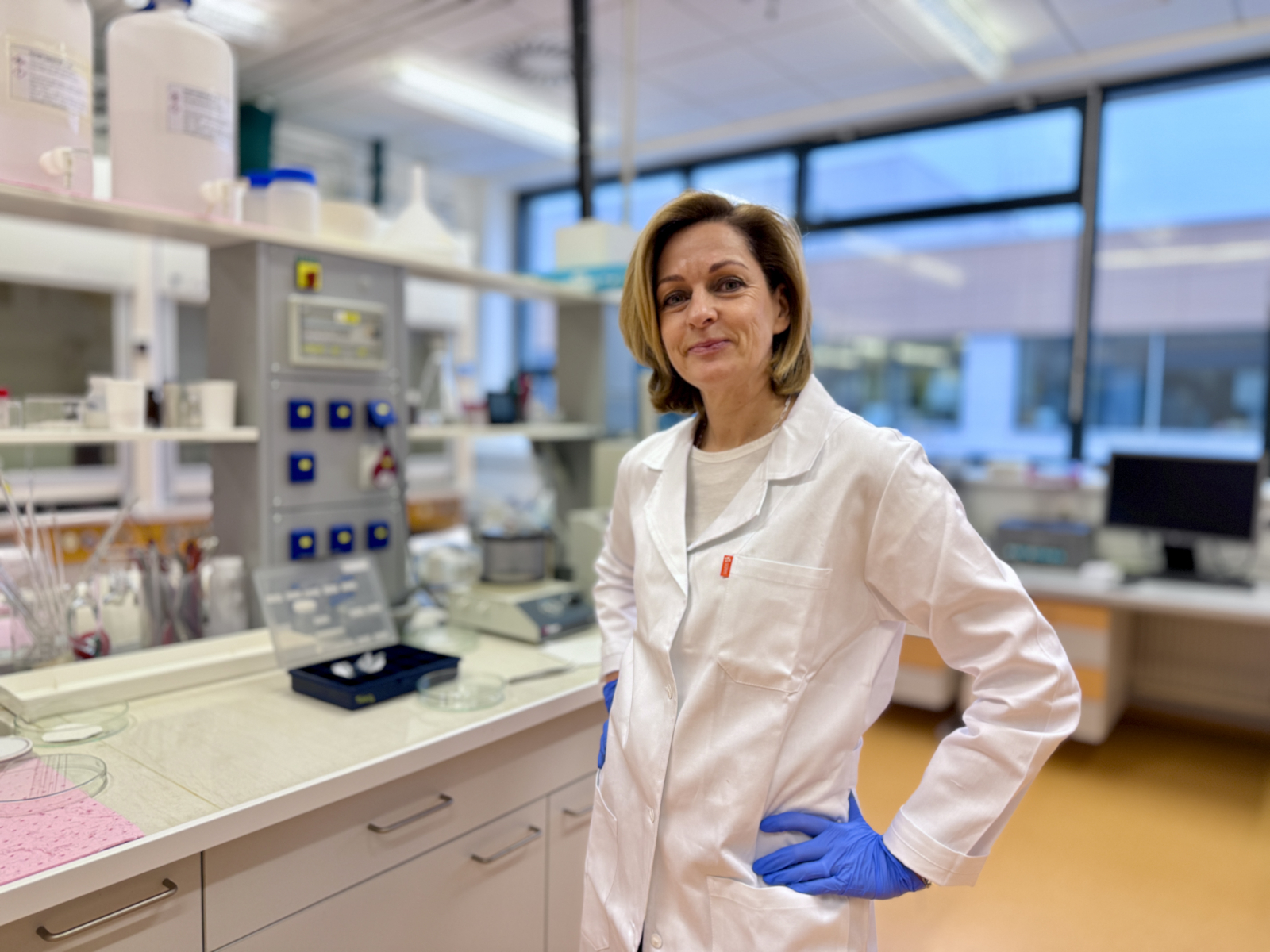
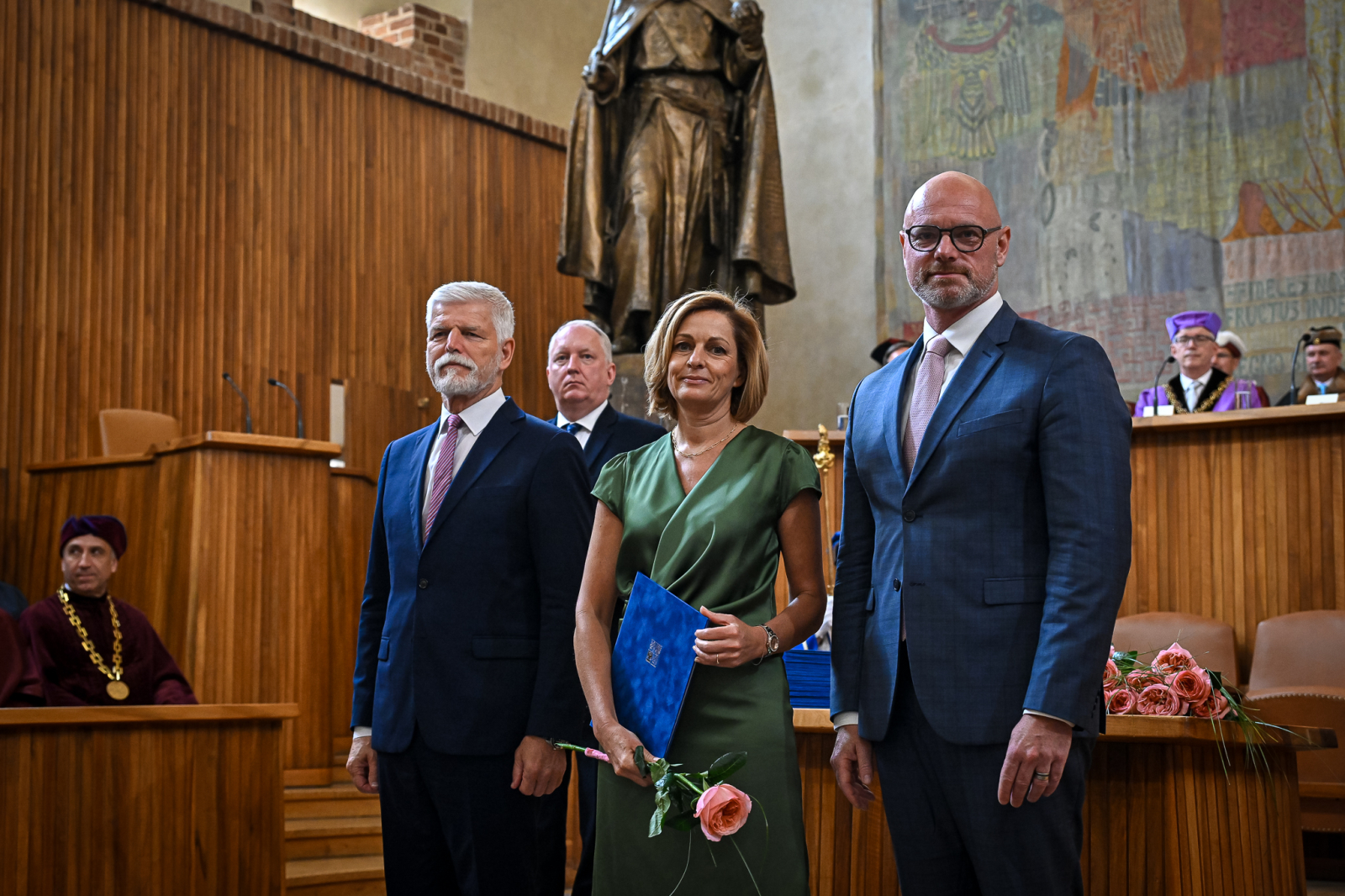
When materials scientist Klára Částková received her professorial decree from the President of the Czech Republic this June, many people warned her that she had reached the pinnacle of her career, beyond which “there is nowhere higher to go.” She herself, however, says with a smile that she sees the title primarily as a commitment to her students and colleagues. And also to the field of advanced ceramic materials, to which she has dedicated her professional life.
“Professor Jaroslav Cihlář, my great role model and in many ways my scientific father, jokingly told me: ‘Klára, a professorship is the peak—there’s nothing waiting for you after that.’ Some students even thought that people become professors just before retirement, that it is essentially the final stop. But I certainly don’t feel like I’m at the end…” says Klára Částková with a smile when reflecting on her newly acquired title.
An event that many academics regard as a major life milestone, she sees more as a responsibility. “Suddenly, you start asking yourself what will actually remain after you. Professor Cihlář mentored several future professors and many successful scientists. To me, that is the real legacy. I would like to leave behind a team of independent and talented people who will develop their own research groups and continue advancing the field,” Částková adds.
Although she is now recognized as an expert in ceramic materials, her path to the field was not straightforward. She first studied Food Technology and Biotechnology at the Faculty of Chemistry, Brno University of Technology. She was originally drawn to disciplines connected with the environment and even considered studying medicine. “I was always attracted to things that were alive. In the end, however, Professor Cihlář, who supervised my master’s thesis, introduced me to the topic of biomaterials, specifically hydroxyapatite. And I have been working on it ever since,” she recalls.
When most people hear the word ceramics, they think of a mug or a floor tile. In the case of advanced ceramics, however, we are talking about an extraordinarily diverse group of materials with applications extending far beyond medicine. “Ceramic biomaterials combine several advantages. They are biocompatible, meaning the body tolerates them well, and some are even bioactive. This means they can trigger reactions in the body that support healing or integration with surrounding tissue,” Částková explains.
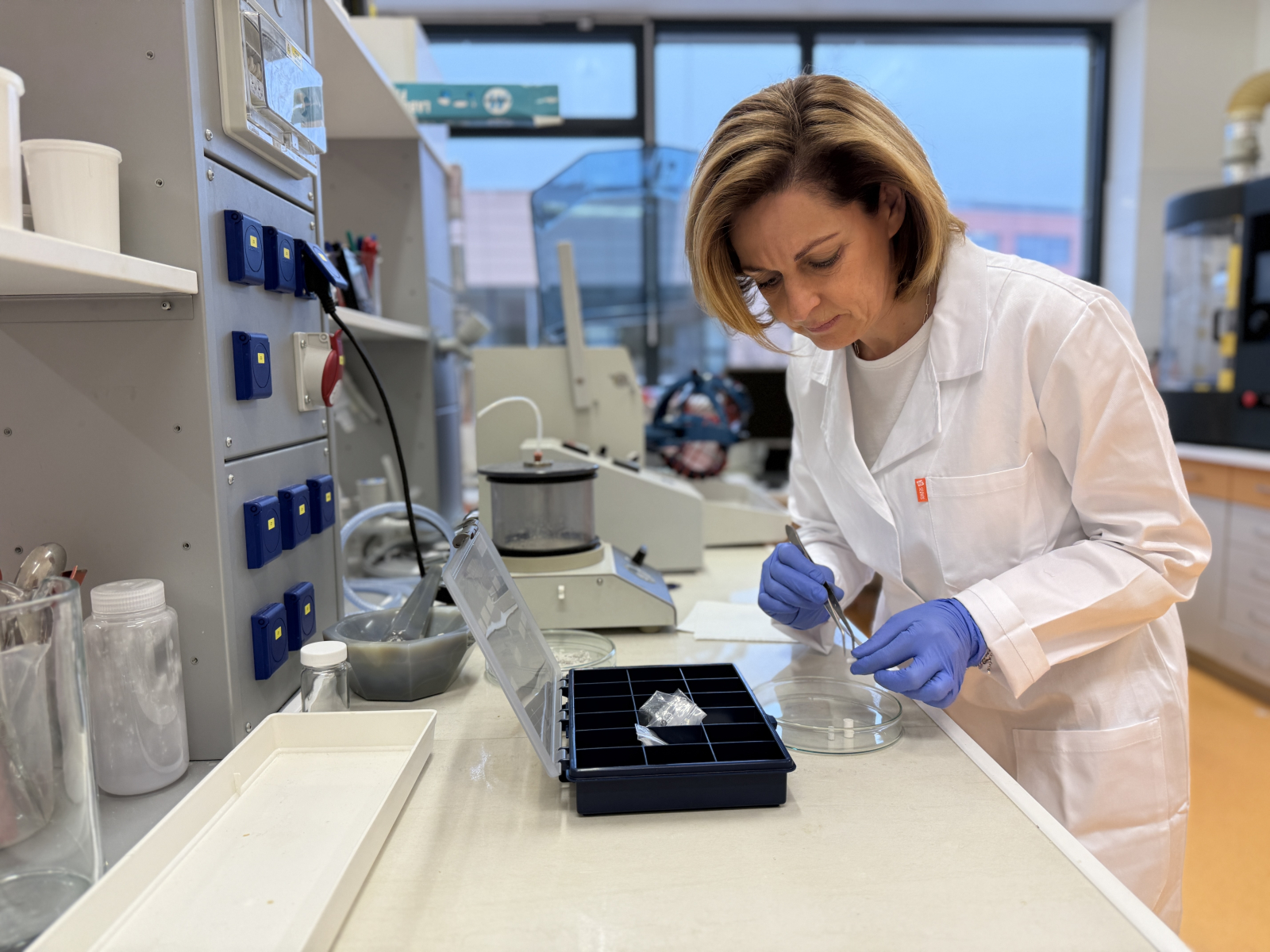
Today, her research at the Faculty of Mechanical Engineering and CEITEC covers a much broader area of advanced ceramics. Biomaterials, however, remain especially close to her heart. “When we collaborate with physicians and see real patients and specific applications, our work takes on a completely different dimension. Basic research is often far removed from practical use. Here, however, you receive direct feedback and can see that the results may genuinely help people,” says Částková.
Science as a Common Language
The development of modern biomaterials relies on collaboration among materials engineers, chemists, physicists, physicians, and many other specialists. And interdisciplinary work seems to be something Professor Částková particularly enjoys.
“Every discipline has its own terminology and way of thinking. When experts from different fields meet for the first time, you often feel as though they are speaking different languages. Yet it is precisely these connections that produce the most interesting results today,” she believes.
Although scientists around the world are striving to imitate the natural structures of the human body, nature remains one step ahead. “We have not surpassed nature yet. Bone, for example, is an extraordinarily sophisticated composite material that combines different structures and properties. Today, however, we already have technologies that allow us to create similarly complex structures, so we are gradually getting closer. On the other hand, technological development can achieve many things, but human aging also has its purpose, and not everything can be replaced. Even if the biomechanics of our bodies function perfectly, we still have a brain that ages in a way that remains irreplaceable,” says Částková, tempering visions of immortality.
One of the greatest opportunities she sees for the coming years lies in multi-material 3D printing of ceramics and their composites. “We are trying to combine different materials so that they achieve the desired complex characteristics. For example, the outer part of a biomaterial could be mechanically strong, while the inner part could be bioactive, biodegradable, and capable of interacting with the body. We still face a number of technological challenges, especially at the interfaces between materials with different physicochemical properties. But it would be amazing if we could master the entire process—from preparing printing precursors to producing the final multi-material structure for a specific application,” Částková says, adding that the significance of such technology would be enormous both for fundamental research and for industrial applications.
Although science occupies a substantial part of her life, she strives to maintain the much-discussed work–life balance. “I am one of those people who keep thinking about work in the evenings and on weekends, often exchanging ideas with colleagues on WhatsApp even during family activities,” she laughs. In the same breath, however, she adds that she cannot imagine recharging her “scientific batteries” without sports, friends, and family.
“You have to make time for yourself. Go cycling, play tennis, or spend time with the people close to you. That is the only way to maintain a positive relationship with your work,” she concludes.
And she is probably doing it right, because she speaks about her work with such enthusiasm and energy that it is almost certain that, in her case, the idea of a “final stop after becoming a professor” is definitely not on the horizon.
Prof. Ing. Klára Částková, Ph.D.
She graduated in Food Technology and Biotechnology from the Faculty of Chemistry at Brno University of Technology, where she also completed her doctoral studies focusing on the properties of bioceramic materials. Since 2001, she has worked at the Institute of Materials Science and Engineering, where she currently heads the Department of Ceramics and Polymers. Since 2012, she has also been conducting research at CEITEC BUT as a member of the Advanced Ceramic Materials research group. This June, she received her professorial decree from the President of the Czech Republic.
Her expertise focuses on the development of advanced ceramic materials, polymers, and composites for specific biomedical, electronic, and catalytic applications. She is the author of dozens of highly cited publications and serves as both guarantor and lecturer of key courses in the field of non-metallic materials. She is a member of the American Ceramic Society and the European Ceramic Society.
Author: Iveta Hovorková
Photogallery
Expert
