

 Share
Share
24. Mar. 2026
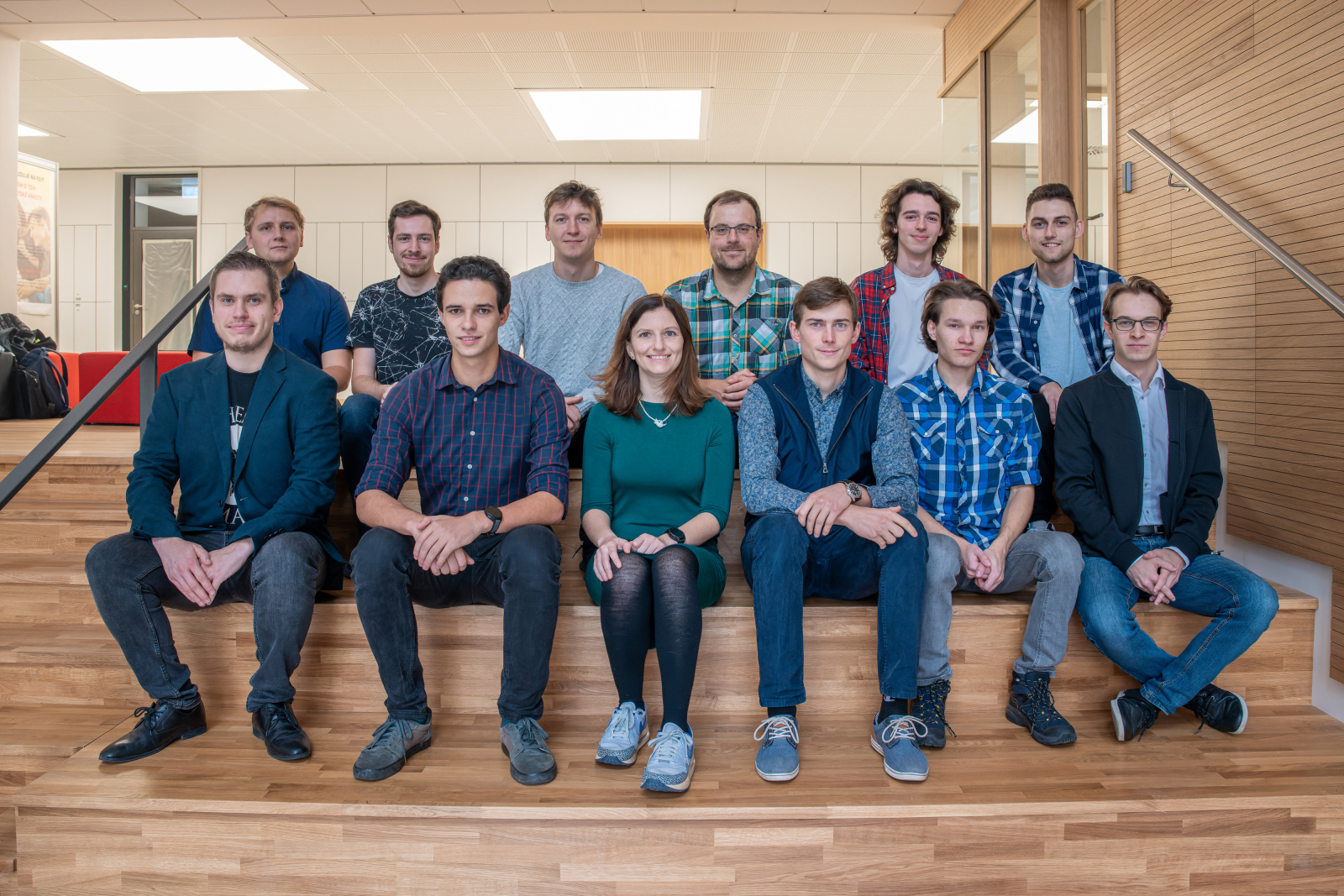
Since the beginning of this year, a project to develop a light-based electron microscope, LightEM, has been underway at CEITEC Brno University of Technology (BUT). The principal investigator is Andrea Konečná from CEITEC BUT and the Faculty of Mechanical Engineering BUT, who has secured support for the project through the prestigious ERC CZ program. Over the next five years, her research team aims to develop and test a light-based electron microscope. This technology would allow scientists to adaptively modulate the electron beam during experiments or observe processes over time – capabilities that are not possible with conventional electron microscopes.
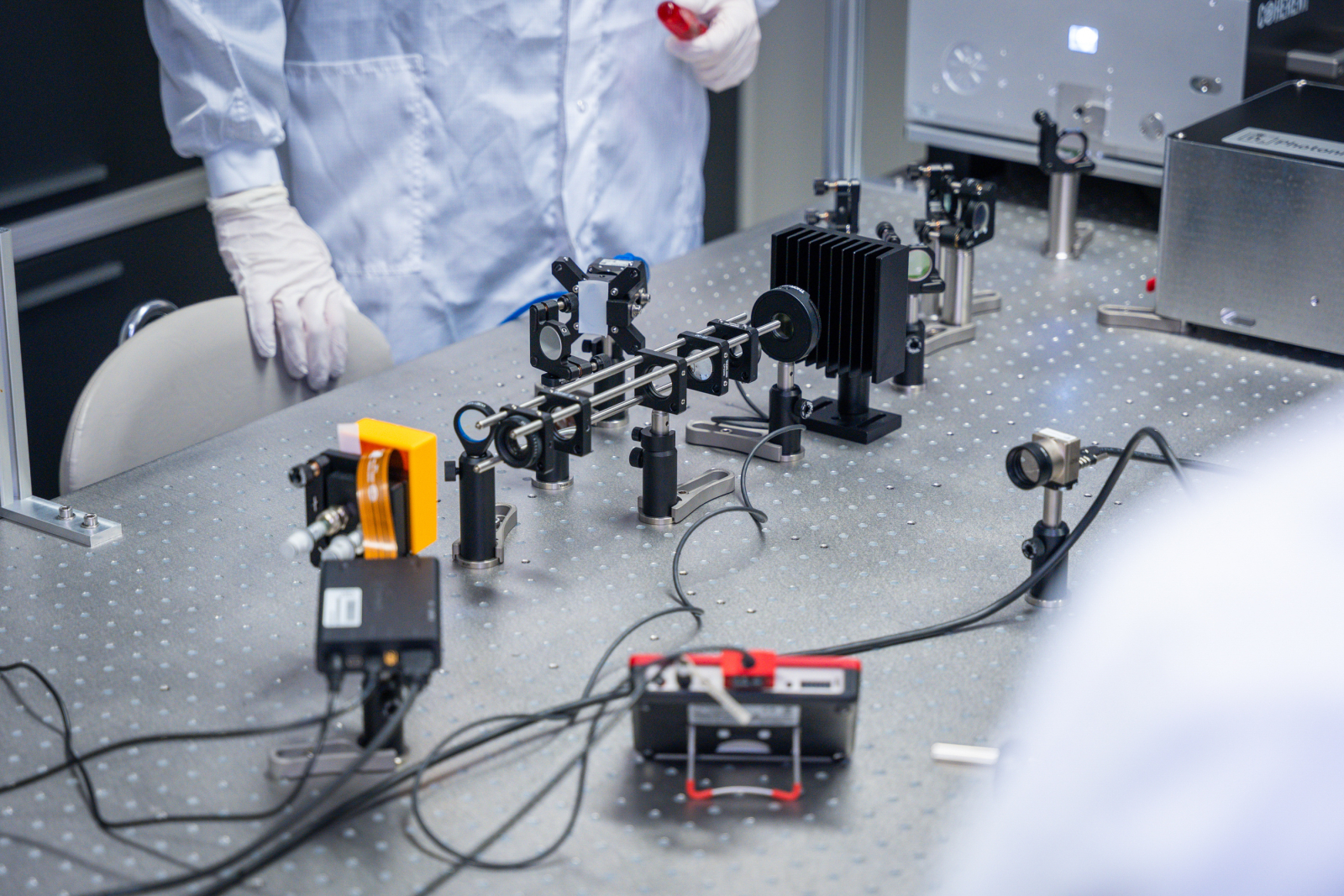
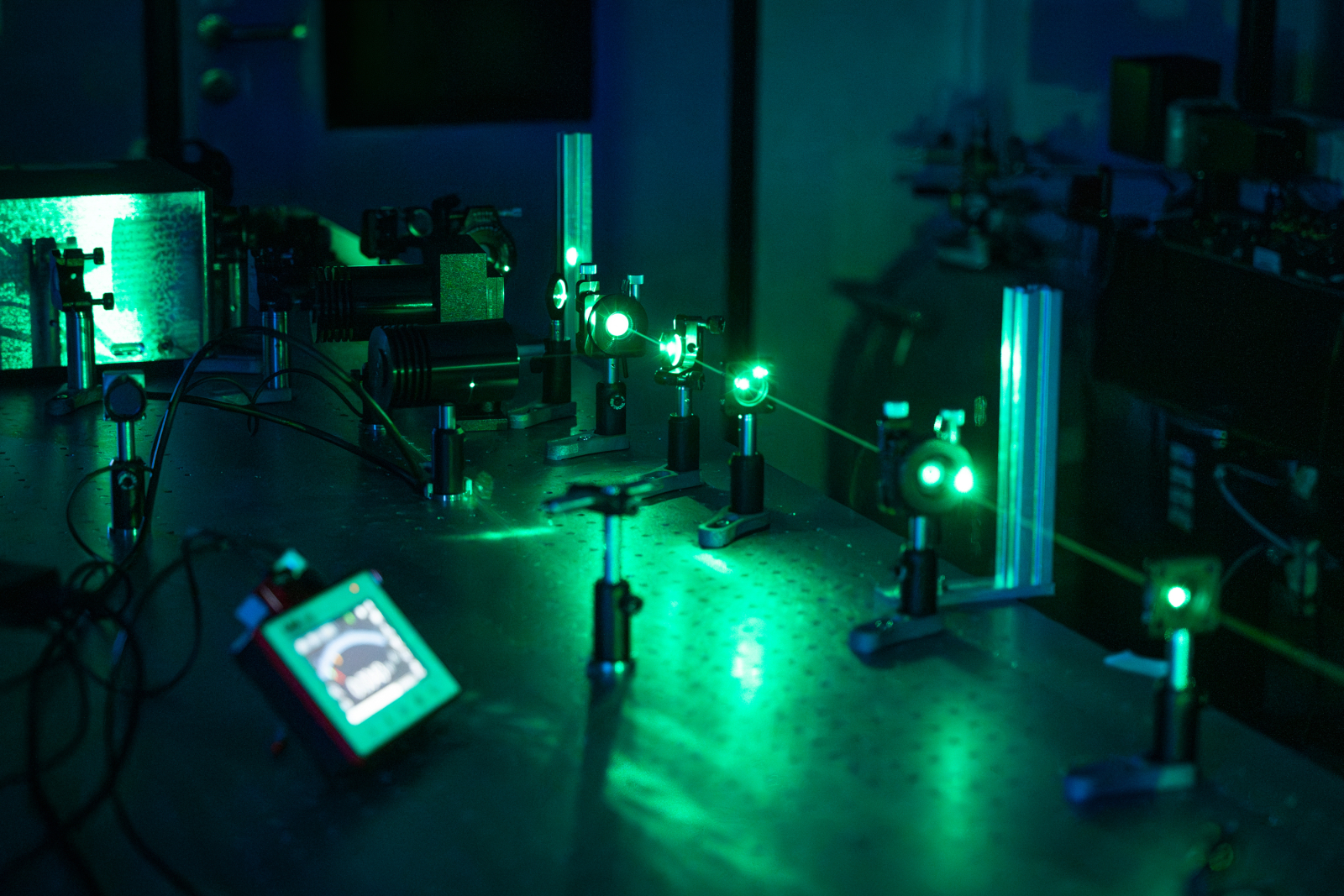
Over the coming five years, Andrea's team will work on improving existing electron microscopes. Her project, Light-Based Electron Microscope (LightEM), focuses on the interaction between electrons and light and could help overcome some of the limitations of classical electron microscopy. “We are trying to improve the electron beam. What we want to do is, figuratively speaking, shoot an intense laser beam into the microscope and influence electrons using light. Simply put, we aim to create adjustable ‘glasses’ for the electron microscope using light and change how optics is traditionally done in electron microscopy,” explained Andrea.
According to her, this approach should bring higher resolution, new imaging techniques, and the ability to study dynamic processes. “With light, the resolution should be even better. Moreover, we could image sensitive samples, which is usually problematic. We could also observe processes over time – stimulate a sample with light, for example by heating it, and then dynamically monitor what is happening,” she added.
The microscope will offer better resolution and new imaging techniques
Andrea points out that standard electron microscopes use magnetic lenses to image and focus electrons onto a sample, but these lenses have imperfections that limit resolution. The best electron microscopes in the world therefore use many lenses – similar to professional camera lenses – to compensate for these defects and achieve atomic resolution. A light-based electron microscope could change this.
“We would like to demonstrate that such complex lens systems – whose production, alignment, and operation are very expensive and demanding – could be replaced by a specially modulated laser beam. Compared to conventional lenses, a laser beam can be used not only for magnification, reduction, or aberration correction, but also offers great flexibility and the possibility to create new ‘exotic’ types of electron beams. Electrons don’t have to be focused only into a point; we can create a beam shaped like a ‘donut.’ In addition, the beams could be modulated quickly and adaptively,” said Andrea.
According to her, such a modified microscope could be used in many fields. “Thanks to the possibility of light-based modulation of the electron beam during experiments, we could more efficiently image sensitive samples, which is crucial for biology. Or we could detect defects in materials and semiconductor components more quickly,” she added.
This is highly unique research with no equivalent in scope, either in the Czech Republic or abroad. According to Andrea, only a few studies on the topic have been published so far. “At the time I was writing the grant, only a few theoretical and experimental papers had demonstrated the basic concept – that electrons can be focused or otherwise modulated using a laser beam. But they did not go as far as we would like, namely to create a prototype microscope where part of the standard electron optics is replaced by a laser beam,” she said.
Unique research supported by the Ministry of Education
The project’s strong potential is confirmed by the fact that Andrea Konečná received an ERC CZ grant from the Czech Ministry of Education, Youth and Sports. The program aims to support researchers who applied for a European ERC grant, succeeded in evaluation, but were not funded due to limited resources.
“There is enormous competition within the European ERC program. I submitted this project twice and both times advanced to the second round, where I presented it and discussed it with the panel. Each time I received an A rating, but unfortunately without funding. The Ministry looks at these European evaluations and ultimately supported my project. To be honest, it is mainly about prestige, because otherwise the conditions are the same. The project still runs for five years, and the Ministry supported it in full, so we receive the same funding we would have received from the European Union,” Andrea noted.
Two prestigious grants – and motherhood alongside
A few years ago, Andrea Konečná also received the prestigious JUNIOR STAR grant from the Czech Science Foundation, which supports outstanding early-career researchers. She is currently the principal investigator of two major projects, while also balancing motherhood since last year.
“Maybe it’s still too early to evaluate, because my daughter is still small and I was on maternity leave for some time. But honestly, it is demanding. At the same time, the flexibility of our work makes it easier than in other professions. Moreover, the JUNIOR STAR project is already in its fourth year, and several excellent PhD and master’s students have joined during that time, so many smaller projects were able to continue even during my maternity leave. I’m also happy that several of these colleagues will now join the ERC CZ project,” she concluded.
A major success for CEITEC Brno University of Technology
“I greatly appreciate the success of Andrea Konečná, who managed to succeed in a highly competitive environment. It is the result of long-term high-quality scientific work and significant personal dedication. At the same time, I am pleased that at BUT, we are systematically creating conditions to support excellent research. One of the key tools is the Research Excellence Support Fund, through which we motivate and support researchers in preparing applications for prestigious grants such as ERC, EXPRO, JUNIOR STAR, or MSCA. These are precisely the types of projects that push the boundaries of knowledge and strengthen the international standing of our university,” said Martin Weiter, Vice-Rector of BUT for Research and Knowledge Transfer.
Author: Zuzana Hübnerová
Photogallery

Expert
