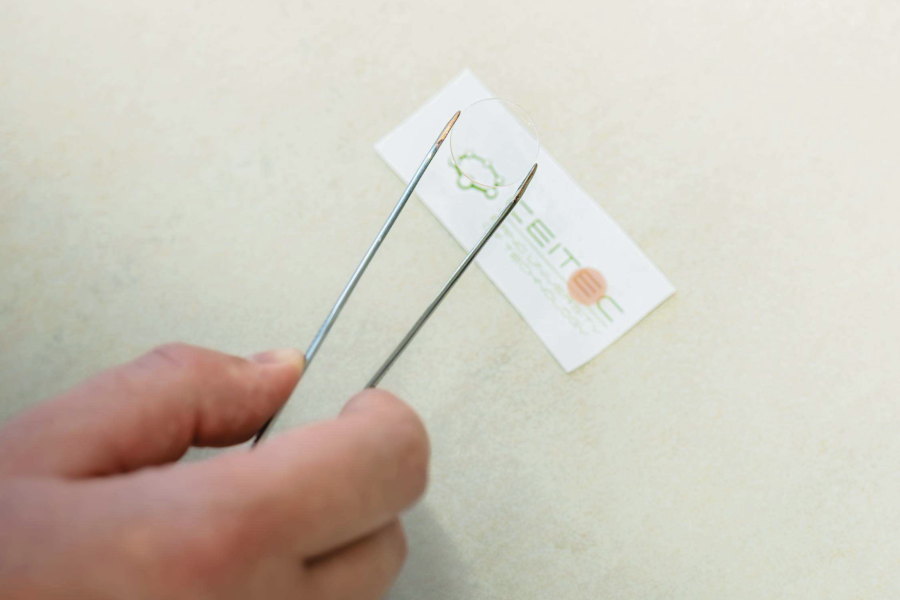
We have established a strong position in transparent ceramics research, achieving internationally recognized results since the early days of this research field. Today, we build on this long-standing expertise to develop new generations of materials, including transparent and luminescent high-entropy ceramics. Processing of transparent ceramics requires high-purity raw materials and precise process control, as even minimal amounts of impurities or residual pores can significantly affect their optical properties; PhD students and early-career researchers, whose projects have received recognition in scientific and talent competitions, also make important contributions to this research. Through TriCera, we have taken the development of ceramic–metal composites beyond academic research, exploring practical applications for materials that combine the high hardness of ceramics with the properties of metals—protection against armour-piercing projectiles to security structures and safes. Our connection with the European research and industrial landscape is further strengthened by the GlaCerHub project, which is building an innovation ecosystem for glass and ceramics and deepening collaboration between CEITEC BUT and the FunGlass centre in Trenčín. The project provides technical and soft-skills training, research mobility opportunities, and a joint doctoral programme, supporting the development of early-career researchers while already delivering tangible scientific results and strengthening links between research and industry
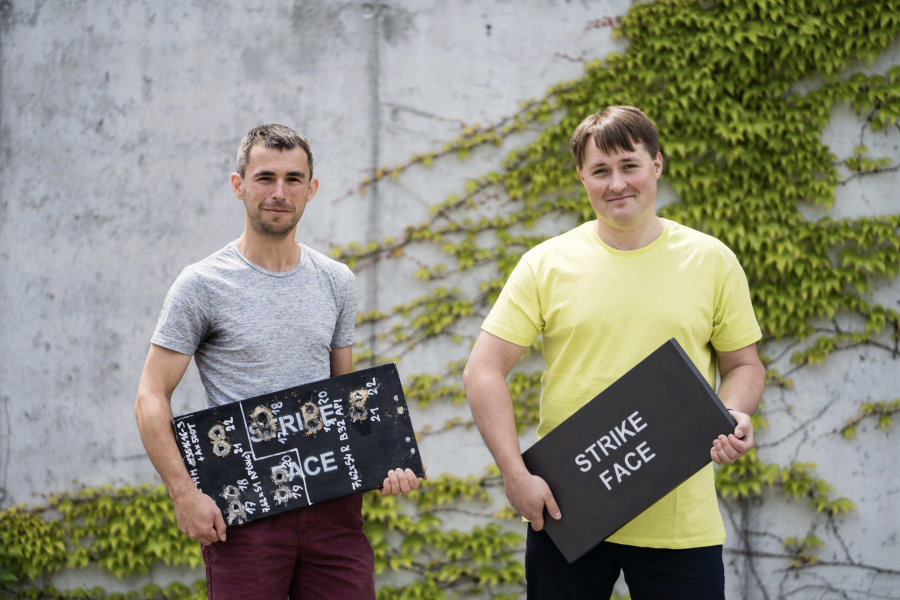
TriCera emerged from long-term research on ceramic–metal composites at CEITEC BUT. For nearly a decade, Martin Kachlík and Jakub Roleček worked on developing a material that creates a strong bond between non-porous ceramics and aluminium alloys. The resulting composite offers high mechanical and thermal resistance and was originally developed primarily for ballistic protection. In 2021, the researchers transferred part of their development activities to the newly established limited company TriCera to accelerate the technology’s path towards specific applications. Its potential extends well beyond military applications: the ceramic–metal composite could be used in police protective shields, security structures, or a new generation of safes, where it could offer lower weight than conventional steel and concrete solutions while maintaining high resistance. TriCera’s development also illustrates the challenges involved in bringing an entirely new material into real-world use. Mastering its production alone is not enough—together with industrial partners, the researchers identify areas where its specific properties can provide a genuine advantage and then adapt the solution to the requirements of each application.
GlaCerHub brings together research, industry, and other partners to accelerate the transfer of new knowledge in glass and ceramics into practice. Funded by the Horizon Europe programme, the project connects six partners from the Czech Republic and seven from Slovakia, including CEITEC BUT and the FunGlass Centre in Trenčín. The consortium benefits from the expertise of technology transfer specialists from the international consultancy Inveniam Group. The ecosystem also involves industrial companies, institutions supporting innovation and talent development, and technology transfer experts, combining research capabilities with industry insights into current needs and practical experience in bringing new technologies to market. The aim is to create a sustainable environment in which researchers and companies can jointly develop new technologies and identify specific applications. Since the project began, collaboration between CEITEC BUT and FunGlass has deepened significantly. A key component of GlaCerHub is its extensive training programme, covering glass and ceramic processing and additive manufacturing as well as soft skills, technology transfer, project management, and entrepreneurship. The project also supports research stays and joint doctoral studies through a cotutelle programme, in which PhD students work under the supervision of experts from both institutions. The collaboration is already delivering tangible scientific results: throughout the project, students participating in the cotutelle programme have worked alongside experienced researchers and contributed to publications in leading materials science journals, such as the Journal of the European Ceramic Society. GlaCerHub thus strengthens not only research itself, but also international collaboration, the development of young talent, and links between academia and industry.