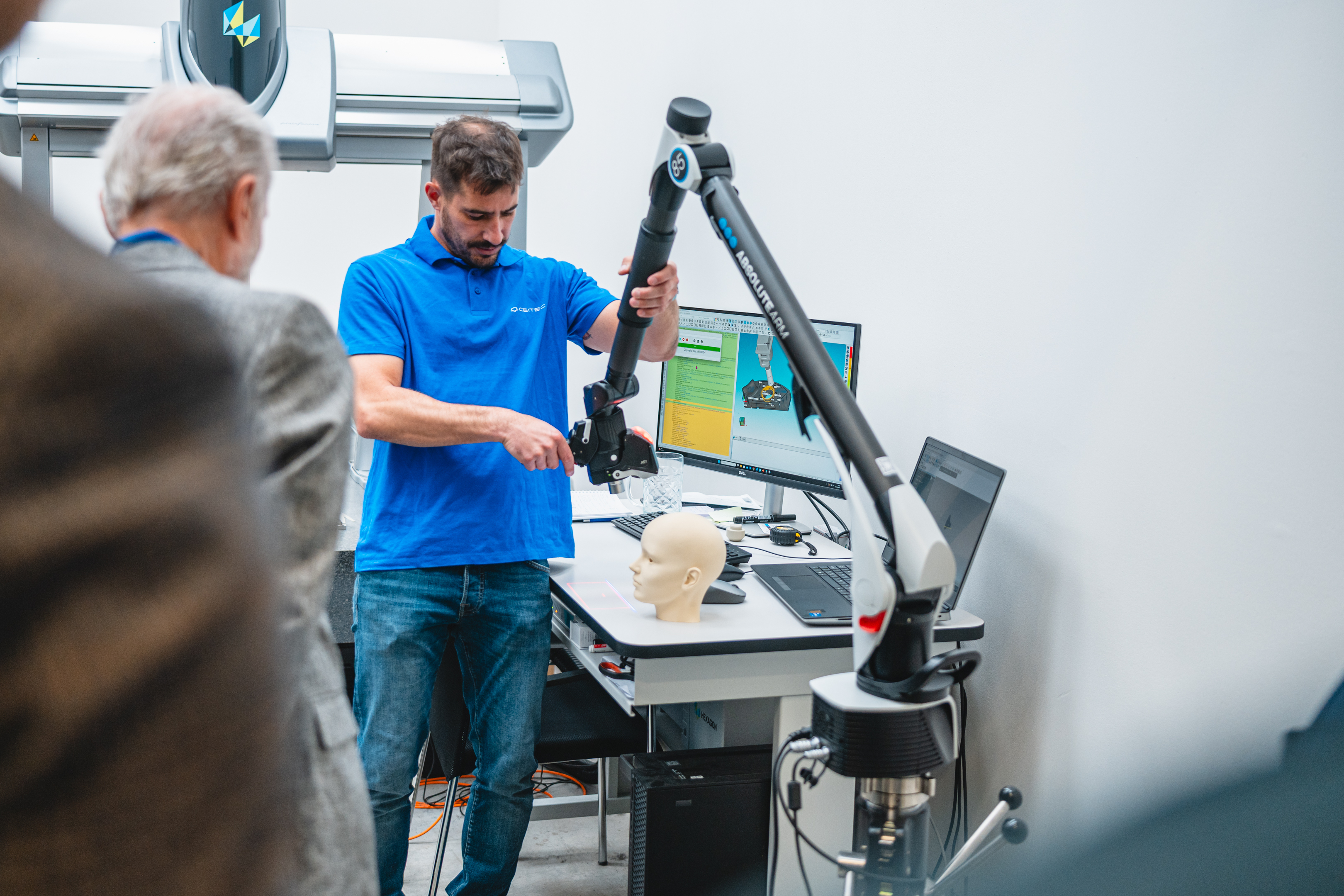
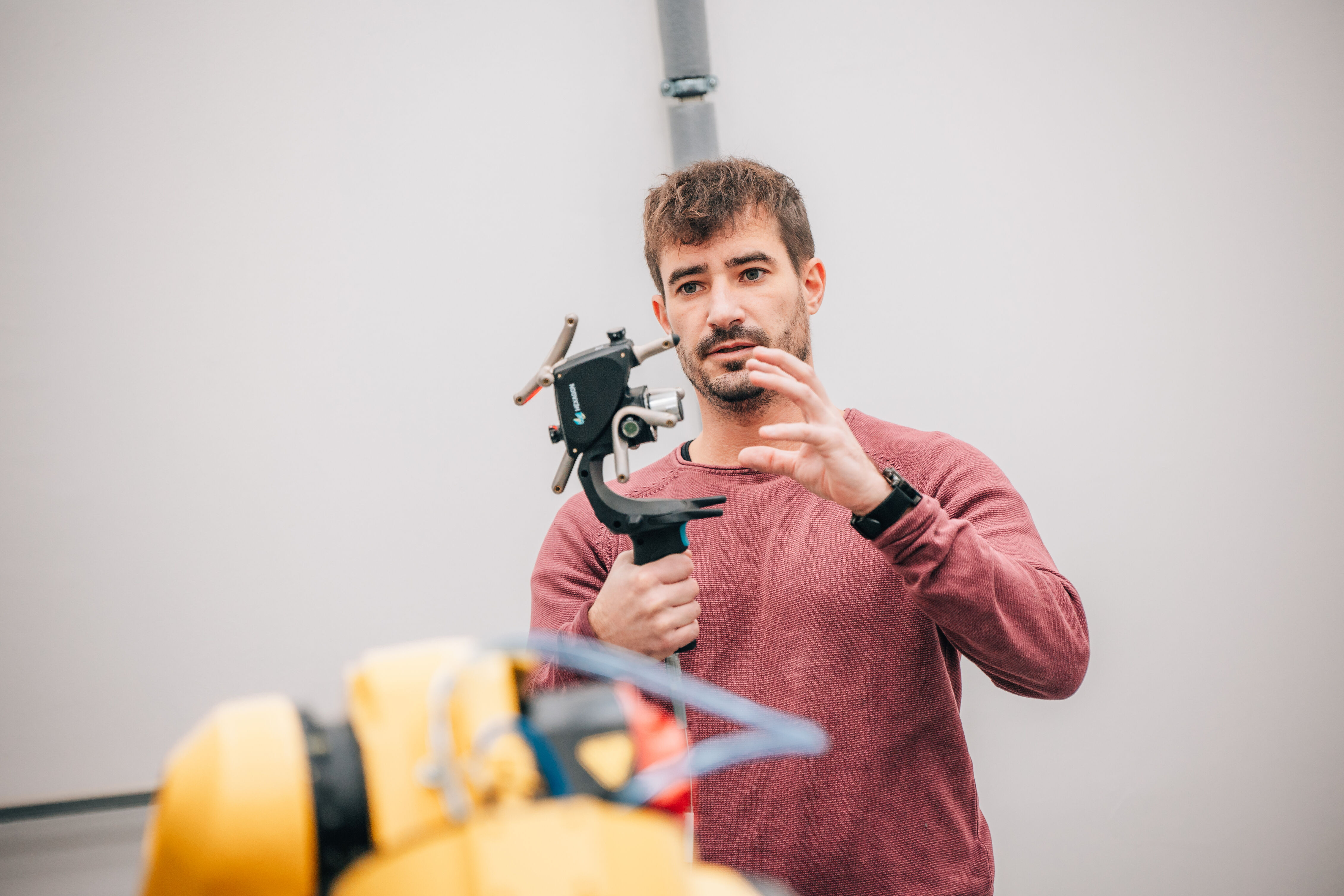
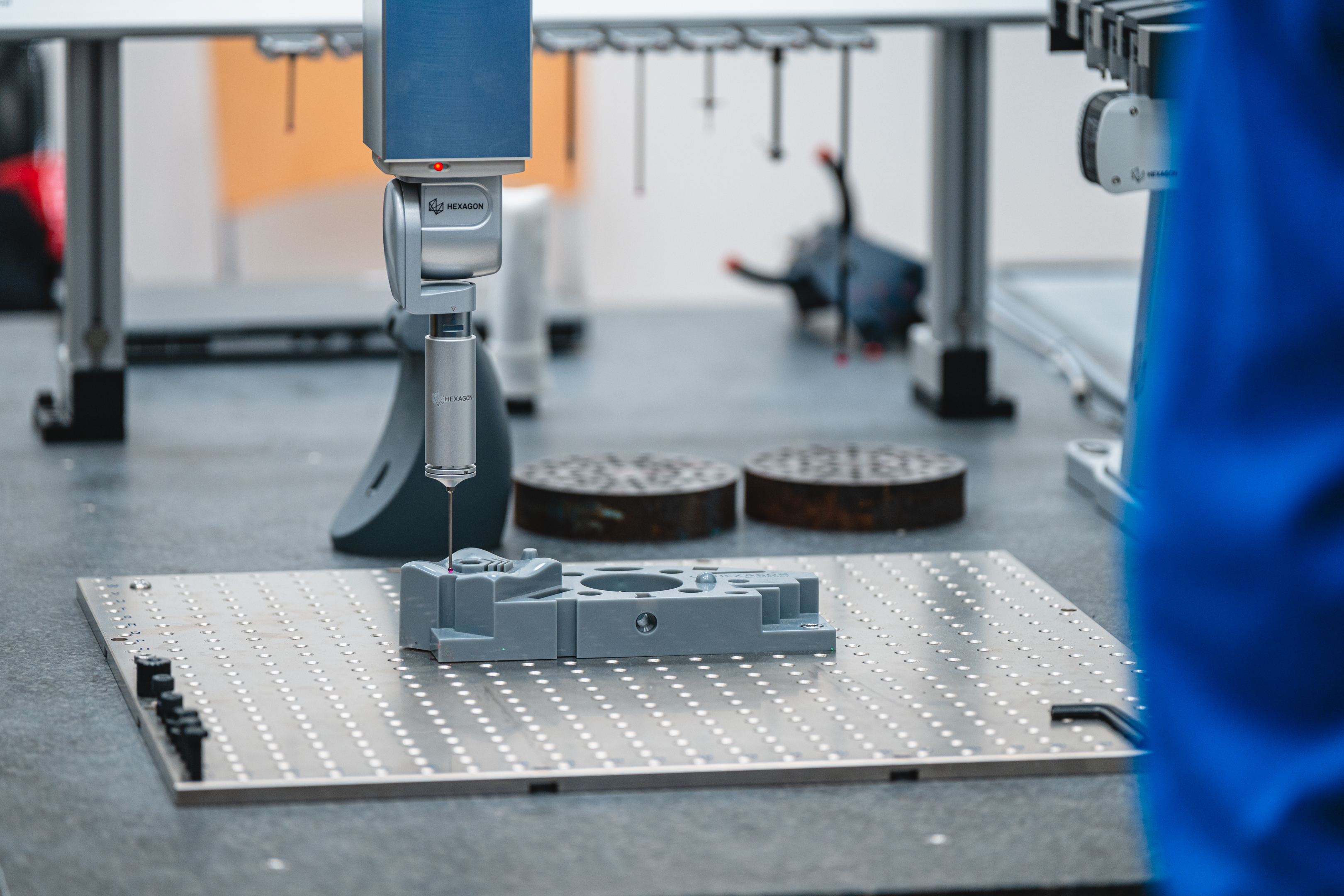
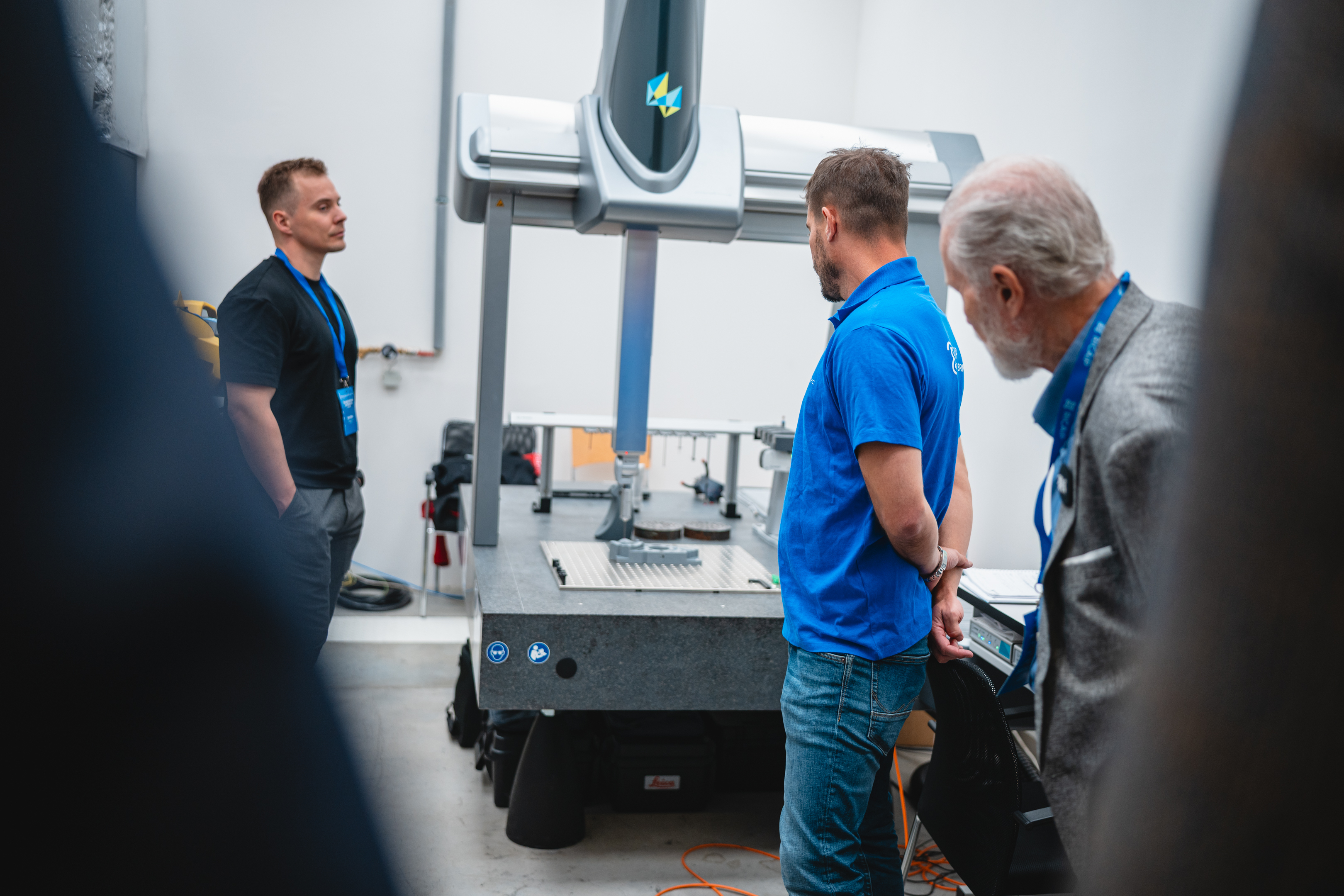
We can create a 3D model of an object, evaluate its compliance with technical documentation, compare the roughness of different materials, and detect the degree of wear. We are equipped with several coordinate measuring systems that enable both contact and non-contact fast and precise measurements. Data obtained from 3D scanning can be used to compare dimensions with CAD models, making precise measurements a valuable tool for quality control. We can measure objects with a maximum diameter of 2.5 m depending on the measurement type. For larger objects, a handheld measurement and scanning system with a range of up to 80 m from the station can be used. In this case, a higher deviation must be taken into account.
Thanks to a high-speed camera, we can capture motion and events in high quality. The footage can then be analyzed to identify various patterns and gain a better understanding of what is happening. This allows us to gain insight into manufacturing processes and identify the causes of errors. For example, we can capture slow-motion footage of chip formation during milling or turning—enabling us to compare the behavior of different materials under various machine settings (different speeds, tool geometries, or cooling). Thanks to the high-speed camera, we can also analyze the dynamics of a robotic arm’s movement, the behavior of a gripper during grasping, and micro-collisions and vibrations demonstrated directly in the testbed.

