

 Share
Share
14. Sept. 2026
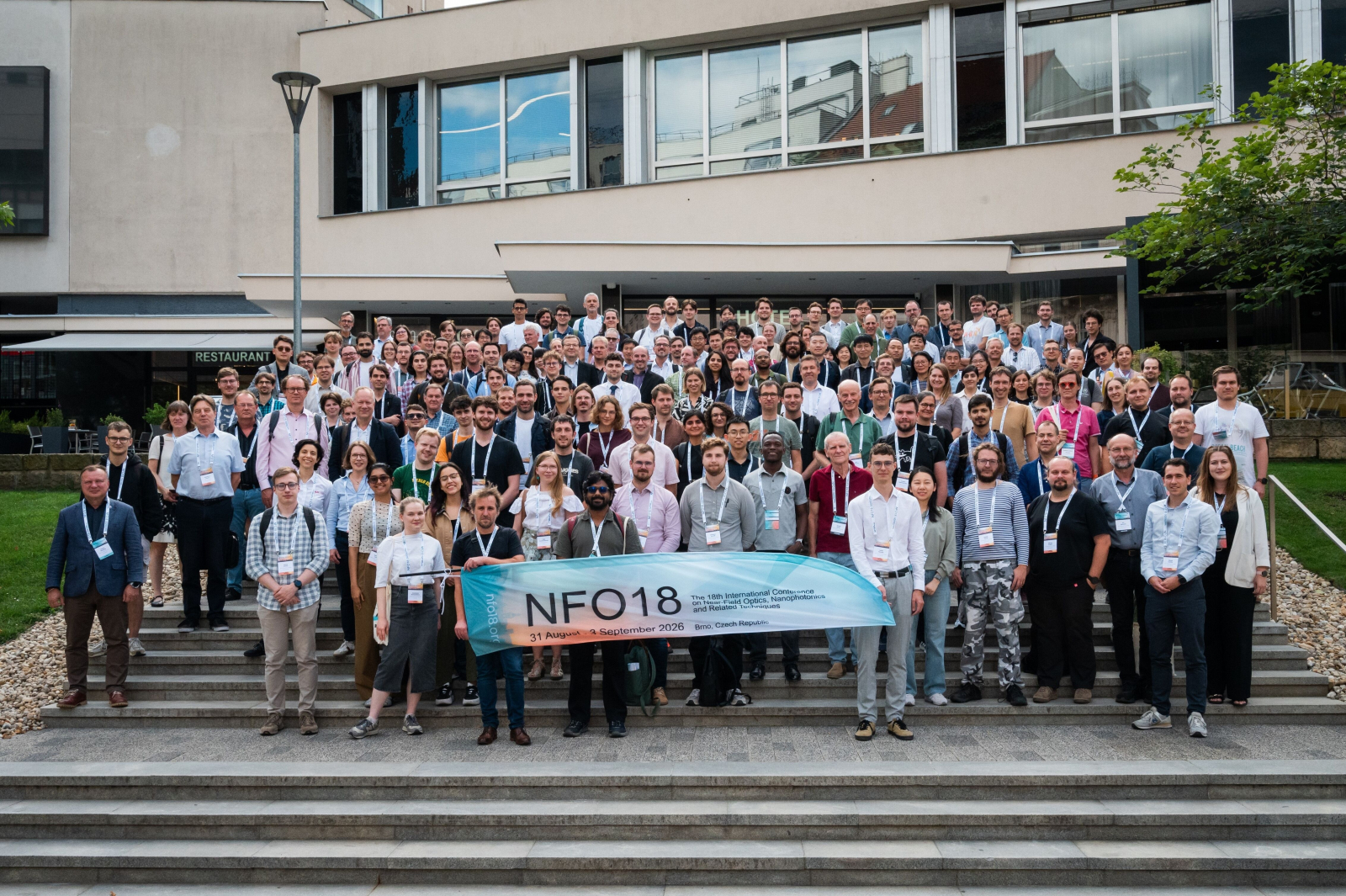
What can we do with light when we get down to the nanometer scale? It is precisely at the interface between light and the nanoworld that new possibilities are emerging for observing, understanding, and controlling the world around us. Approximately 200 experts from around the world gathered at the NFO18 conference in Brno to discuss where current research is headed.
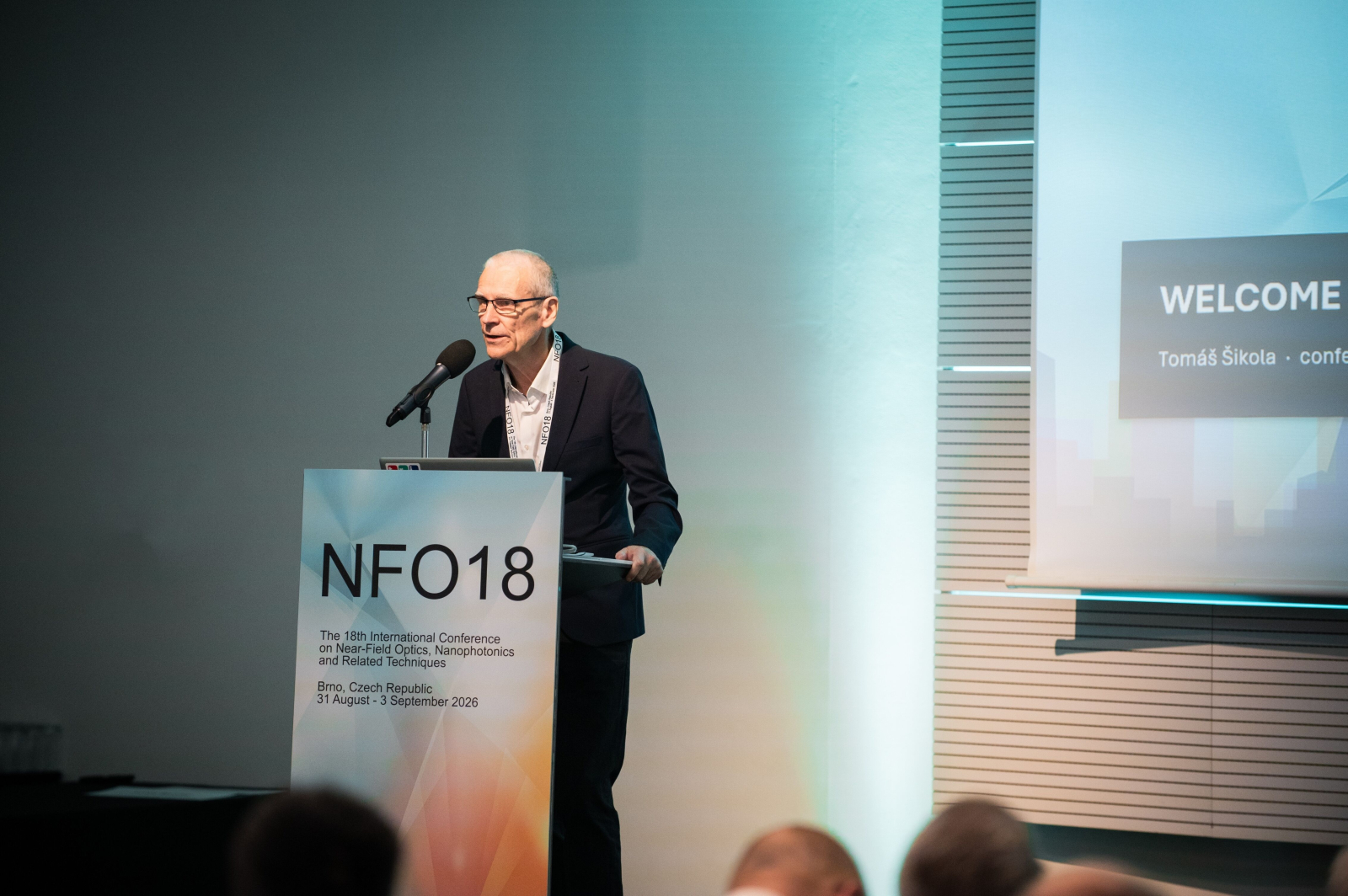
Following Victoria, Canada, in 2022 and Melbourne, Australia, in 2024, the international conference Near-Field Optics, Nanophotonics and Related Techniques (NFO). Its 18th edition was organized from August 30 to September 3 by the Brno University of Technology (BUT) under the auspices of CEITEC BUT. The conference chair was Tomáš Šikola, director of the Institute of Physical Engineering at the Faculty of Mechanical Engineering (FME) of BUT and coordinator of the Advanced Nano and Microtechnologies research program at CEITEC BUT.
The NFO is typically held once every two years and, since its inception in 1992, has rotated among major research centers around the world. In 2026, Brno became the first city in the conference’s history to host it for a second time. The NFO was first held here in 1995, when it was chaired by Pavel Tománek from the Faculty of Electrical Engineering and Communication (FEEC) at BUT.
After more than thirty years, the NFO thus returned to Brno as an established international conference with participants from 22 countries. The four-day main scientific program at the Hotel International featured 125 lectures and more than 50 poster presentations focused on current research in nanophotonics and related fields. The conference was officially opened by Jiří Zámečník, Deputy Governor of the South Moravian Region; Ladislav Janíček, Rector of BUT; and Radimír Vrba, Director of CEITEC BUT.
Scientific program: From nanometer imaging to ultrafast phenomena and increasing tissue transparency
The first plenary lecture symbolically linked the two Brno editions of NFO. Fritz Keilmann from Ludwig-Maximilians-Universität München, one of the pioneers of s-SNOM microscopy, had already participated in the Brno conference in 1995. At NFO3, he presented experiments that subsequently led him to develop this method and, later, to found the company neaspec.
At NFO18, he presented the current capabilities of s-SNOM microscopy. This method enables imaging and spectroscopy on the nanometer scale and is gradually finding applications in the study of biological systems as well.
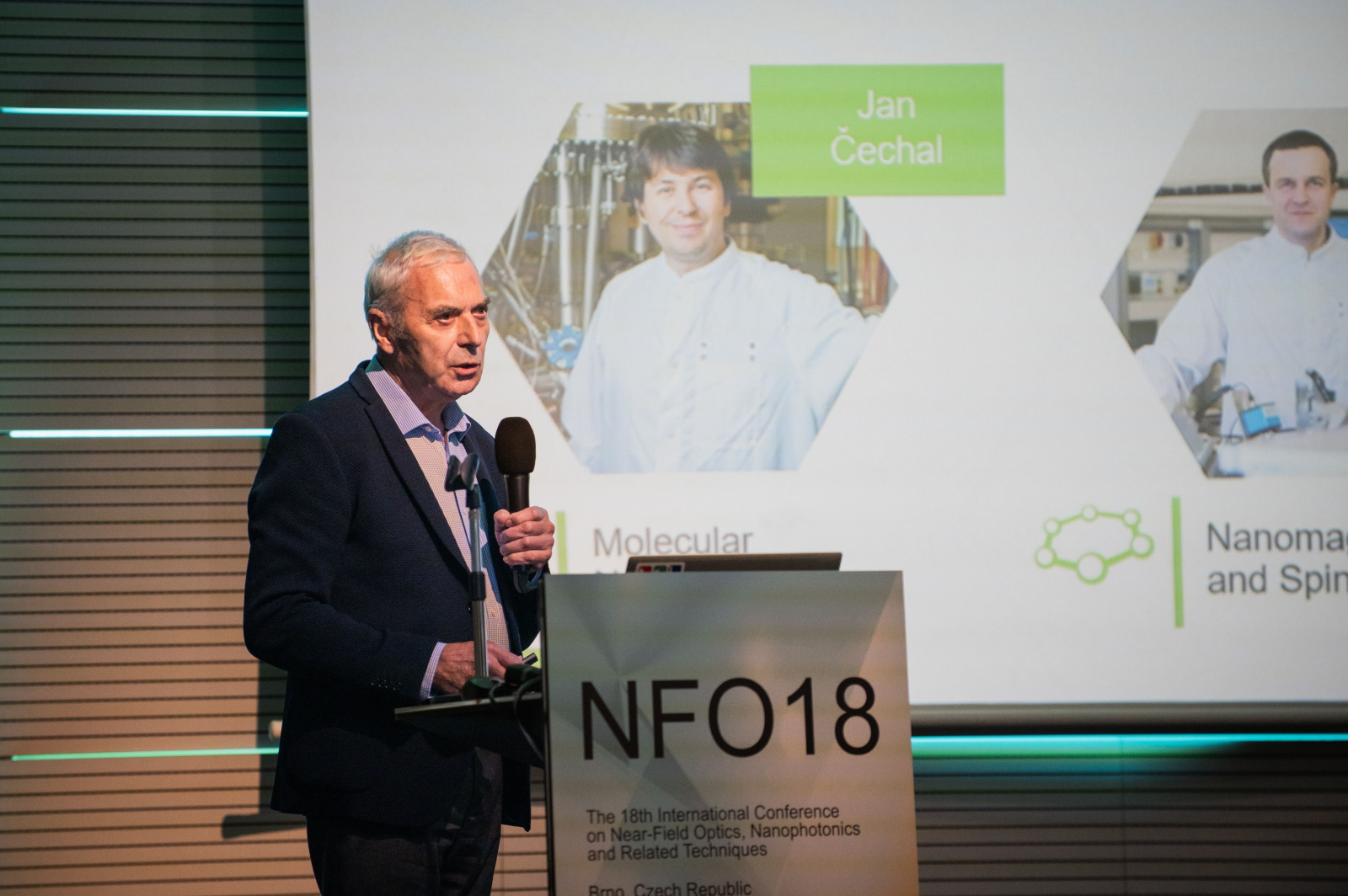
{{photo|Keilmann_talk.jpg|800}}Other plenary lectures also demonstrated the breadth of contemporary nanophotonics. Is it possible to control the properties of emitted light using metasurfaces? To observe the motion of electrons and atoms on femtosecond to attosecond timescales? Or temporarily increase the optical transparency of living tissue to peer inside it? These topics were addressed by Isabelle Staude from Friedrich Schiller University in Jena, Peter Baum from the University of Konstanz, and Mark Brongersma from Stanford University.
Space for the next generation of scientists
In addition to presenting new results, the advancement of the field also involves passing on knowledge to the next generation of scientists. The NFO18 scientific program was therefore complemented by a one-day NFO School at FME BUT, attended by approximately 50 students and early-career researchers. The educational program introduced selected principles and methods of contemporary nanophotonics.
Young scientists were also actively involved in the main program, where they competed for the Best Talk and Best Poster awards. Among the winners were doctoral students and young researchers from BUT, who received one of the three awards for best talk and two of the three awards for best poster.
Science also relies on networking and collaboration
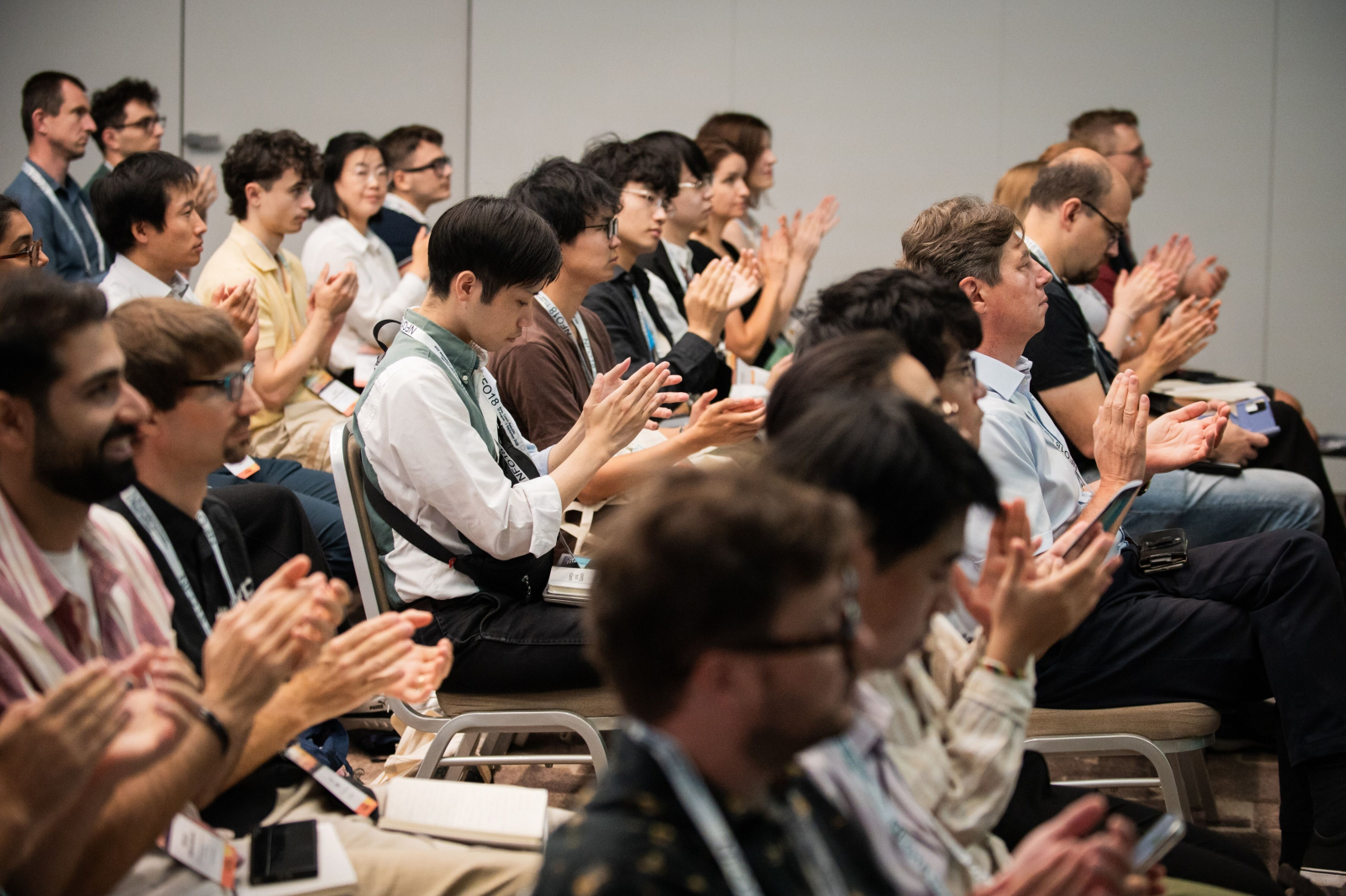
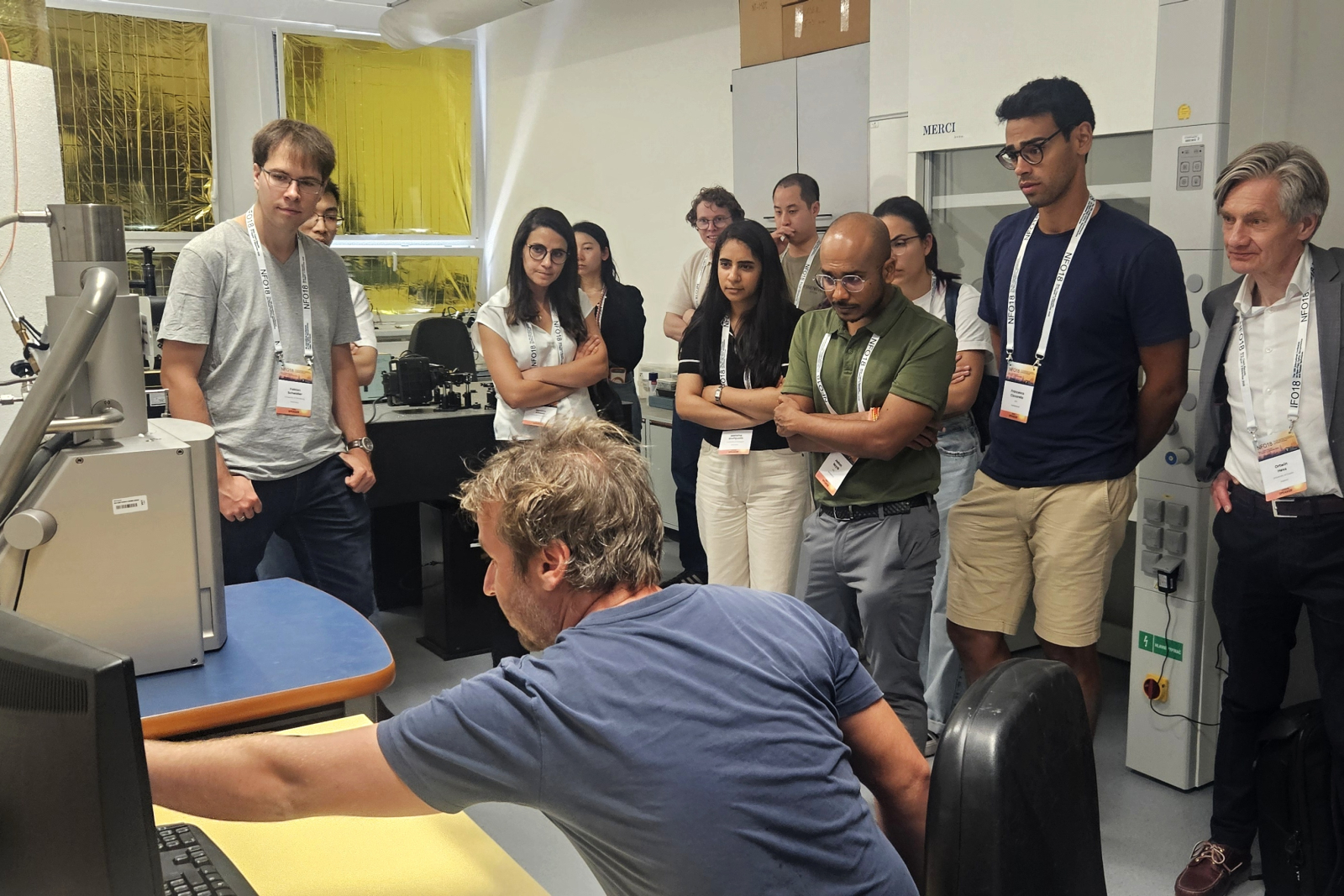
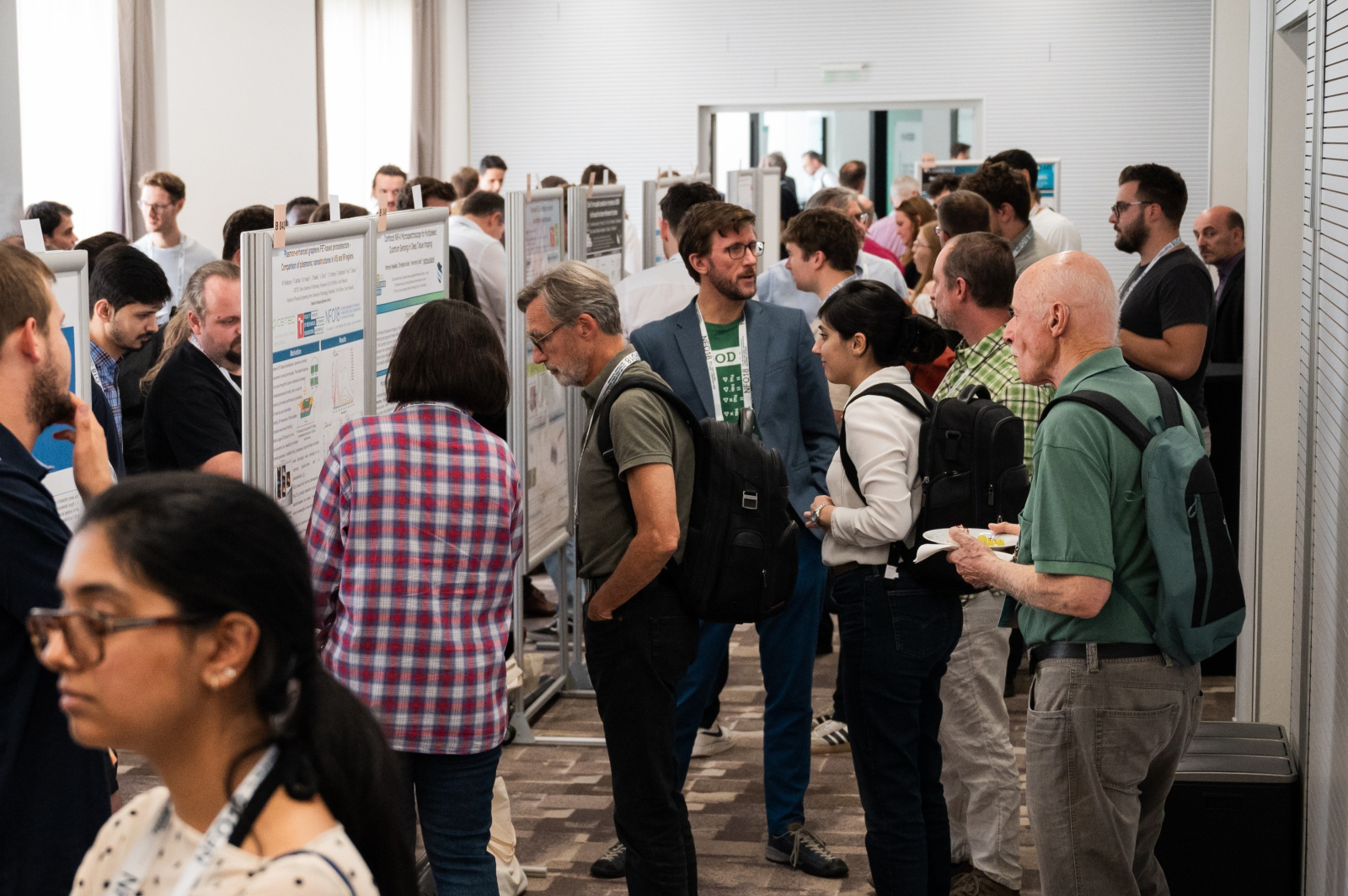
NFO18 also created a space for networking and establishing collaborations, without which today’s research—which brings together various fields of expertise, approaches, and technologies—would be difficult to conduct. Discussions continued during the two poster sessions as well as during breaks between presentations. Participants also had the opportunity to meet with representatives from partner companies in the field, including the conference’s silver partner, Thermo Fisher Scientific, and bronze partners attocube, Kurt J. Lesker, onsemi, Raith, and Měřící technika Morava. Additional opportunities for informal gatherings were provided by a social evening, excursions around Brno and the surrounding area, and a tour of the CEITEC Nano laboratories.
“We are very pleased that, after more than thirty years, we have succeeded in bringing the NFO conference back to Brno. We are all the more pleased by the positive feedback from participants—not only regarding the technical program but also the organization and atmosphere of the entire conference. Above all, NFO is a place where people from various fields of nanophotonics meet, share their results, and generate new ideas and collaborations,” summarizes Tomáš Šikola.
After Victoria, Melbourne, and Brno, the NFO’s next stop will be Shanghai, China, which will host the conference in 2028.
Author: Katarína Rovenská
Photogallery
Expert
