

 Share
Share
31. Aug. 2026
Whether a drug can effectively bind to its target protein, or how different parts of a virus or a cell interact, depends on processes taking place at the level of individual molecules. Their behaviour is determined not only by their shape, but also by the electrostatic forces acting between them. Understanding how these forces are distributed helps scientists explain why certain molecules attract each other, how they bind and how they interact.
This is where the Atomic Charge Calculator (ACC) comes in. Researchers at Masaryk University have been developing this computational tool for more than a decade. Its third and most advanced generation to date was developed at CEITEC Masaryk University and the Faculty of Science at Masaryk University, in collaboration with the Faculty of Informatics at Masaryk University and Palacký University Olomouc.
ACC III calculates the electric charges of individual atoms and visualises their distribution directly within three-dimensional molecular structures. It brings together twenty different calculation methods in a single environment and can work with a wide range of molecules – from small organic compounds to proteins and other large biomolecular structures.
A key advantage of Atomic Charge Calculator III is that it combines a broad range of computational methods with ease of access. Basic calculations can be performed directly in a web browser, with no need to install specialised software or register for an account. The resulting charges can be displayed directly on a 3D model of the molecule. For advanced users and large-scale analyses, the platform also supports automated data processing and allows its computational core to be run locally.
Why are scientists interested in the electric charges of atoms?
Electrons are not distributed evenly within molecules. Individual atoms can therefore carry different partial electric charges. These charges play an important role in determining how molecules behave towards their surroundings and towards one another.
Positively and negatively charged regions of molecules can attract each other, while regions with the same charge repel each other. The distribution of these charges therefore helps determine which molecules approach each other, how they orient themselves and how strongly they may bind. In biology, this is important, for example, in molecular recognition or when a drug binds to its target protein. Understanding partial charges therefore helps scientists gain insight into the interactions underlying the behaviour of many molecular systems.
There is, however, no single universal way to determine partial charges. Different computational methods can produce different values, and the choice of method also depends on how the results will be used. Accurate quantum-chemical calculations can also become very computationally demanding when large numbers of structures are involved. ACC III therefore brings together empirical methods that allow these calculations to be performed more quickly and on a large scale.
“From the outset, we designed ACC III to make calculating partial atomic charges as straightforward as possible. Users do not need to install anything or deal with complicated settings – they simply upload a molecule and start the calculation with a single click. The application then suggests suitable methods from the twenty available and can handle both small molecules and large biomolecular structures,” says Tomáš Raček, who has been developing and maintaining ACC since 2018.
How an antiviral drug binds to an influenza virus protein
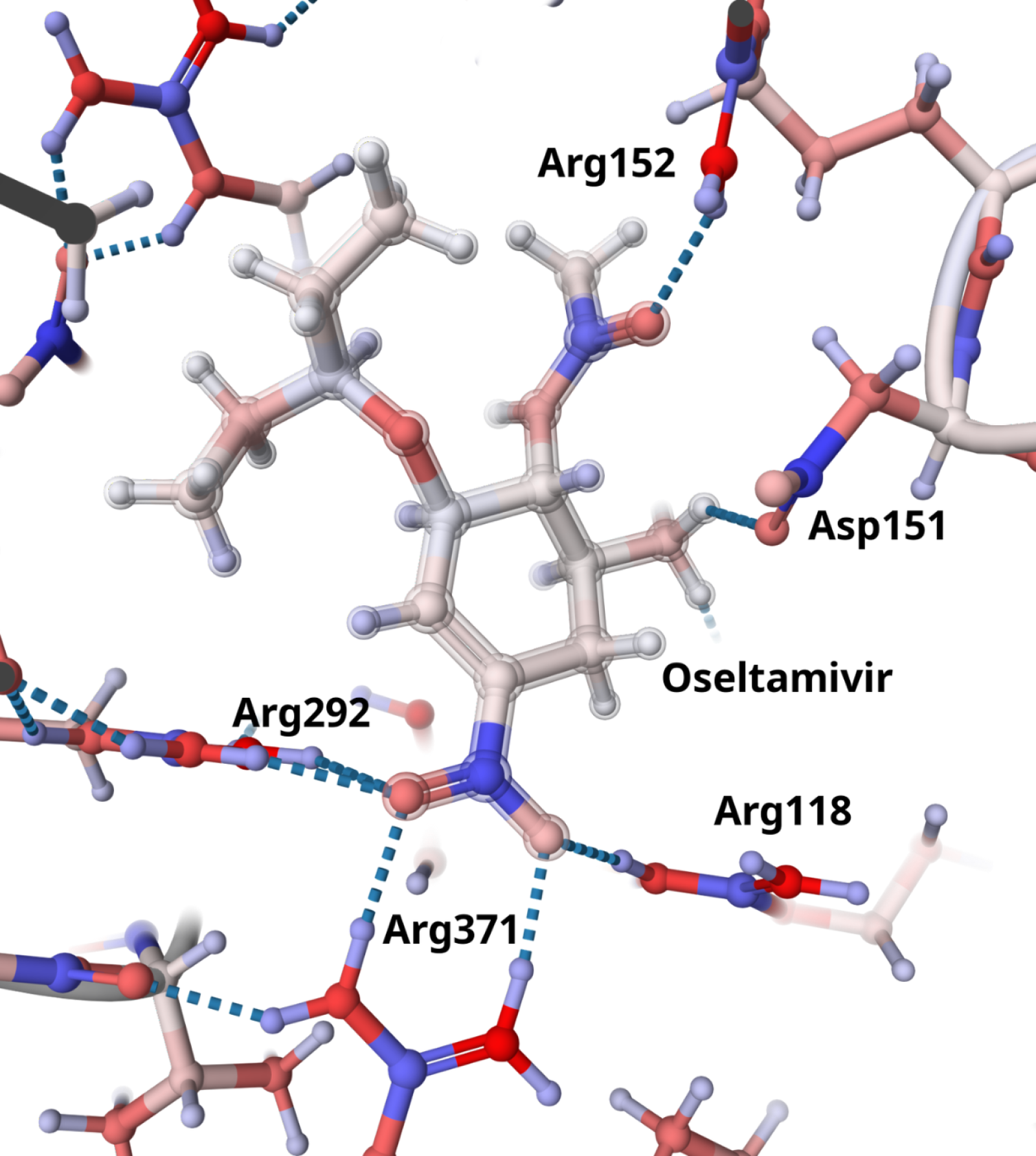
The authors demonstrate what charge distribution can reveal using the well-known antiviral drug oseltamivir, marketed as Tamiflu. The drug binds to neuraminidase, a protein of the influenza A virus. ACC III can show directly within the three-dimensional structure where positive and negative partial charges are located and how they contribute to the interaction between the drug and the protein.
“The example of oseltamivir clearly shows why it is useful not only to calculate the charges, but also to visualise them directly within the structure. This allows us to see which parts of the two molecules interact electrostatically. The same approach can be used to study many other molecular systems,” explains Tomáš Raček.
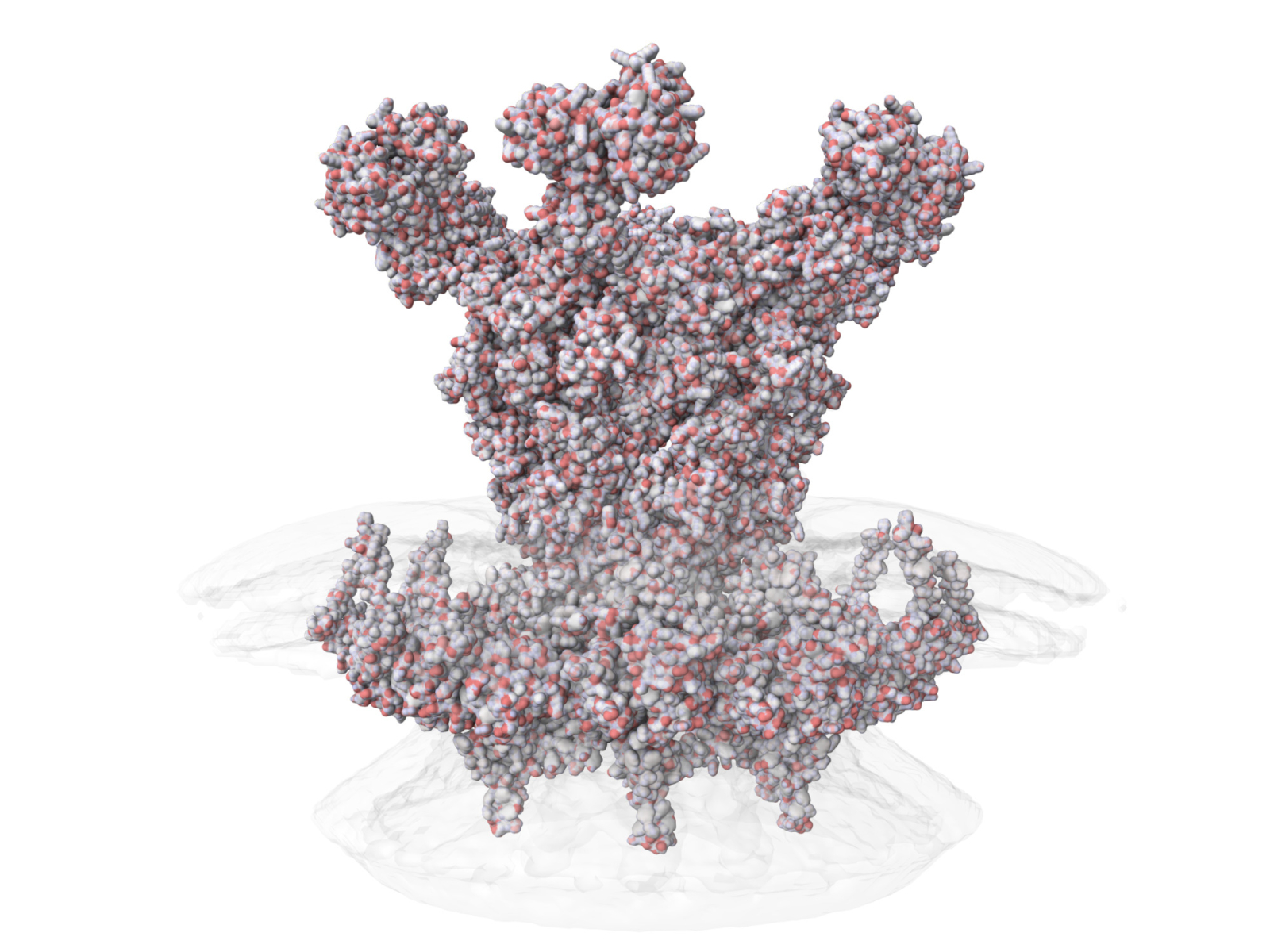
ACC III is not limited to small molecules. It can also work with proteins and other large biomolecular structures. The authors demonstrate this using a second example: the SARS-CoV-2 pore complex. Coronaviruses form these pores during replication in infected cells and use them to transport viral RNA across membranes. Visualising partial charges helps distinguish the parts of the complex that pass through the non-polar environment of the membrane from its more highly charged regions.
From calculation straight to a 3D model
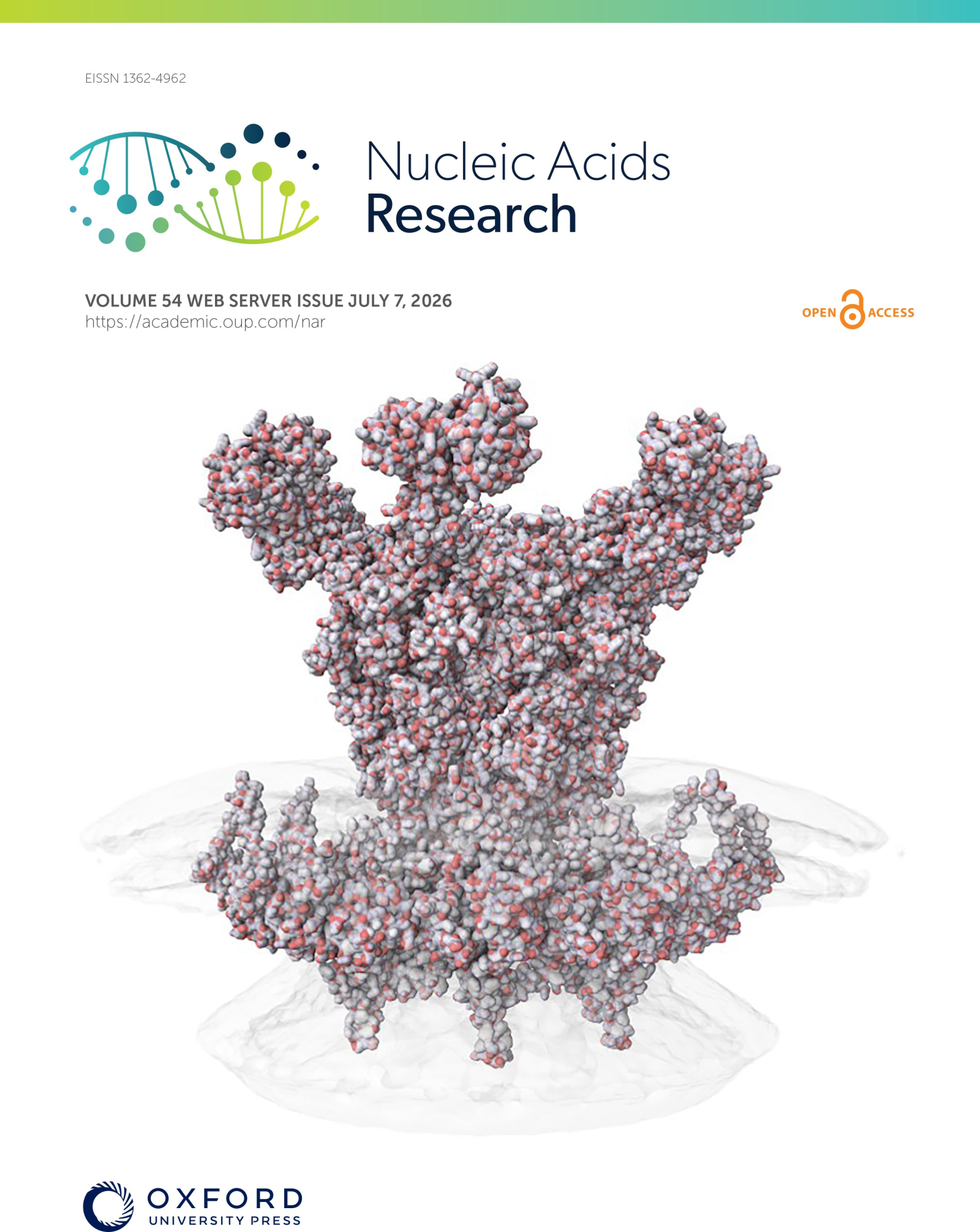
The new generation of the Atomic Charge Calculator also offers more advanced visualisation. It uses Mol*, which allows calculated charges to be mapped directly onto a three-dimensional structure and explored interactively. A visualisation created using ACC III was also selected for the cover of the special Nucleic Acids Research Web Server Issue. Created by Tomáš Raček, the cover image shows the distribution of partial charges in a membrane protein system.
Results can be downloaded in several standard formats and, for the first time, stored directly in the mmCIF format commonly used for three-dimensional biomolecular structures. Information about the structure and its calculated charges can therefore remain together in a single file and be used by other tools.
For researchers who need to process large numbers of structures, ACC III also provides an API and a computational core that can be run locally. The platform can therefore be used both for individual calculations through its web interface and as part of larger automated analyses.
More than a decade of development
Scientists introduced the first Atomic Charge Calculator in 2015, followed by its second generation in 2020. In the meantime, the team also developed specialised tools: PDBCharges for structures from the Protein Data Bank and AlphaCharges for structures from the AlphaFold Database.
“The Atomic Charge Calculator was never a one-off project,” says Radka Svobodová, Head of the Biological Data Management and Analysis Core Facility at CEITEC Masaryk University. “For more than a decade, we have been continuously developing tools that respond both to new possibilities in structural bioinformatics and to the needs of their users. The third generation combines straightforward web-based use with capabilities that are important for the automated processing of large numbers of molecular structures.”
Atomic Charge Calculator III is freely available through its web interface and does not require registration for basic use. Its development was supported by the ELIXIR CZ research infrastructure.
The authors presented the new generation of the tool in Nucleic Acids Research.
Photogallery
Author

Expert
