 Share
Share
14. Apr. 2026
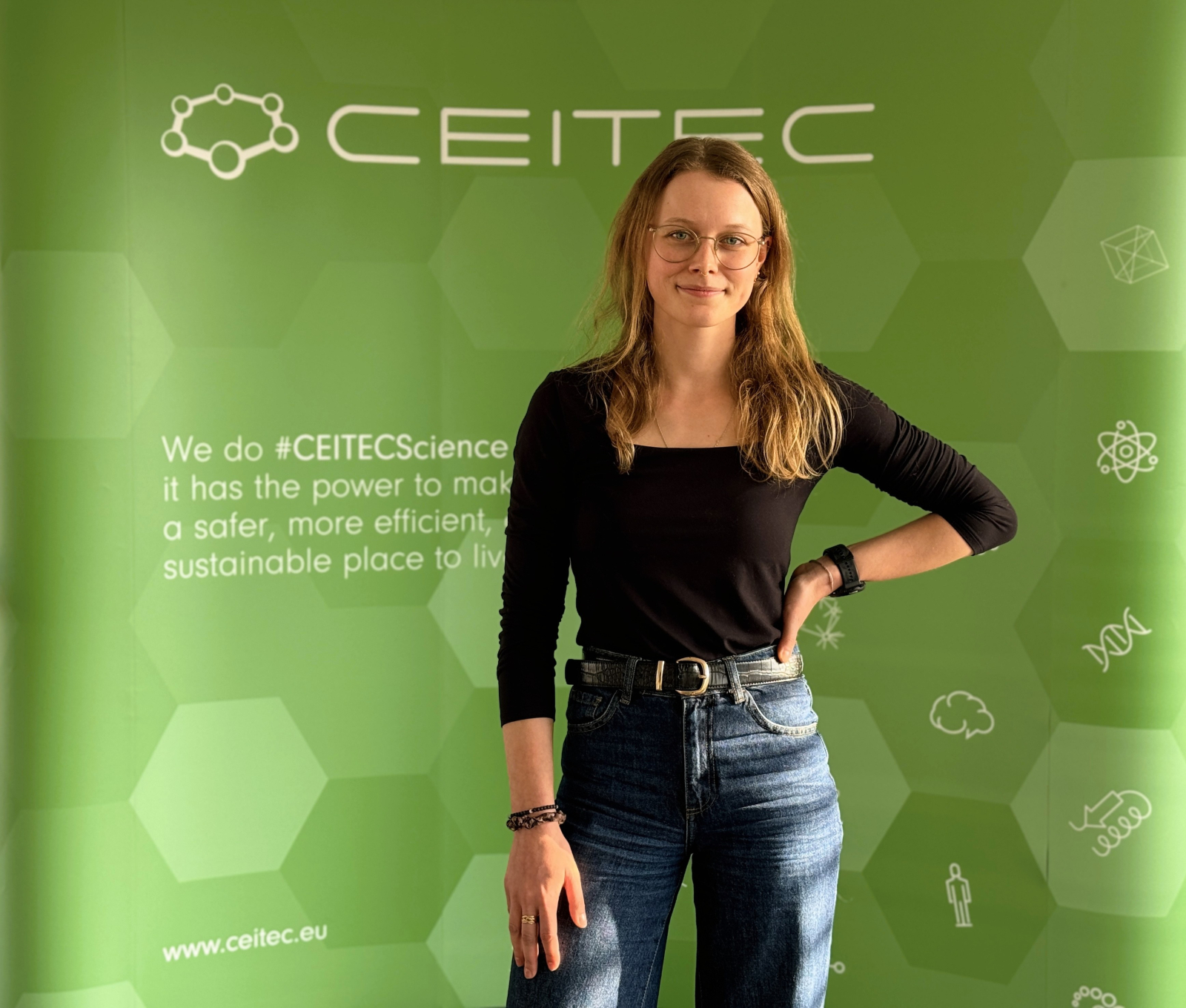
Since January of this year, Beáta Idesová has been serving as the ombudsperson at CEITEC Brno University of Technology, succeeding Katarína Rovenská. In addition to her doctoral studies, this confidential advisor is responsible for helping all other students. “My task is to create a safe environment in which students can confide in me about anything that troubles them here at CEITEC, whether it concerns their studies or interpersonal relationships, and together we can look for possible steps to resolve the situation,” says the young scientist about the purpose of her new role.
You have now been in the ombudsperson role for 4 months. Do you have a lot of work?
Fortunately, I don’t have too much work yet, which is, to some extent, a good sign. However, I have already been in contact with several students. There have been various reasons, but generally speaking, in most cases it has been about coping– or failing to cope – with pressure. Either internal pressure that students place on themselves, or external pressure from supervisors or fellow students. Fortunately, the vast majority of problems do not stem from bad intentions, but rather from mistakes and misunderstandings, typically due to poor or unclear communication or different perceptions shaped by cultural backgrounds – both of the students themselves and of the teachers.
Could you describe in more detail the kinds of problems students bring to you?
It’s very individual, but as I see it, some students – even at the doctoral level – sometimes feel they are still in a position where they cannot really say what they want or how they want things done. This naturally leads to frustration, increasing stress, and even doubts about the meaning of their studies. Then there is another group of students who are able to assert themselves, but then encounter difficulties with how the other side responds. If the reaction is positive, there’s no problem. But sometimes conflict arises precisely in these moments, and the student may no longer be able to resolve it on their own. That’s when they need help from someone who is not involved in the dispute. My email contact is available on the CEITEC website – students just need to write to me, and I respond promptly, so we can usually arrange a meeting within a day if they wish. We can meet here on campus or, for example, in a café in the city. It depends on where the student feels more comfortable.
What can you do for them in your role, what are your competencies?
It should be noted that, in most cases, these are not serious problems but rather misunderstandings. If I see that the root of the issue lies in problematic communication, I try to encourage students not to be afraid to talk things through with the person involved. In a way, I help give them the courage to stand up for themselves – to realize that they are capable and that certain behaviour toward them is neither appropriate nor acceptable – and to confront it. Sometimes, however, even the student’s efforts to resolve the issue on their own are not enough. In such cases, I can offer to involve CEITEC management – either the Deputy Director, Pavel Krečmer, or, in the most serious cases, the Director, Radimír Vrba. I can pass on information anonymously or arrange a meeting for the student. But we must always act in a way that benefits the student, so that raising a complaint does not backfire on them. Students need to feel safe and trust that we can help resolve their problems.
You work with adults under stress who often cannot see solutions to their difficulties. Do you have any training in interpersonal relations in addition to your technical education?
I don’t have formal training in this area, but I have a lot of experience working with people – both from my personal life and from my role in the Student Chamber of the Academic Senate at BUT, where I represent the interests of students from three university institutes, including CEITEC. I am also a member of the Disciplinary and Ethics Committees at BUT, where I have gained further experience. So, although the role of ombudsperson at CEITEC is quite specific, I believe I can fulfill it well.
In addition to these academic roles, you are pursuing your PhD in the research group “Preparation and Characterization of Nanostructures” led by Tomáš Šikola. Why did you choose CEITEC for your dissertation?
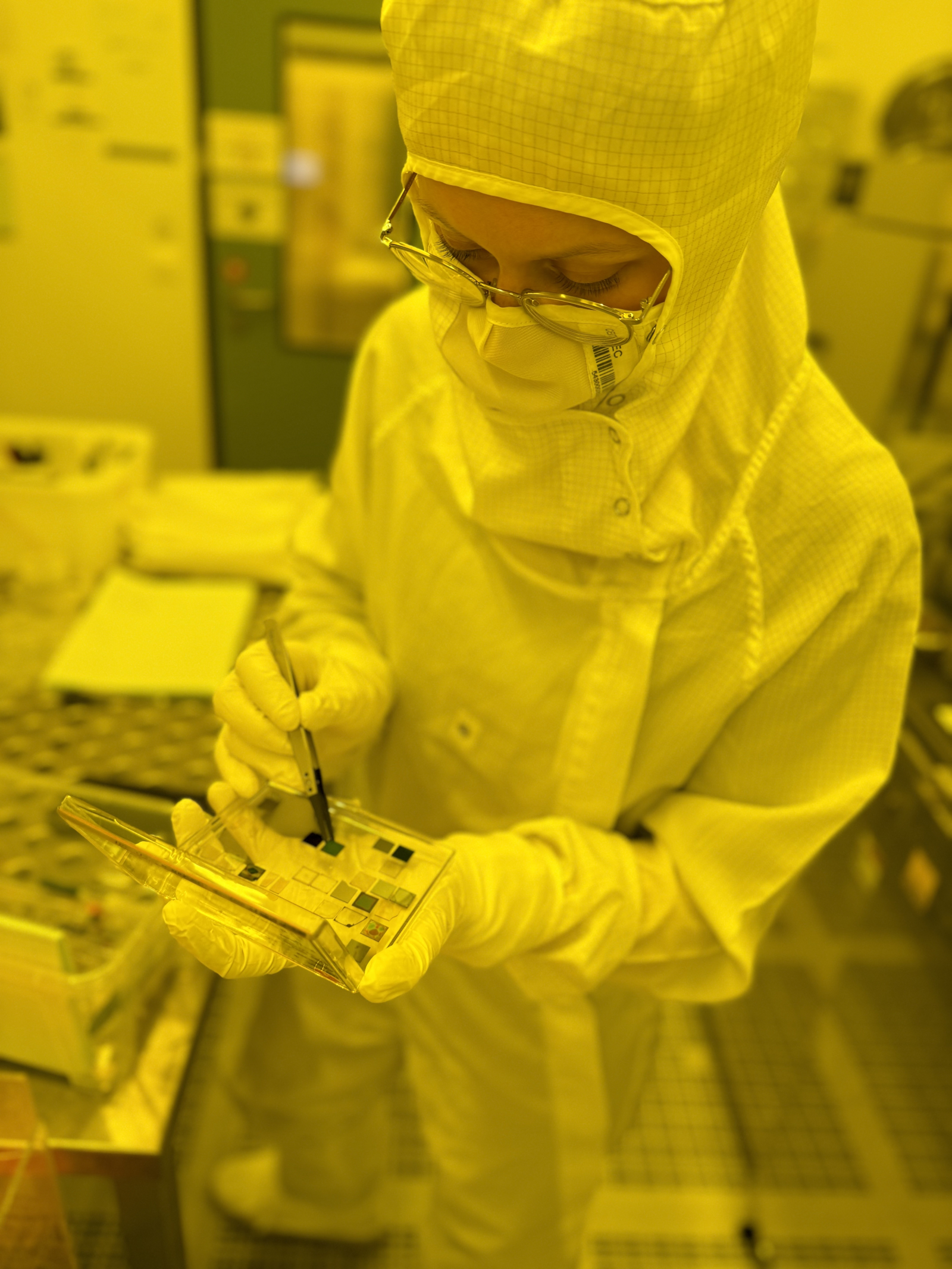
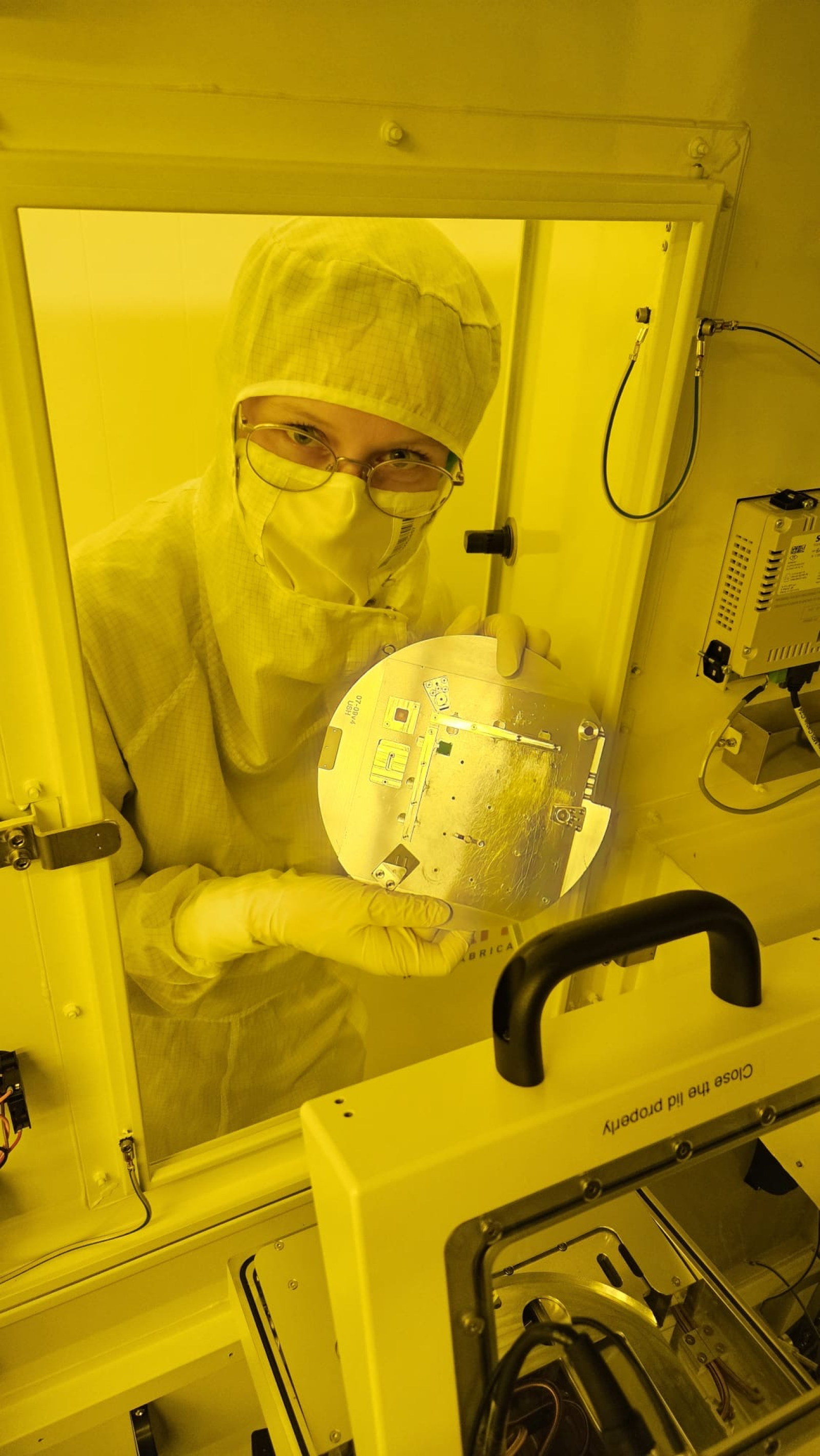
To answer that accurately, I need to go back to when I was still a student at the Faculty of Mechanical Engineering at BUT, specifically the Institute of Physical Engineering, led by Tomáš Šikola, who also worked – and still works – at CEITEC. In both my bachelor’s and master’s theses, I focused on surfaces with special properties, and such research requires cleanroom laboratories. So I had already been coming to CEITEC years ago, learning to work with instruments and beginning real research. When I was deciding what to do next during my fourth year, I realized I wanted to continue my research as a PhD student. The only real question was whether to stay in the Czech Republic or go abroad. Since I already knew the environment at CEITEC and liked it, I decided to stay. So I applied for doctoral studies again under Tomáš Šikola.
What exactly is your dissertation about?
I work on dielectric metasurfaces for unconventional optical elements. To simplify a bit, dielectric materials are essentially insulators that can be polarized, such as glass, ceramics, or plastics. Metasurfaces are artificially structured surfaces covered with millions of nanostructures that can precisely control light and other electromagnetic waves. In my research, I aim to create metasurfaces with very specific properties for ultraviolet wavelengths. This field is very important because electronics are becoming smaller, and chips must accommodate a huge number of transistors. As a result, global research focuses on photolithography, a key technological method for transferring complex nanostructures onto semiconductor wafers using UV radiation. These nanostructures must be extremely small, comparable to the wavelength of the incoming UV radiation, which presents many manufacturing challenges. I am currently working on creating a filter for a specific UV wavelength that can effectively eliminate radiation at that wavelength.
That sounds very interesting. Have you thought about what you will do after finishing your PhD?
To be completely honest, I’m still leaving that question open – even for myself. My friends among PhD students often say they wouldn’t mind becoming carpenters, bakers, or even herding animals somewhere in the mountains; basically, doing jobs where there is less pressure. I’m not sure yet myself, and I’m keeping that option open. I’ll see how I feel after finishing my PhD and what opportunities arise. In science – and in life outside it – things often develop very quickly.
At the beginning, you mentioned that students often create pressure for themselves, which leads to discomfort. Why is that?
I think the main stressor we all face is the desire not to disappoint ourselves or others. The academic world is very competitive, and people want to do their work as well as possible. Some also have an inner drive to achieve something significant as quickly as possible, which doesn’t always work out. There is also a difference between a supervisor who acts more like a strict manager with a clearly defined structure and one who is more like a mentor whom students are not afraid to approach when things go wrong – someone who reassures them that mistakes are part of science and motivates them to continue. A supervisor’s approach can either ease and soften internal pressure, or intensify it. And that brings me back to why the role of an ombudsperson is so important: when pressure from both inside and outside becomes too great, an impartial person can step in and offer concrete solutions.
To help others and face all the challenges of working in science, you also need to be well-rested yourself. How do you relax?
I try to relax actively, mostly through sports, especially running. I also enjoy going on nature trips with friends. Recently, I got a dog, so I take longer walks with him, too. It’s really necessary. I spend long hours in laboratories, often without windows, so I don’t see daylight much. That’s why I try to spend as much of my free time as possible outdoors, ideally outside the city.
PhD students usually also teach in addition to their research. You teach physics lab classes at the Faculty of Mechanical Engineering at BUT. Final question: do you enjoy teaching, and would you like to pursue it in the future?
My classes are attended by first-year bachelor’s students – very young people who are just getting familiar with the faculty and the equipment. The advantage of this course is that we don’t focus so much on theory and can spend more time on practical work, such as measurements. I enjoy teaching, but it’s also quite stressful for me because I stand in front of students, explain things, and am responsible for the content and accuracy of the lectures. If I make a mistake, they write it down because they don’t yet know I’m wrong. Those moments are difficult for me. I have to step back, explain the mistake, and I can see all the questions running through the students’ minds. On the other hand, these situations often lead to very interesting discussions, and both the students and I take much more away from the class. Even though it’s ultimately positive, I’m not yet fully convinced about pursuing a full-time academic teaching career. As I said, I’m keeping my options open because academia is full of surprises. For now, I’m trying to enjoy the present and not think too much about what exactly I will do in the future.
Author: Kristina Blümelová
Photogallery
Expert