

 Share
Share
15. May 2026
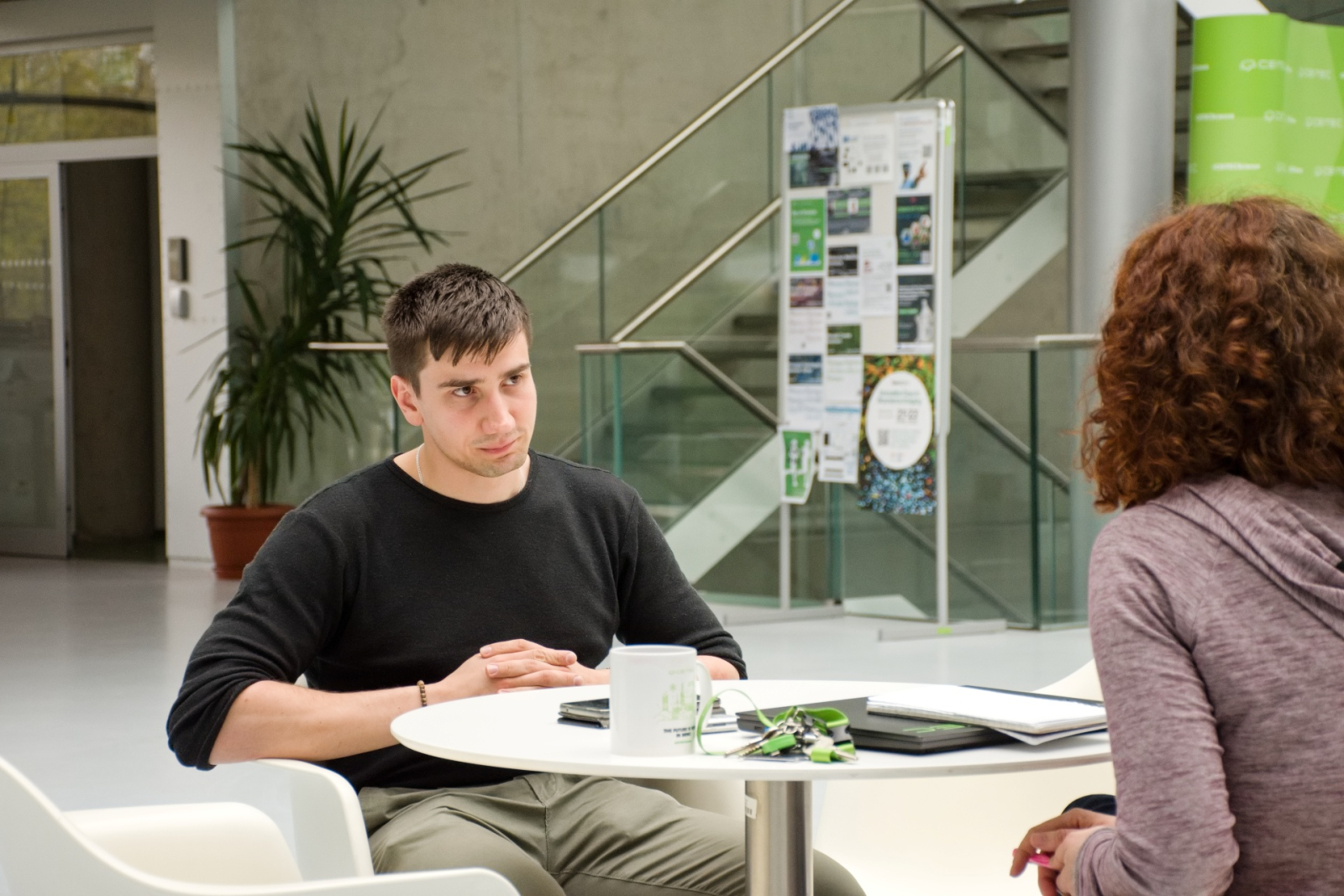
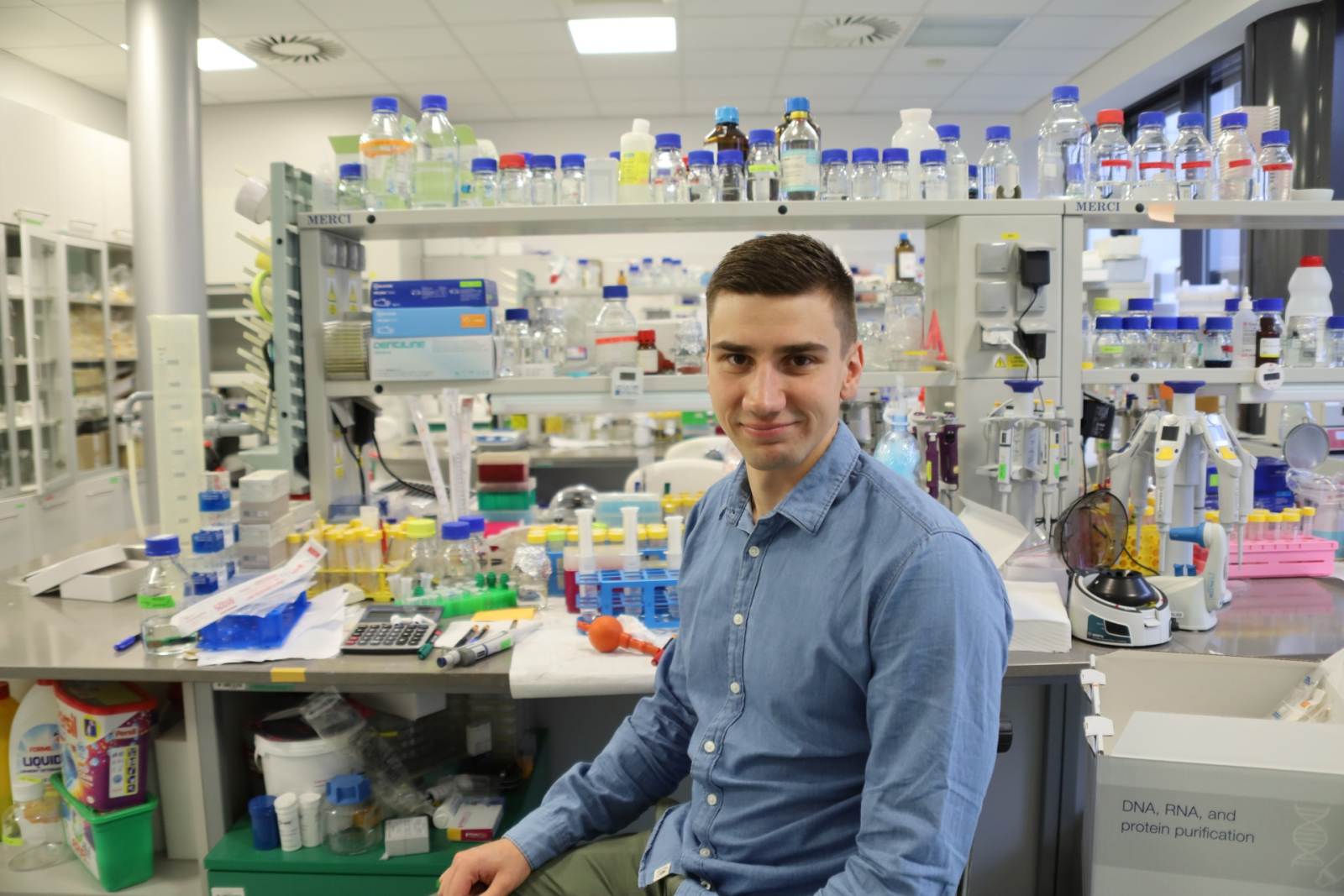
What happens inside a cell at the very moment it decides its future? A recent study by two teams from Masaryk University (MUNI) brought new insight into this question by describing a key step in cellular signalling linked to the development of cancer. Yet the story behind the discovery is equally compelling – a story of collaboration between two scientific environments. How does the combination of two different research approaches work in practice, and what does it mean for a young scientist moving between them? We spoke with Miroslav Micka, the lead researcher of the study, who is now continuing his scientific career in France.
Your PhD connected CEITEC and the Faculty of Science at Masaryk University. How did this collaboration begin?
The collaboration actually started before I joined the project – it was initiated by a previous PhD student. I continued building on it, and over time it evolved into a project in which I worked as a shared doctoral student between two institutes. From the very beginning, it was clear that this would not simply mean “doing one half here and the other half there.” The two approaches really had to become integrated.
What did that mean for you in practice?
I had two supervisors, each from a different field, and that was essential for the project. Each of them brought a different way of thinking and a different methodology, but the two complemented each other extremely well. It was not only about having more ideas – it was mainly about being able to study the same problem from multiple perspectives. At CEITEC, we focused deeply on protein structure, while at the Faculty of Science we studied how these processes actually take place inside cells. When these two approaches are combined, the results provide a much clearer and more reliable picture of the biological problem being studied.
What exactly were you working on?
We focused on a protein called Dishevelled, which plays an important role in cellular signalling. We wanted to understand what happens to this protein when a signalling pathway is activated – in other words, how its behaviour changes and how it communicates with other proteins once the cell receives a signal from its environment.
Thanks to the combination of methods, we managed to identify one specific site on the protein that becomes modified after the signal is received. This modification turned out to be crucial – it determines whether the protein remains attached to the receptor or is released to transmit the signal further into the cell.
And this is exactly the kind of information that would have been extremely difficult to obtain using only a single research approach.
Why should this matter to people outside the scientific community?
The signalling pathway we studied is connected to the regulation of cell division. And when this process “gets out of control,” it can lead, for example, to the development of cancer.
This does not mean that we discovered a direct path towards treatment, but we are helping to better understand how the whole system works. And the more precisely we understand where and how signals are transmitted within the cell, the better we can eventually identify points where the process could be targeted – either suppressed or enhanced.
You were, in a way, working “between two worlds.” What was that experience like?
At the beginning, it was definitely challenging. Each supervisor had a slightly different perspective on what was important and where the project should go. I had to learn how to navigate between these viewpoints and find my own direction. At the same time, I was given a lot of freedom to decide how the research would progress.
Over time, I naturally became a link between the two teams – transferring information, coordinating tasks, and making sure the two parts of the project fit together. It helped that I already knew the environment at the Faculty of Science from my Bachelor’s and Master’s studies, while at CEITEC I gradually built strong relationships.
In the end, it became one of the most valuable experiences for me – not only scientifically, but also personally.
How did this collaboration work in practical terms?
We met regularly, roughly once a month, to discuss new data and the future direction of the project. Between these meetings, there were many ongoing consultations – usually with one of the supervisors, depending on which part of the project I was working on at the time.
What was important was that these were not two separate projects, but one truly shared project. Everyone understood how their contribution fit into the bigger picture.
What has this experience given you for your future career?
Beyond the specific methods, it mainly taught me how to think across disciplines. I started in cell biology and gradually moved towards structural biology. Thanks to this experience, I now understand both approaches.
In Montpellier, France, where I currently work as a postdoctoral researcher, combining these approaches is completely standard. So, when colleagues present their results, I am able to follow both the cellular and the structural aspects. Without this experience, that would not have been possible.
And perhaps even more importantly, I experienced first-hand how true interdisciplinary collaboration works – with all its advantages as well as its challenges.
Konstantinos Tripsianes, CEITEC Masaryk University
“Mirek spent his PhD moving between two laboratories and two different leadership styles, which is not easy. He had to learn how to find balance – not only between scientific approaches, but also between the expectations of both teams. At the same time, this is exactly what helped him become an independent scientist capable of connecting different perspectives into one coherent result.
Personally, I also appreciate how this was reflected on a human level. At the end of the project, both teams independently prepared almost the same farewell gift for him – a T-shirt and a hoodie with a metal music theme. It showed that both groups saw him in a very similar way and that he had become a natural part of both environments.
This type of collaboration is not something to be taken for granted, but when it works, it can produce truly powerful results.”
Vítězslav Bryja, Faculty of Science, Masaryk University
“This was not a one-off project, but the result of a long-term collaboration that had been built over many years. It is based on the connection between cell biology and structural biology, but another equally important pillar is the Proteomics Core Facility at CEITEC – without the very close and long-term collaboration with colleagues such as Zbyněk Zdráhal, David Potěšil, and Ondrej Šedo, this type of research would not have been possible at all.
Mirek made full use of this unique environment – he learned how to work with our different approaches, deal with pressure, find compromises, and bring projects to completion. For a young scientist, this is an essential experience that he will carry with him throughout his career.”
Photogallery
Author

Expert
