

 Share
Share
10. June 2026
Scientists from CEITEC Brno University of Technology have succeeded in a highly competitive international selection process and secured a prestigious Human Frontier Science Program (HFSP) grant, which supports groundbreaking fundamental research. The Brno-based team led by Eric Daniel Glowacki will contribute a unique technology to an international project that enables precise control of oxygen levels in tissues. Changes in oxygen availability may play a crucial role in determining how cells specialize during early embryonic development.
The project, entitled “Beyond Theory: Regulation of Mammalian Embryo Patterning by Electrochemical Gradients,” is being carried out by CEITEC BUT in collaboration with biologists from the Max Planck Institute of Molecular Cell Biology and Genetics and Yale University. The Brno team’s role is central to the project: providing technology that enables the deliberate creation of regions with different oxygen concentrations in tissues and the observation of how cells respond to these changes.
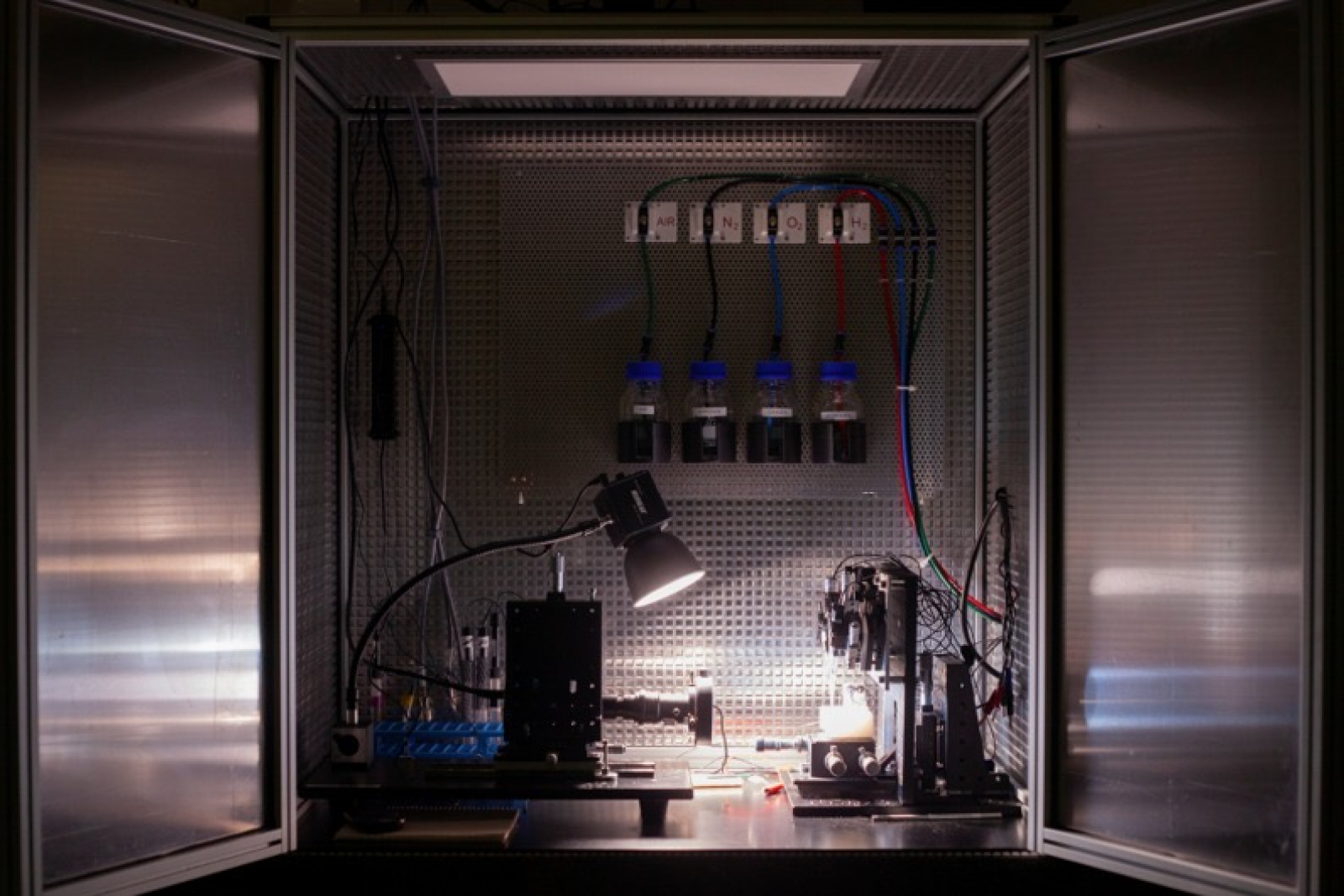
“Our research group specializes in electrochemistry, particularly in studying how electric current affects tissue oxygenation and the resulting chemical changes. To perform certain types of experiments, we developed our own integrated system of needle probes, electrodes, and software, which allows us to influence and control the amount of oxygen present in tissues through which current is passed,” explains team leader Eric Daniel Glowacki. Using these tools, researchers can create regions within samples where oxygen is scarce or even completely absent. Changes in oxygen levels are fundamental to biology because they affect cellular metabolism and, consequently, cell behaviour. In some types of research, such precise environmental control is essential.
“Our system is not universal; we tailor it to each application. In the future, however, we aim to expand its variants so that it can be used across the widest possible range of research fields,” adds Eric.
Scientists at the Max Planck Institute have already used CEITEC’s technology in previous studies of early embryonic development. They investigated how the metabolic activity of stem cells – undifferentiated cells capable of self-renewal and transformation into specialized cells such as muscle, nerve, or blood cells – affects both their own development and that of neighbouring cells.
The newly funded HFSP project builds on this work. Its goal is to revisit the nearly century-old theory proposed by the American zoologist Charles Manning Child, which explains how stem cells in multicellular organisms gradually develop into mature cells with specific functions and structures. The three-year project, supported by a grant of CZK 7.5 million for each partner, will test a new hypothesis in mouse embryos directly in the uterus: that the specific transformation of cells depends not only on oxygen depletion itself but also on the cell’s location within the tissue and the timing of the oxygen decrease.
A better understanding of the mechanisms that govern early embryonic development could, in the future, contribute to advances in regenerative medicine, research into developmental disorders, and the more effective use of stem cells in biomedicine.
“The success of our project is both a great honour and a significant responsibility. HFSP is a unique programme dedicated to fundamental research, where investigators seek answers to the most basic and still unresolved questions in biology,” says Eric. The programme is extremely competitive, with only two to three percent of the thousands of submitted projects receiving funding. Requirements include international collaboration across continents and a genuinely innovative approach.
“Through this, we have become part of a community of world-class scientists from around the globe. Although the results of this kind of research are not immediately applicable, their long-term benefit to society is immense,” Eric concludes.
About HFSP
The Human Frontier Science Program Organization (HFSPO) was established in France in 1989, although the idea of creating such an international community dedicated to fundamental research originated several years earlier in Japan. The programme funds cutting-edge research in life sciences, particularly in biology, physics, chemistry, mathematics, and computer science, and supports innovative interdisciplinary projects that would otherwise be difficult to finance.
HFSPO receives funding from governments and institutions, including those of France, Japan, Switzerland, South Korea, the United States, the European Union, Singapore, New Zealand, and the United Kingdom. Since the programme’s launch in 1989, 31 HFSP-supported scientists have gone on to receive Nobel Prizes. The most recent awardees, in 2024, were David Baker, who received the Nobel Prize in Chemistry for computational protein design, and Gary Ruvkun, who received the Nobel Prize in Physiology or Medicine for the discovery of microRNA.
Author: Kristina Blümelová
Photogallery

Expert
