

 Share
22. Oct. 2026
Some plants can produce seeds without sexual reproduction. Their offspring are genetically identical to the mother plant and can therefore retain the same combination of traits across generations. This ability, known as apomixis, has long attracted the attention of plant biologists and breeders. Researchers at CEITEC Masaryk University have become the first in the world to assemble a complete genome of an apomictic plant from the genus Boechera. The new genome will help them investigate the genetic mechanisms behind this unusual form of reproduction in greater detail. However, practical applications of apomixis in agriculture are still a long way off.
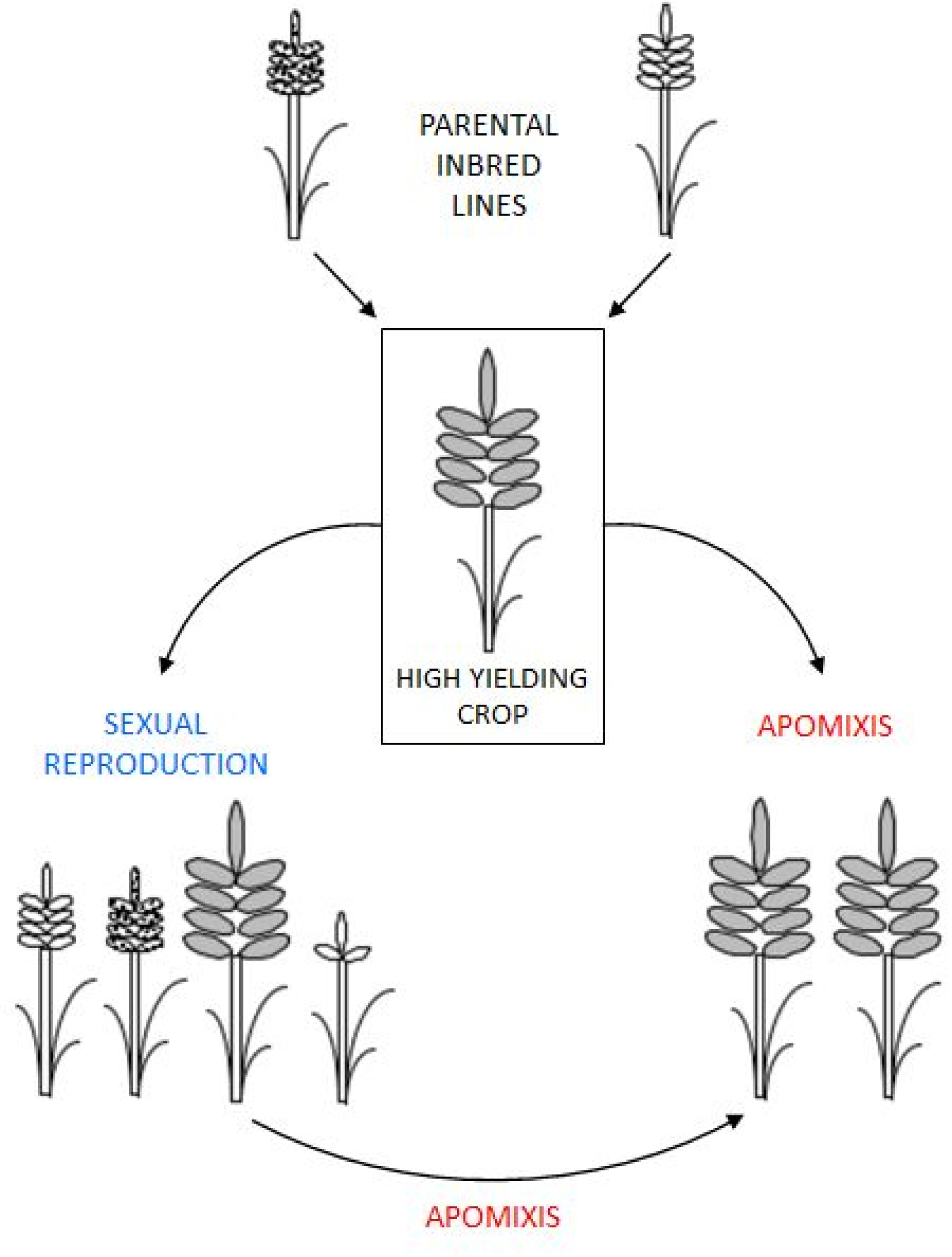
Sexual reproduction is one of the driving forces of evolution. It combines genetic information from two parents, making each new generation slightly different. While this diversity is essential in nature, it can pose a challenge for plant breeders: a valuable combination of traits achieved through breeding may not be preserved in subsequent generations. Apomixis works differently, allowing plants to produce seeds that give rise to genetically identical offspring. If scientists could harness this ability in agricultural crops, it could help preserve desirable traits across generations.
"Being able to preserve a valuable combination of plant traits through seed reproduction is one of the holy grails of plant biology. Although apomixis has been known for more than a century, we still do not fully understand how it works at the genetic level. Assembling the first genome of an apomictic plant from the genus Boechera gives us an important tool to begin finding answers," explains Hassan Tarabai, the study's first author.
One of the challenges is that most apomictic plants have highly complex genomes. An exception is the genus Boechera, a close relative of the model plant Arabidopsis thaliana. In this genus, apomixis also occurs naturally in diploid plants, which have two sets of chromosomes and therefore a simpler genetic make-up than most other apomictic plants. This makes Boechera a particularly useful model for studying this form of reproduction.
The research led by Terezie Mandáková at CEITEC Masaryk University focuses on the genus Boechera. As part of this research, the scientists became the first in the world to assemble a complete genome of an apomictic plant from this genus. The research was supported by the Czech Science Foundation. The new genome will enable the researchers to systematically investigate genes and genetic changes that may be associated with apomixis.
"The genome alone does not yet tell us which genes or mechanisms control apomixis. But it provides us with a reference map that allows us to systematically compare the genetic make-up of sexually and asexually reproducing plants. Our goal is to gradually uncover what enables some plants to produce genetically identical offspring through seeds," explains Terezie Mandáková.
The new genome does not yet provide a blueprint for creating apomictic crops such as wheat or rapeseed. It does, however, represent an important step towards understanding the genetic mechanisms of apomixis, which could one day be applied in agricultural crop breeding.
The study was published in the journal Scientific Data.
Photogallery

Author

Expert

Deputy Research Group Leader, Senior Staff Scientist
Personal Profile