

 Share
Share
Exploring high-frequency electrical neurostimulation beyond classical mechanisms
| Supervisor | Prof. Eric Glowacki, Ph.D. | 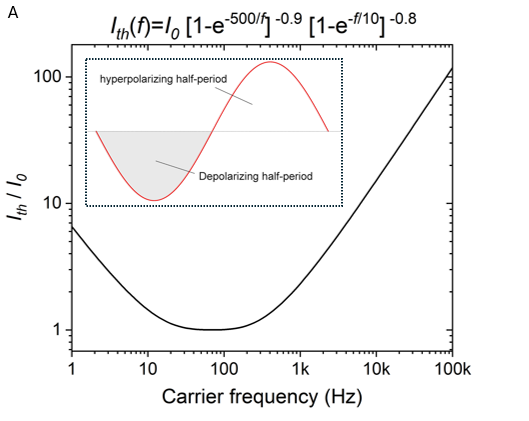 |
| Research Group | Bioelectronics Materials and Devices |
We are seeking a motivated postdoctoral researcher to join our interdisciplinary team at the Bioelectronics Materials and Devices Laboratory, Brno University of Technology. Our research focuses on high-frequency electrical neurostimulation, specifically using unconventional waveforms in the kilohertz-to-megahertz (kHz–MHz) range. The central goal is to investigate how these atypical frequencies can influence neuronal function through non-classical biophysical mechanisms, potentially operating beyond standard membrane depolarization. This is a fundamental scientific question with significant implications for future bioelectronic therapies and neural interfacing technologies. We offer a flexible and multidisciplinary research environment, with opportunities to work across several experimental and theoretical platforms: Computational modeling of neuronal responses to high-frequency fields; In vitro electrophysiology, including patch clamp and multielectrode arrays; Experiments on model organisms (e.g. invertebrate nervous systems); Noninvasive human studies, with access to stimulation and recording equipment. The project benefits from strong collaborative ties with neuroscience groups at the CEITEC campus of Masaryk University (MUNI), enabling joint experiments and access to complementary infrastructure across Brno’s leading research institutions. A successful fellowship project may thus span both campuses.
See list of topics
- Advanced software for batch processing of correlative imaging with quantitative phase and fluorescence
- Advancing coral biomineralization studies: Real-time imaging of coral skeletogenesis using 4D X-ray microcomputed tomography
- Advancing time-resolved cryo-EM to elucidate insulin receptor inhibition mechanisms
- Atomically engineered materials for sustainable carbon-free fuels
- Development and application of novel technology and/or characterization methods
- Development of multimaterial 3D printing using the digital light processing method
- Environmental “double trouble”: Elucidating plant molecular responses to heavy metal and PFAS co-contamination
- Exploring high-frequency electrical neurostimulation beyond classical mechanisms
- Exploitation of novel functional properties of surfaces/nanostructures in nanophotonics, nanoelectronics and/or quantum technologies
- FAST-4D hiQPI: Fast, accurate, scalable time-lapse 4D holographic incoherent-light-source quantitative phase imaging
- Genetic predispositions to development of hematological malignancies
- Characterization of electrochemical double layers...
- In situ magneto-ionic control of antiferromagnetic/ferromagnetic interfaces
- Investigation of novel possibilities for targeted therapy in acute myeloid leukemia
- Long non-coding RNAs in microenvironmental interactions of B cell chronic lymphocytic leukemia
- Magnetic actuation platforms for biological environments
- Magneto-structural properties and quantum phenomena in molecular materials
- Manipulation and detection of molecular magnets at 2D van der Waals interface
- Molecular mechanisms of heat stress adaptation...
- Nanorobots for biomedical and environmental applications
- Next generation materials for flexible wearable sensors and energy storage
- Next-generation noninvasive neurostimulation technologies
- Postdoctoral researcher in structural virology
- Processing of carbide-based ceramics by upcycling ceramic waste
- Pushing thin-film deposition techniques beyond their conformality limits
- Radical-free photocrosslinkable hydrogels for 3D bioprinting
- Role of transcription factors in B-cell malignancies
- Structural changes in intrinsically disordered proteins
- The future of deep brain stimulation in Parkinson’s disease
- Transformers applications for industrial systems faults detection
- Translation control
- Tuning the bioactivity of carbon-based coatings and nanoparticles
- Unravelling microplastic fate and transport
- Upcycling of ceramic waste to produce carbide-based ceramics