

 Share
Share
Advanced software for batch processing of correlative imaging with quantitative phase and fluorescence
| Supervisor | Prof. Radim Chmelík, Ph.D. | 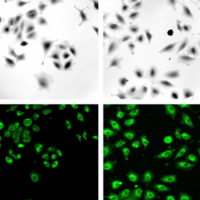 |
| Research Group | Experimental Biophotonics |
Design and develop software for batch processing of correlative imaging, dealing with responses of live tissue culture cells, where quantitative phase and fluorescence micrographs are stored in directories corresponding to individual experiments, which include time-lapse, multi-field, and multi-channel sequences. The software should perform relevant pipelines of image-processing steps on individual time-lapse sequences, appreciating the natural hierarchy of the experimental design and feeding the cell-relevant segmentation results into data analysis based on analysis of variance. The project should allow flexibility in the experimental design hierarchy and utilize the extensive experience and development in the field achieved by our research group. The software should be multi-platform, including Windows and Unix, and utilize Mathematica, C, and potentially Python.
See list of topics
- Advanced software for batch processing of correlative imaging with quantitative phase and fluorescence
- Advancing coral biomineralization studies: Real-time imaging of coral skeletogenesis using 4D X-ray microcomputed tomography
- Advancing time-resolved cryo-EM to elucidate insulin receptor inhibition mechanisms
- Atomically engineered materials for sustainable carbon-free fuels
- Development and application of novel technology and/or characterization methods
- Development of multimaterial 3D printing using the digital light processing method
- Environmental “double trouble”: Elucidating plant molecular responses to heavy metal and PFAS co-contamination
- Exploring high-frequency electrical neurostimulation beyond classical mechanisms
- Exploitation of novel functional properties of surfaces/nanostructures in nanophotonics, nanoelectronics and/or quantum technologies
- FAST-4D hiQPI: Fast, accurate, scalable time-lapse 4D holographic incoherent-light-source quantitative phase imaging
- Genetic predispositions to development of hematological malignancies
- Characterization of electrochemical double layers...
- In situ magneto-ionic control of antiferromagnetic/ferromagnetic interfaces
- Investigation of novel possibilities for targeted therapy in acute myeloid leukemia
- Long non-coding RNAs in microenvironmental interactions of B cell chronic lymphocytic leukemia
- Magnetic actuation platforms for biological environments
- Magneto-structural properties and quantum phenomena in molecular materials
- Manipulation and detection of molecular magnets at 2D van der Waals interface
- Molecular mechanisms of heat stress adaptation...
- Nanorobots for biomedical and environmental applications
- Next generation materials for flexible wearable sensors and energy storage
- Next-generation noninvasive neurostimulation technologies
- Postdoctoral researcher in structural virology
- Processing of carbide-based ceramics by upcycling ceramic waste
- Pushing thin-film deposition techniques beyond their conformality limits
- Radical-free photocrosslinkable hydrogels for 3D bioprinting
- Role of transcription factors in B-cell malignancies
- Structural changes in intrinsically disordered proteins
- The future of deep brain stimulation in Parkinson’s disease
- Transformers applications for industrial systems faults detection
- Translation control
- Tuning the bioactivity of carbon-based coatings and nanoparticles
- Unravelling microplastic fate and transport
- Upcycling of ceramic waste to produce carbide-based ceramics